

For most of us a public drinking fountain is one of those things we barely notice. You press a button, take a drink, and walk on.
For much of European history things worked very differently. Before water arrived through pipes inside almost every home, a fountain could be one of the most important objects in a neighborhood. People depended on it every day. Cities therefore faced a simple question: if you were going to place an essential piece of infrastructure in the middle of a square, why shouldn’t it also be beautiful?
So they made fountains into architecture.
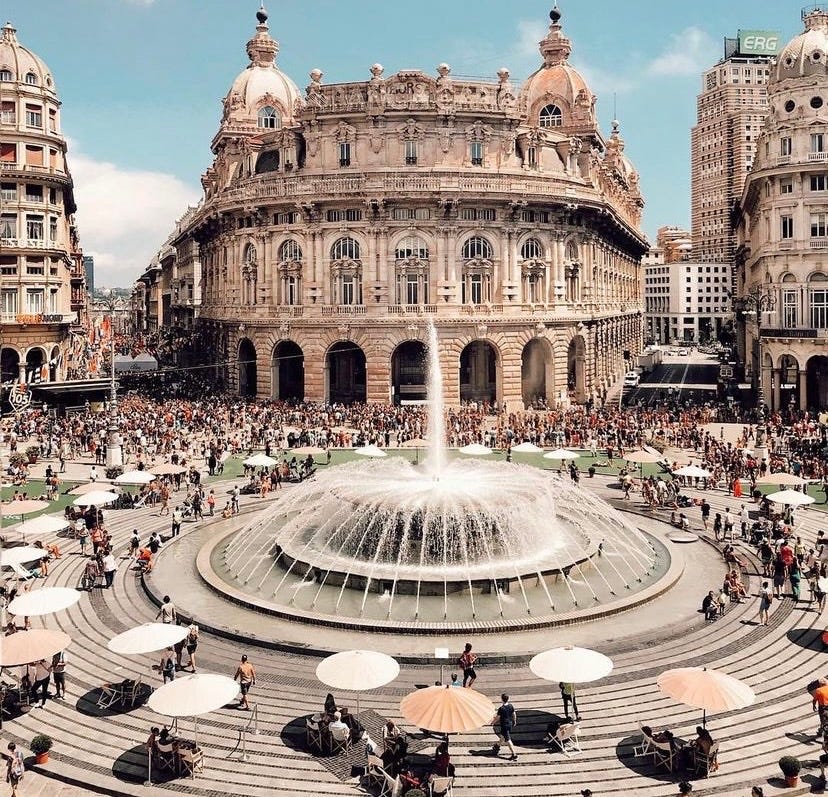
Before Water Came to Your House
People still needed water for drinking and domestic life. Aqueducts could carry it across long distances; public fountains were the point where ordinary people finally collected it.
Paris traces its earliest public fountains to the thirteenth century. Over the following centuries aqueducts and pumps improved the supply, but people still came to the street for water, and they met their neighbors while they were there. The fountain was infrastructure and a meeting place at once.
John Ruskin saw that double life clearly. In The Seven Lamps of Architecture he argued that a working fountain was the wisest kind of street ornament precisely because people actually stopped there:
So, again, there is no subject of street ornament so wisely chosen as the fountain, where it is a fountain of use; for it is just there that perhaps the happiest pause takes place in the labour of the day, when the pitcher is rested on the edge of it, and the breath of the bearer is drawn deeply, and the hair swept from the forehead, and the uprightness of the form declined against the marble ledge, and the sound of the kind word or light laugh mixes with the trickle of the falling water, heard shriller and shriller as the pitcher fills. What pause is so sweet as that—so full of the depth of ancient days, so softened with the calm of pastoral solitude?
The beauty belonged to the pause that the water created.
So Cities Made Them Beautiful
Once a fountain occupied an important public space, there was little reason to treat it as nothing more than plumbing. Stone could be carved around the outlet. Sculpture could turn the water itself into part of the design. In a larger square the fountain could become the visual center of the entire space.
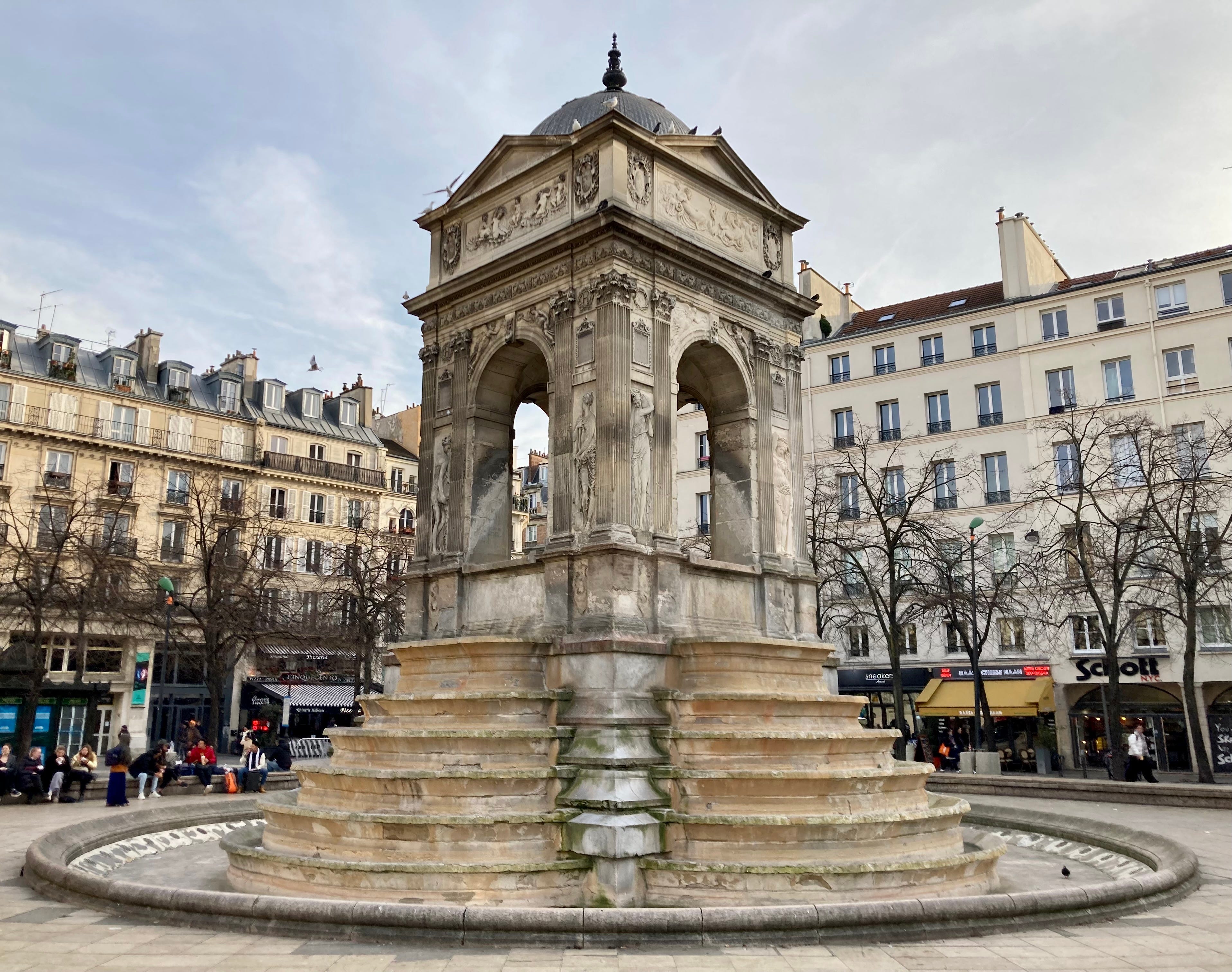
Paris produced an extraordinary sixteenth-century example in the Fontaine des Innocents: Renaissance sculpture wrapped around a working water source. Across Europe the same logic held. A fountain could supply water, commemorate a ruler, and decorate a square at the same time. Utility did not excuse ugliness.
Venetian wellheads said so outright. One inscription in Campo San Leonardo reads: “For the convenience of the people as well as an ornament to the city.”
Francis Bacon, writing about gardens rather than streets, described the same marriage of refreshment and display:
Fountains are a great beauty and refreshment; but pools mar all and make a garden unwholesome and full of flies and frogs. Fountains I intend to be of two natures: the one, that sprinkleth or spouteth water; the other, a fair receipt of water of some thirty or forty foot square, but without fish or slime or mud. For the first, the ornaments of images gilt, or of marble, which are in use, do well; but the main matter is so to convey the water, as it never stay either in the bowls or in the cistern, that the water be never by rest discolored, green, or red or the like, or gather any mossiness or putrefaction. Besides that, it is to be cleansed every day by the hand. Also, some steps up to it, and some fine pavement about it, doth well.
The ornaments mattered. So did moving, clean water.
Rome Took This Much Further
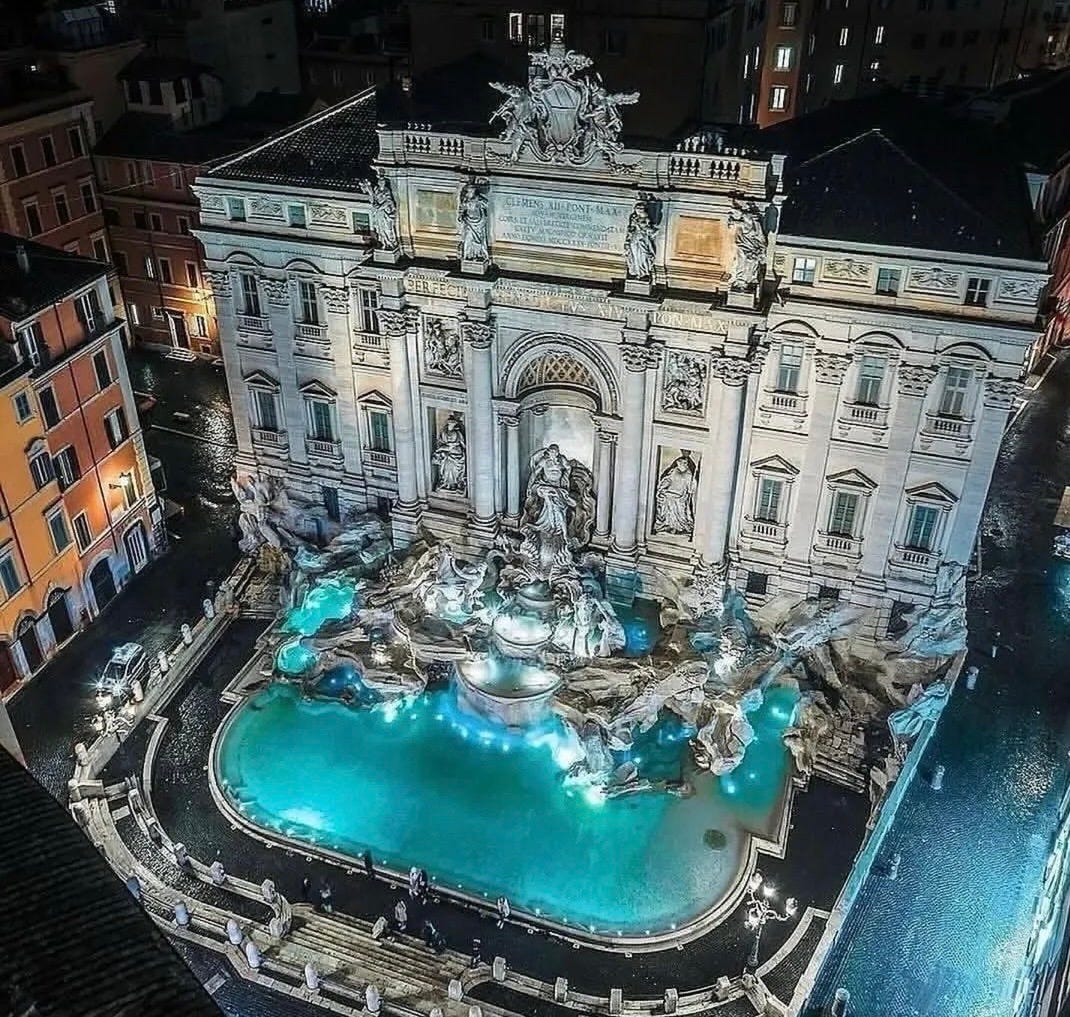
Rome inherited an ancient relationship with aqueducts. When popes restored old water systems in the early modern period, they also created monumental fountains at their endpoints. Water travelled into the city through infrastructure most people never saw. At the point where it finally appeared, the engineering announced itself through sculpture.
The Trevi Fountain is the most famous result. What looks like an enormous piece of urban sculpture is also the terminal display of the Acqua Vergine. Rome could have let the water emerge from an ordinary outlet. Instead it gave the water a façade.
Voltaire, writing from Paris in 1739 about Bouchardon’s Fontaine de Grenelle, measured his own city against that Roman standard:
The Parisians should do more to embellish their city, to destroy the monuments of Gothic barbarism, and particularly these ridiculous village fountains which disfigure our city. I have no doubt that Bouchardon will make this fountain a beautiful piece of architecture; but what is a fountain leaning against a wall, in a street, and half hidden by a house? What is a fountain with only two taps, where the water carriers will fill their buckets? This is not the way to build the fountains with which Rome is embellished. We find it hard to get out of the mean and rude taste. Fountains must be erected in public places, and beautiful monuments must be seen from all sides.
Even the complaint assumes that a fountain should be architecture, not merely a tap.
The Fountain Could Advertise the City
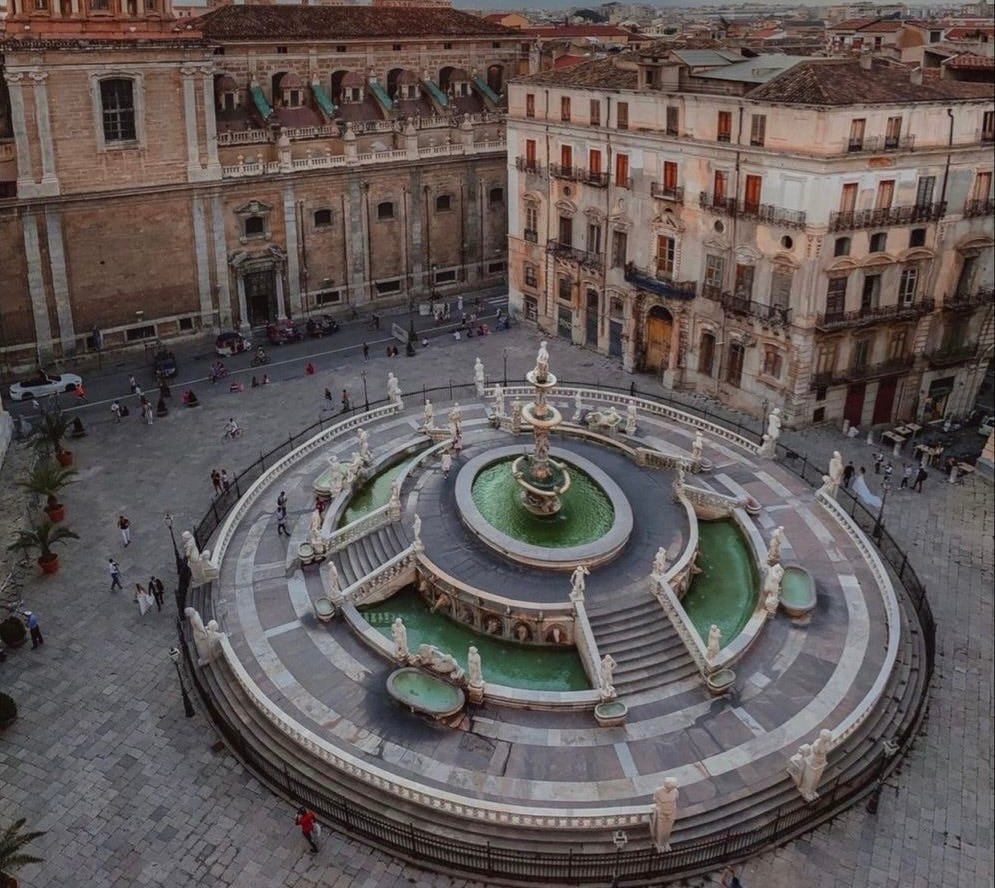
Bringing clean water across a landscape required engineering and money. Letting that water flow in public demonstrated that both existed. A monumental fountain turned municipal infrastructure into civic pride.
That is why fountains belonged in squares. Water drew people toward them; architecture gave the space a center. Unlike a statue, the fountain was alive. Water moved across stone, changed in sunlight, and filled a square with sound long before you reached it.
James Silk Buckingham, writing in 1841 after seeing cities that still treated water as public spectacle, put the case directly:
It is to be regretted that the introduction of fountains is not more frequent in the cities of England and America. Whoever has travelled much in Turkey, Greece, Italy, Spain, and Portugal, cannot fail to have admired the many beautiful fountains adorning the open places and public squares of the ancient cities of these countries. The refreshing coolness of the atmosphere, the sparkling brilliance of the waters, the soothing murmur of their falling sounds, and the air of freshness, luxury, and repose, which are all sources of enjoyment, are in themselves sufficient recommendation. It seems astonishing that London, Edinburgh, and Dublin, as well as New-York, Philadelphia, and Washington, should be so deficient as they are in these combinations of beauty and utility.
If these essays have changed the way you see the world around you, the paid tier goes further.
You get longer, more researched pieces on the places that shaped Western civilization and the stories behind them. Deep dives into tradition, craftsmanship, and what the built world reveals about culture. Travel guides that teach you to actually read the places you visit.
This project is kept alive by people who care about old-world traditions. For a few dollars a month, you can be one of them.
Then Paris Tried Something Different
Continue reading below…