

Walk through the villages of the Cotswolds, the hills of Tuscany, the streets of Provence, or the highlands of Scotland, and one material connects them all.
Stone.
It appears beneath our feet, forms the walls of centuries-old homes, supports graceful arches, frames humble cottage windows, and rises into church towers that have watched over generations. Every region uses its own variety—golden limestone in England, honey-colored sandstone in Germany, rugged granite in Scotland, pale limestone in France—but each possesses the same enduring quality. Stone gives a building a sense of permanence.
It is difficult to imagine these places built from anything else.
For thousands of years, stone has been one of humanity’s most trusted building materials. Civilizations have risen, kingdoms have fallen, and architectural styles have changed, yet stone continues to shape some of the world’s most beautiful buildings.
Its appeal is more than historical.
Stone possesses a beauty that deepens with time.
As Frank Lloyd Wright wrote of the material:
“The rock-ledges of a stone-quarry are a story and a longing to me. There is suggestion in the strata and character in the formations. I like to sit and feel it, as it is. … Read the grammar of the Earth in a particle of stone! Stone is the frame on which his Earth is modeled, and wherever it crops out – there the architect may sit and learn. … Whenever, in his designs, he allows the natural beauty of the stone, as stone, to speak its own material-language, he has justified his machine as an artist’s tool.”
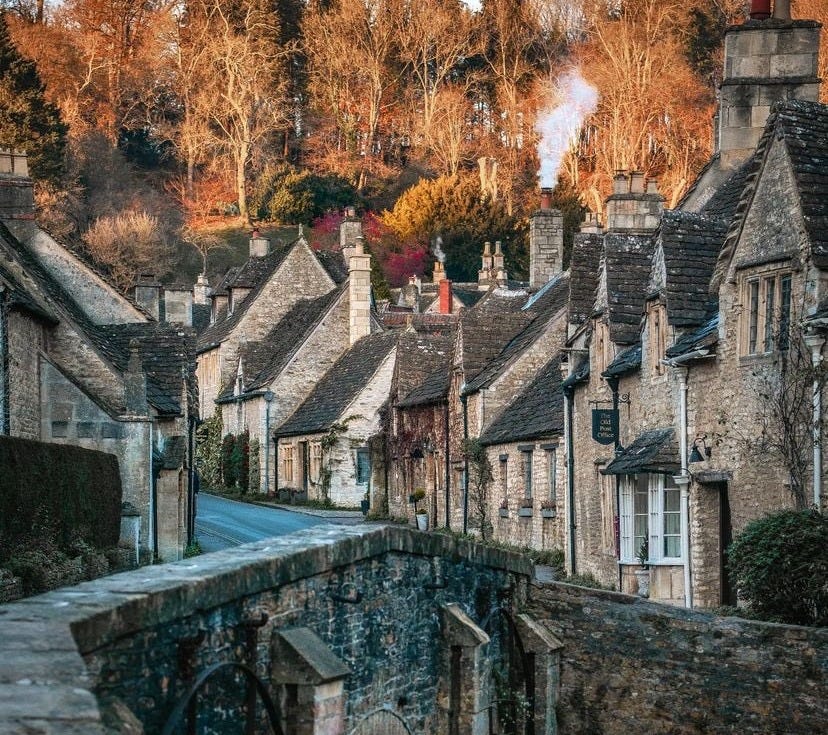
A Material Born from the Landscape
The finest stone buildings seem as though they belong exactly where they stand.
This is no coincidence.
Before railways and modern transportation, builders worked with the materials surrounding them. Villages nestled among limestone hills were built from limestone. Mountain communities relied on granite. River valleys supplied sandstone, while Mediterranean regions turned to warm-coloured limestone and marble. The landscape itself determined the appearance of the architecture.
As a result, buildings became part of their surroundings rather than standing apart from them. A Cotswold cottage seems to emerge naturally from the rolling English countryside because the very hills beneath it provided the stone. Across Tuscany, farmhouses reflect the soft earth tones of the vineyards and olive groves that surround them. In the Scottish Highlands, sturdy granite homes echo the rugged character of the landscape itself.
The architecture feels rooted because it quite literally grew from the ground beneath it.
The Japanese architect Kengo Kuma has expressed this principle with particular clarity:
“Architecture, by its very nature, has been created by local craftsmen using local materials, upon their careful observation. Architecture is rooted in the earth and cannot be moved in the air from one place to another. Therefore, understanding the local materials and craftsmanship is essential for anyone involved in architecture. … There was a time when modern architecture was severed from the ground and local materials. … Prioritizing the uniqueness of a place has become my architectural principle.”
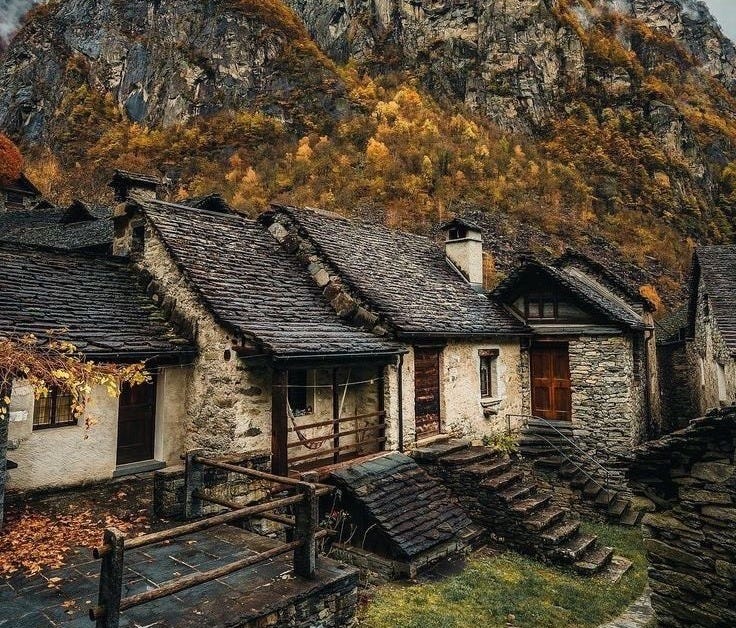
Every Stone Carries a Story
Unlike manufactured materials, no two pieces of natural stone are identical.
Each block bears subtle differences in colour, texture, and grain, shaped over millions of years by immense geological forces. Fossils appear unexpectedly within limestone walls. Veins of mineral deposits create delicate patterns that no craftsman could intentionally reproduce. Weather leaves gentle variations across every surface, allowing a building to develop a character entirely its own.
Stonemasons understood these qualities well.
Rather than forcing stone into perfect uniformity, they worked with its natural character, carefully selecting each block for its place within the wall. Their skill lay not in disguising the material, but in revealing its beauty through thoughtful craftsmanship.
The result is architecture that feels alive, enriched by countless small imperfections that together create harmony.
Stone Ages with Grace
Some materials appear at their best on the day they are installed.
Stone follows a different path.
Each passing year adds another layer of beauty. Rain softens sharp edges, sunlight warms pale surfaces, and moss settles gently into shaded corners. Ivy climbs ancient walls, while centuries of weather produce colours and textures that no artificial finish can imitate.
Walk through an old French village after a summer rain, and the limestone seems to glow beneath the changing light. Visit an English church whose stone has weathered for eight hundred years, and every carved detail carries the marks of time. In Italy, worn steps polished by generations of footsteps invite visitors to follow the same path taken by countless others before them.
Time becomes part of the architecture itself.
John Ruskin captured this quality of age with lasting force:
“Therefore, when we build, let us think that we build for ever. Let it not be for present delight, nor for present use alone; let it be such work as our descendants will thank us for, and let us think, as we lay stone on stone, that a time is to come when those stones will be held sacred because our hands have touched them, and that men will say as they look upon the labour and wrought substance of them, ‘See!—this our fathers did for us.’ For, indeed, the greatest glory of a building is not in its stones, nor in its gold. Its glory is in its Age, and in that deep sense of voicefulness, of stern watching, of mysterious sympathy… which we feel in walls that have long been washed by the passing waves of humanity.”
Stone has long been admired for its durability..
Roman aqueducts continue to span valleys nearly two thousand years after they were built. Medieval castles still crown hilltops across Europe. Village churches that welcomed worshippers in the twelfth century continue to do so today beneath the same stone vaults.
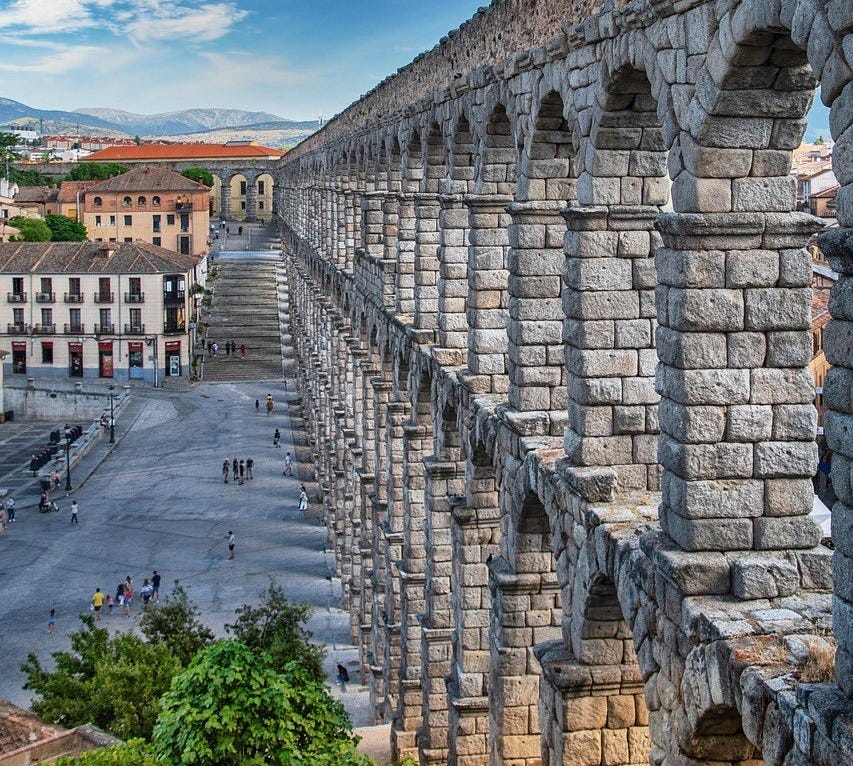
Yet strength alone does not explain stone’s enduring appeal.
The greatest builders understood that durability and beauty belong together. They carved capitals with intricate leaves, sculpted graceful window surrounds, shaped elegant arches, and transformed simple walls into works of craftsmanship. Even the humblest cottage received careful attention, its stones laid with patience until each course contributed to the rhythm of the façade.
Stone became both structure and ornament, carrying the weight of the building while giving it its lasting character.
Le Corbusier distinguished between mere construction and true architecture in these words: