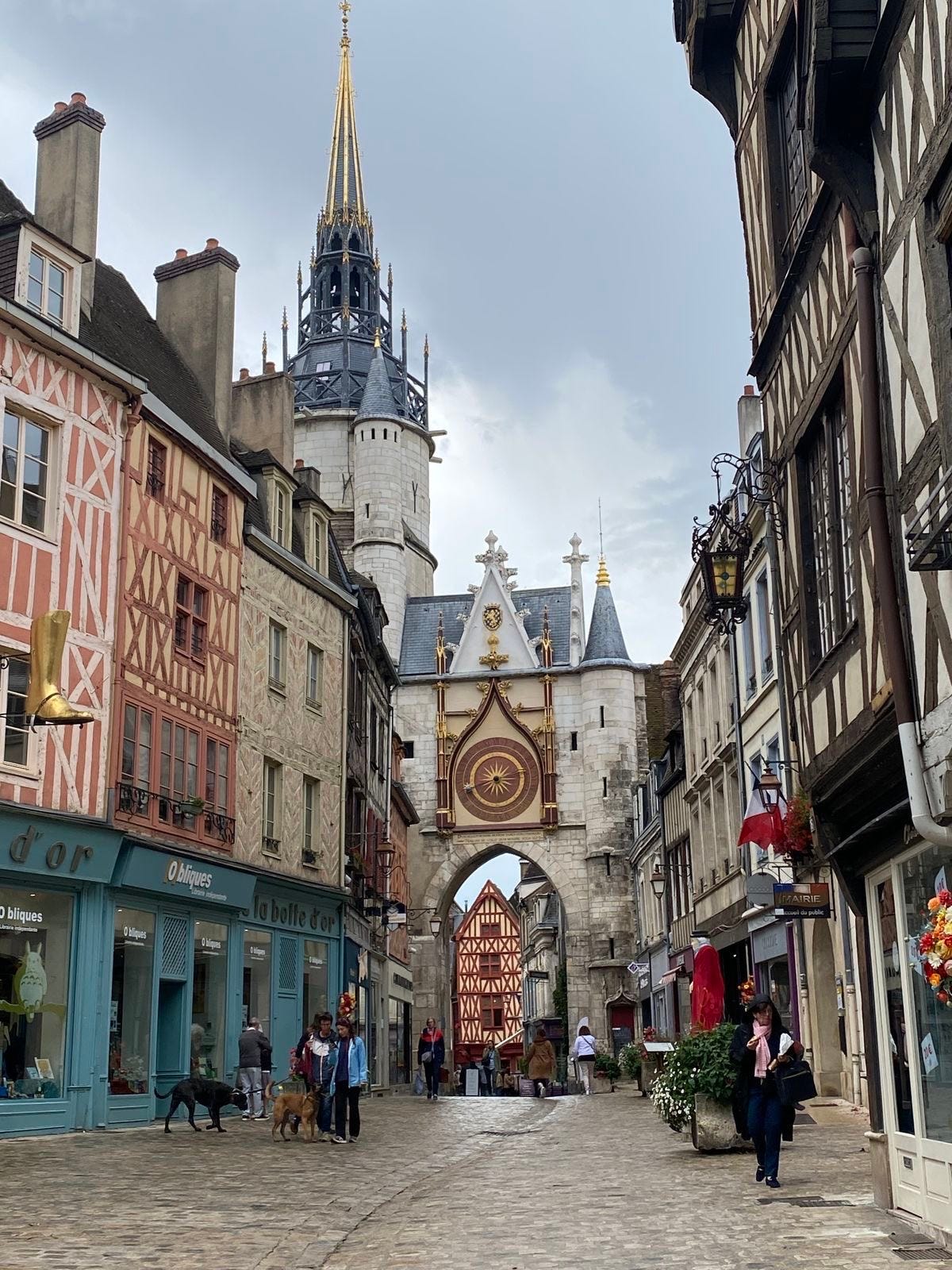
Why do old streets feel so different?
The answer lies not in nostalgia, but in the way they were shaped..
They Grew Instead of Being Planned
The beauty of an old street cannot be separated from the time it took to build it. Few historic towns appeared all at once. They grew gradually, house by house, generation by generation, each builder contributing something to the street while respecting what had already been built. A fifteenth-century timber-framed house might stand beside a Baroque townhouse completed two hundred years later, while a nineteenth-century shop joins the composition without disturbing its harmony. The materials remain familiar, the proportions feel consistent, and every addition becomes another chapter in the story of the street.
Christopher Alexander described this quality in The Timeless Way of Building:
A building or a town will only be alive to the extent that it is governed in a timeless way. It is a process which brings order out of nothing but ourselves; it cannot be attained, but it will happen of its own accord, if we will only let it.
That slow process created a richness that is difficult to imitate. Rooflines rise and fall with quiet irregularity. Chimneys, dormers, and gables catch the changing light throughout the day. Every doorway possesses its own character, every window reveals the hand of a craftsman, and every slight variation reminds us that these buildings were made individually rather than repeated endlessly from the same drawing.
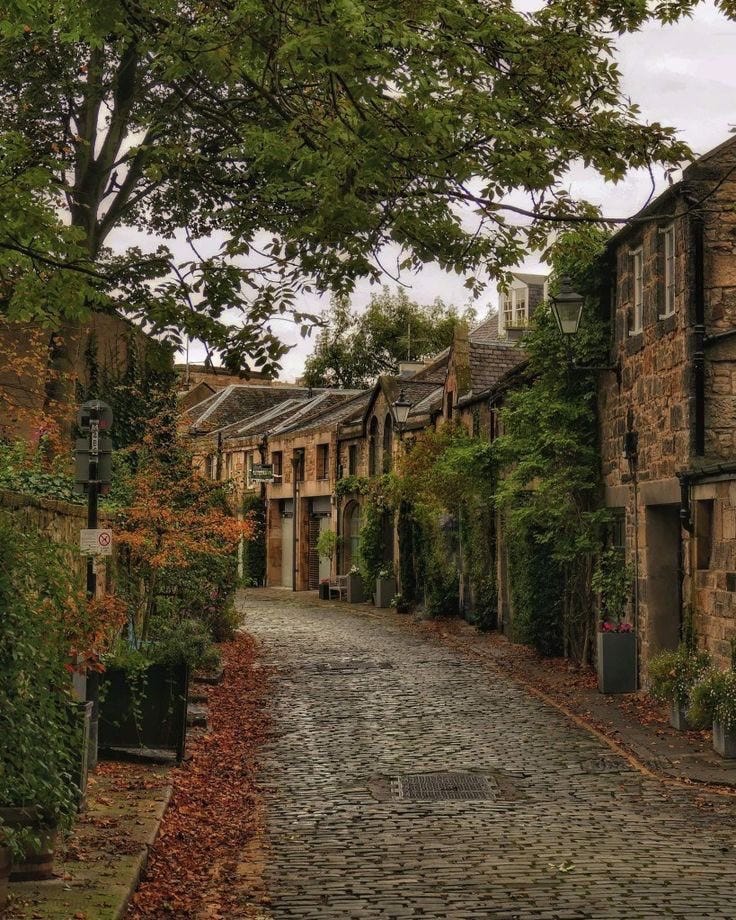
The Street Was Designed Around Human Life
Before the arrival of railways and automobiles, nearly every journey began on foot. Bakers, blacksmiths, merchants, priests, and farmers all shared the same streets, moving through spaces designed according to the pace of daily life. Houses opened directly onto the road, workshops occupied the ground floor, churches anchored the village square, and markets gathered beneath the shadow of town halls and bell towers. Every destination lay within a comfortable walk, allowing the street itself to become an extension of the home.
Jane Jacobs understood this better than anyone. In The Death and Life of Great American Cities she wrote:
Streets and their sidewalks—the main public places of a city—are its most vital organs. A city street equipped to handle strangers, and to make a safety asset, in itself, out of the presence of strangers, as the streets of successful city neighborhoods always do, must have three main qualities:
First, there must be a clear demarcation between what is public space and what is private space. Second, there must be eyes upon the street, eyes belonging to those we might call the natural proprietors of the street. The buildings on a street equipped to handle strangers and to insure the safety of both residents and strangers, must be oriented to the street. They cannot turn their backs or blank sides on it and leave it blind. And third, the sidewalk must have users on it fairly continuously, both to add to the number of effective eyes on the street and to induce the people in buildings along the street to watch the sidewalks in sufficient numbers.
That relationship shaped the architecture in remarkable ways. Windows overlooked the pavement rather than turning away from it. Front doors welcomed visitors directly from the street. Small gardens softened the edges of stone walls, while benches beneath porches and deep roof overhangs provided quiet places to rest. Every few steps offered another detail worthy of attention, whether a carved lintel above a doorway, an iron lantern fixed to an old façade, or a narrow passage leading toward another square waiting to be discovered.
If these essays have changed the way you see the world around you, the paid tier goes further.
You get longer, more researched pieces on the places that shaped western civilization and the stories behind them. Deep dives into tradition, craftsmanship, and what the built world reveals about culture. Travel guides that teach you to actually read the places you visit.
This project is kept alive by people who care about old world traditions. For a few dollars a month, you can be one of them.
Natural Materials Tell the Story of Time
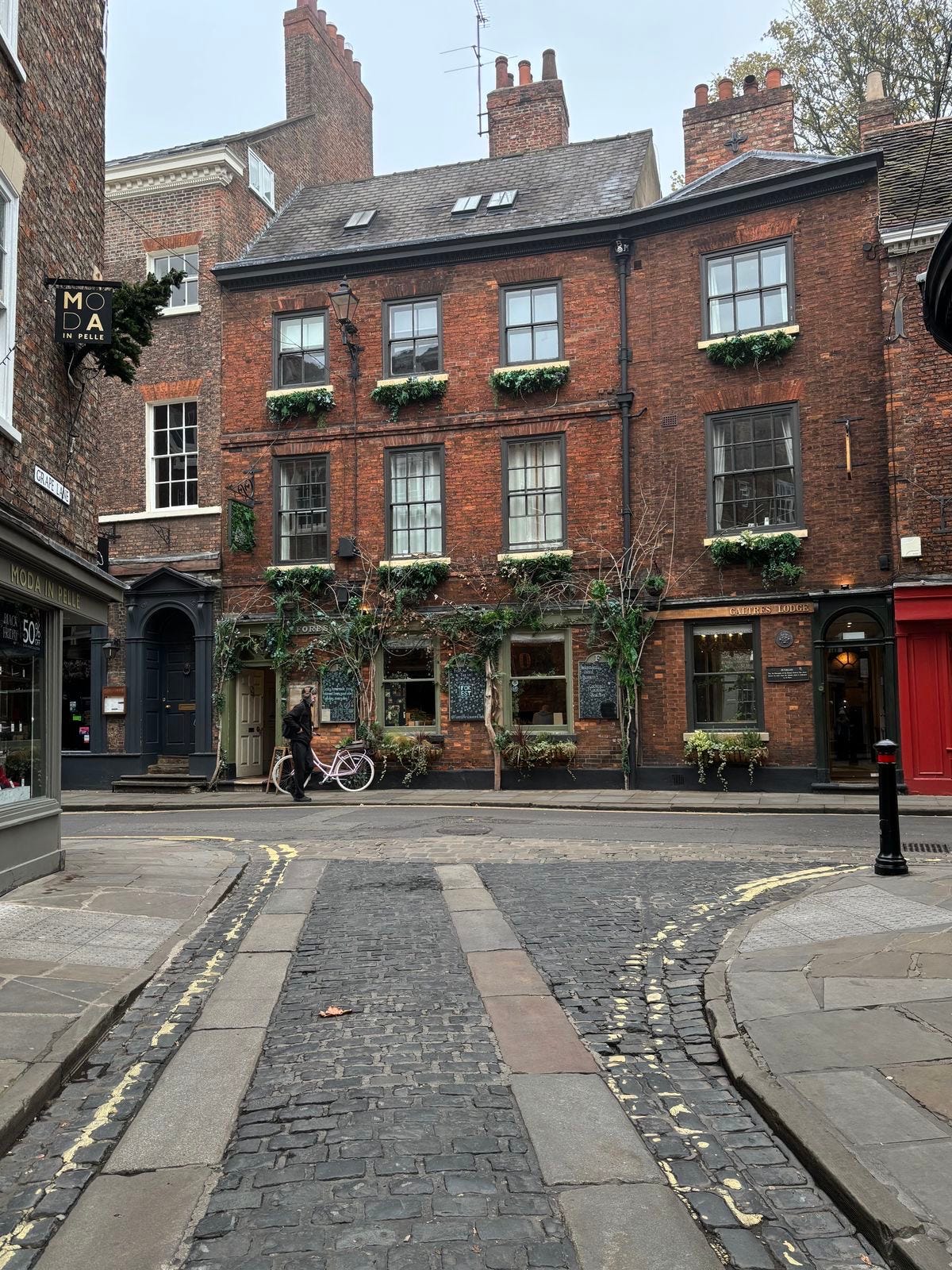
One of the greatest pleasures of walking through an old town is seeing how beautifully its materials mature. Limestone gradually softens beneath centuries of rain. Oak darkens until its grain acquires a richness impossible to recreate in a factory. Copper roofs slowly develop their familiar green patina, while handmade brick reveals subtle shifts in colour that fill entire streets with warmth. Stone pavements become smooth beneath generations of footsteps, and climbing roses weave themselves across ancient walls as though they had grown there from the beginning.
John Ruskin said:
The greatest glory of a building is not in its stones, nor in its gold. Its glory is in its Age and in that deep sense of voicefulness, of stern watching, of mysterious sympathy, nay, even of approval or condemnation, which we feel in walls that have long been washed by the passing waves of humanity. It is in their lasting witness against men, in their quiet contrast with the transitional character of all things… it is in that golden stain of time, that we are to look for the real light, and colour, and preciousness of architecture.
Nothing appears frozen. Every season leaves its mark, every generation contributes another layer, and every weathered surface becomes part of the architecture itself. Time ceases to be an enemy of the building and instead becomes one of its finest craftsmen.