

There is a certain silence that belongs only to old libraries.
It is not an empty silence, nor the silence of abandonment. It is the presence of countless voices waiting to be heard. Shelves rise from floor to ceiling, their wooden cases filled with volumes that have survived centuries. Sunlight filters through tall arched windows, falling across worn stone floors and polished oak tables where generations have read, studied, and written. Every corner seems to invite reflection.

Even those who rarely read find themselves lowering their voices when they enter.
It is difficult to explain.
Why do old libraries feel so different?
The answer lies in far more than the books they contain.
Their architecture was designed to honor knowledge itself.
Built to Preserve Wisdom
Long before the invention of the printing press, every book represented years of painstaking labor.
Monks copied manuscripts by hand, one page after another, carefully illuminating letters with gold leaf and brilliant pigments. Scholars traveled across kingdoms to consult a single manuscript. Universities treasured their collections because each volume preserved knowledge that could not easily be replaced.
The buildings that housed these collections reflected their importance.
Libraries were never treated as simple storage rooms. They became places worthy of the treasures they protected. Thick stone walls sheltered delicate manuscripts from fire and weather. Tall windows admitted generous daylight for reading, while vaulted ceilings created spacious interiors where scholars could work in concentration.
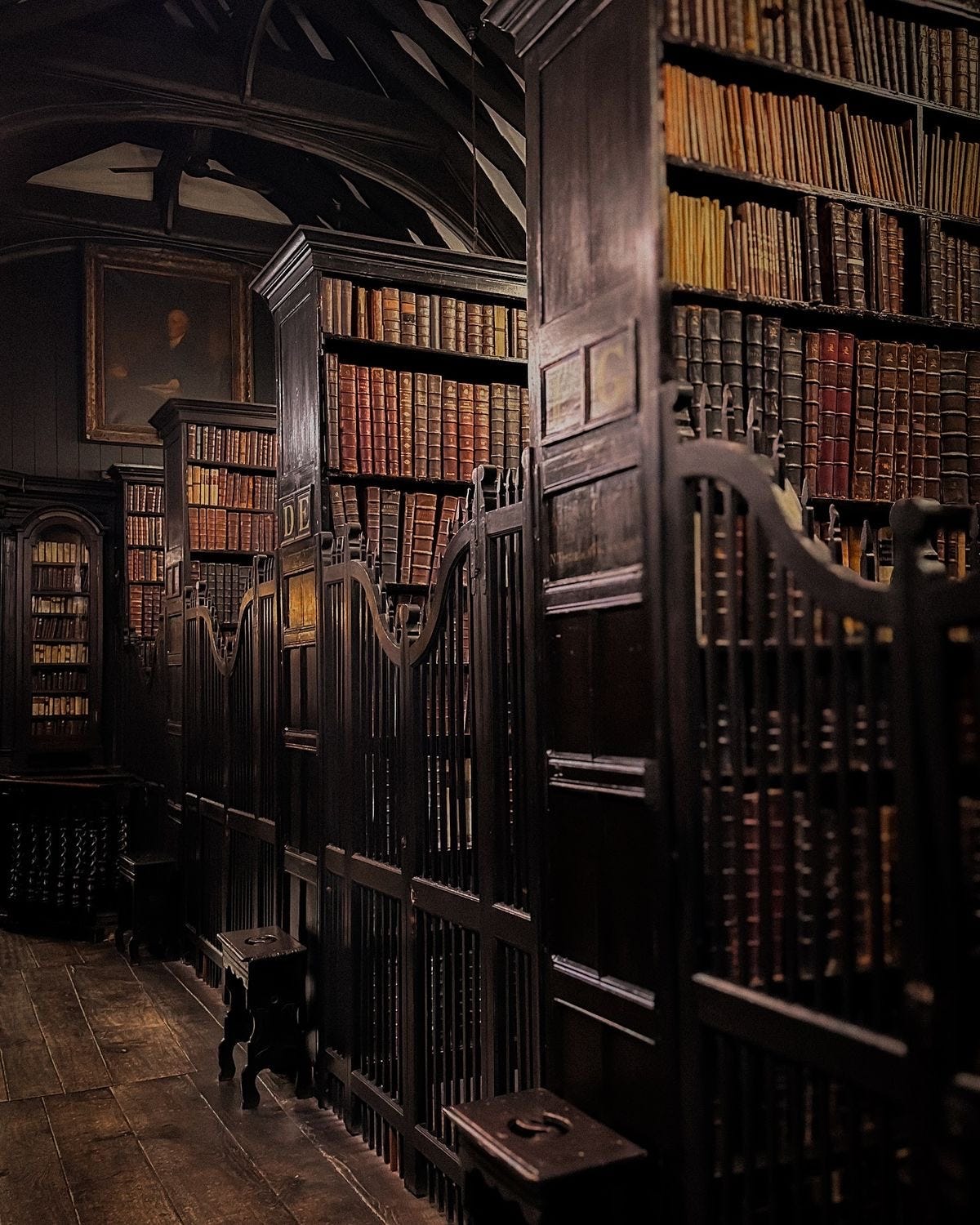
The architecture expressed a simple conviction.
Knowledge deserved a beautiful home.
The Roman architect Vitruvius understood this bond between architecture and the transmission of learning when he wrote:
“Our ancestors established the intelligent and useful practice of transmitting their thoughts to future generations in the form of bodies of notes so they would not be lost but, growing generation by generation once they had been published as books, they would gradually arrive at the highest level of scientific development in the course of time. So for this we owe them no half-hearted thanks but infinite gratitude, because they did not jealousy pass over these matters in silence but took great care to hand on to posterity their insights of all kinds in written form.”
A Place Designed for Contemplation
The finest libraries encourage a slower pace.
Long reading tables invite hours of uninterrupted study. Wooden shelves create a sense of enclosure without feeling oppressive. High ceilings draw the eye upward, filling the room with light and space. Every proportion seems carefully considered, allowing architecture to support the work taking place within its walls.
This sense of order is no accident.
Many of Europe’s greatest libraries were built within monasteries, cathedrals, and universities, where learning formed part of daily life. Reading was understood not merely as a practical task but as an act requiring patience, discipline, and careful thought. The building itself reflected those values, providing an environment where distractions faded into the background.
Wood, Stone, and Light
Old libraries rely upon simple materials..
