

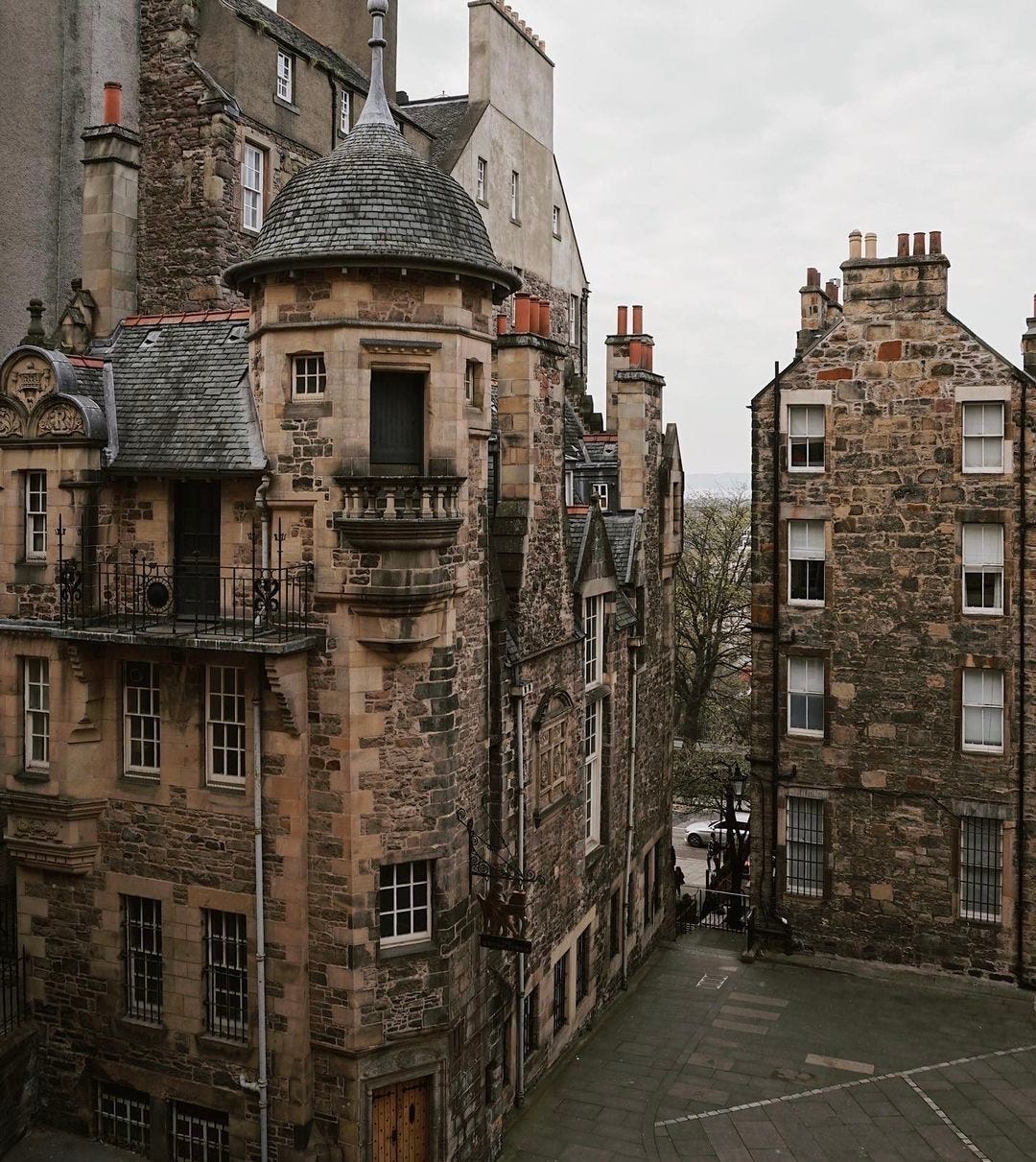
Buildings that were constructed hundreds of years ago, often without modern machinery or the technology we have today, are still among the most beautiful buildings you will ever see. Churches, town halls, universities, libraries, and even ordinary houses were built with an attention to detail that is increasingly difficult to find in modern architecture.
Now compare them with what we build today. Glass office towers, concrete apartment blocks, enormous shopping centers, and public buildings that often look more like warehouses than places where people are supposed to spend their lives. Of course, there are beautiful modern buildings, and not every old building was a masterpiece, but the difference in what architects once aspired to create and what we often settle for today is difficult to ignore.
We have more money, better technology, and more advanced construction methods than any previous generation. We can build taller, faster, and more efficiently than ever before. And yet, when people travel to Europe, they rarely go to admire the newest office buildings or apartment complexes. They go to Rome, Florence, Prague, Vienna, and Paris to see buildings that were constructed centuries ago.
So what happened? Why did beauty, once considered one of the most important purposes of architecture, become something that is often treated as unnecessary, expensive, or merely subjective?
When Beauty Was Part of the Purpose
For much of Western history, architecture was understood as something more than the practical business of putting walls around a room and a roof over people’s heads. Buildings were supposed to serve a purpose, but they were also expected to contribute something beautiful to the world around them.
The Roman architect Vitruvius, writing in the first century BC, argued that good architecture should possess three essential qualities: firmitas, utilitas, venustas, commonly translated as firmness, usefulness, and beauty. A building should be structurally sound, serve its intended function, and be pleasing to look at. None of these qualities was supposed to exist entirely at the expense of the others.
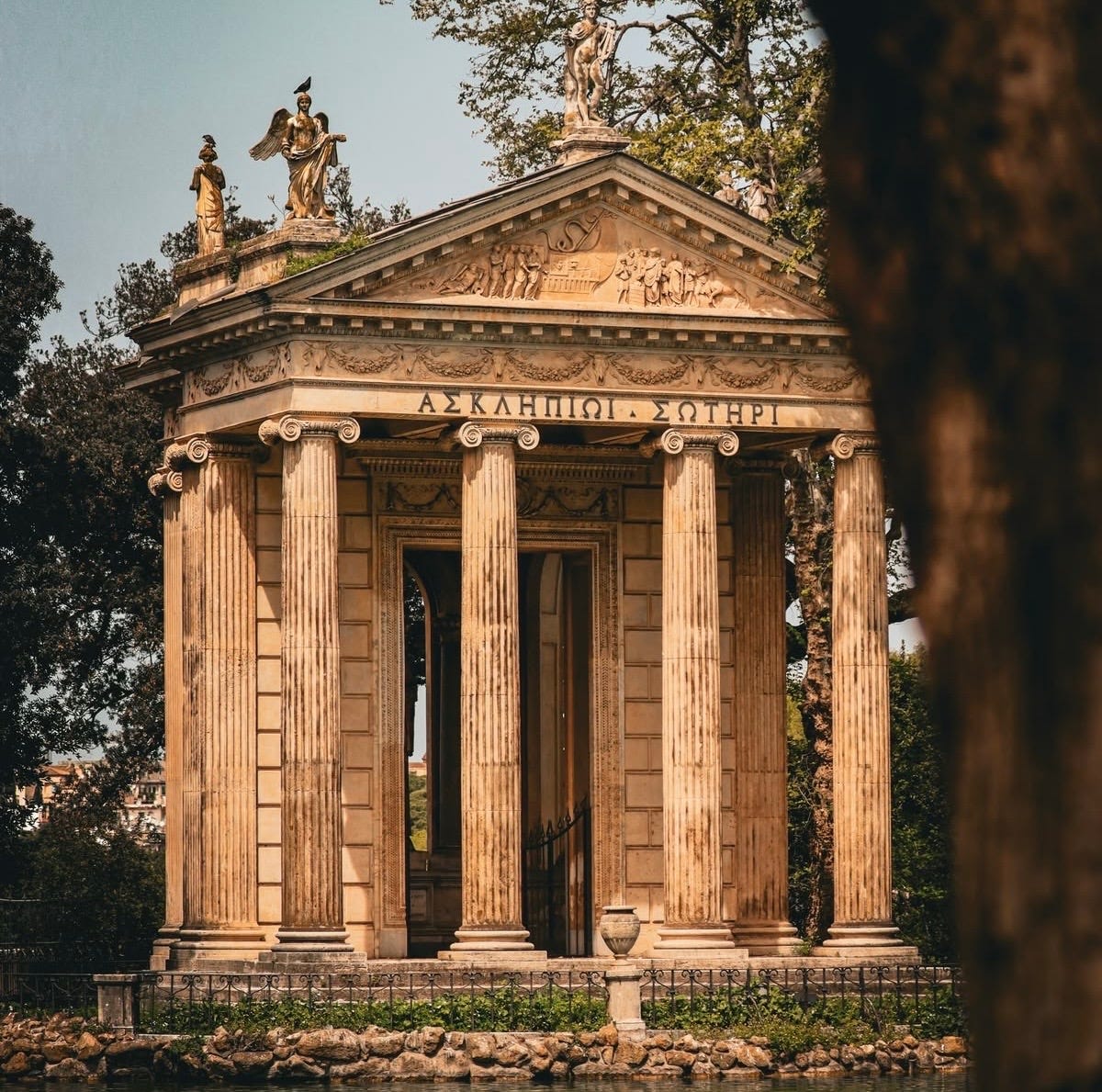
This understanding of architecture continued to influence European builders for centuries. During the Middle Ages, churches and cathedrals were constructed not simply to provide a place where people could gather for worship, but to express something about the Christian understanding of the world. Their proportions, sculptures, stained-glass windows, and enormous vaulted ceilings were intended to direct people’s attention toward God and the things that transcended ordinary life.
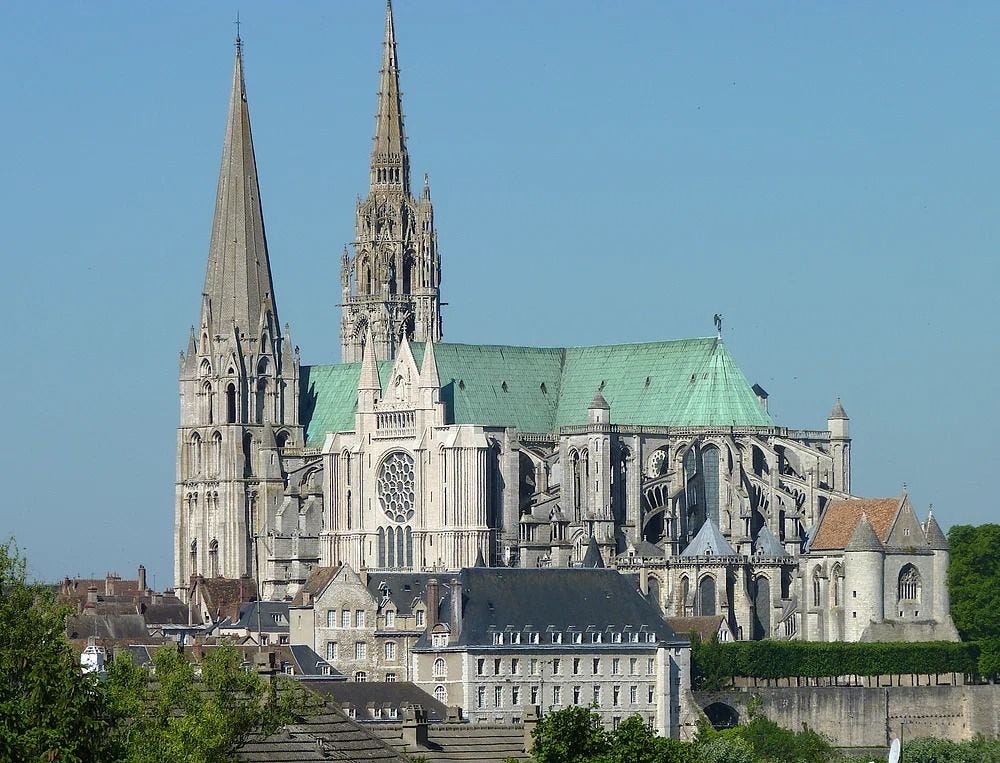
Consider Chartres Cathedral, one of the great achievements of Gothic architecture. Construction of much of the present cathedral began after a fire in 1194, and generations of craftsmen worked to create a building whose beauty still attracts visitors more than eight hundred years later. Its stained glass, sculptures, and architectural proportions were not decorative additions that could simply have been removed to save money. They were part of what the building was supposed to be.
And this concern for beauty was not limited to churches. European cities were filled with town halls, market squares, bridges, universities, and ordinary houses that reflected the architectural traditions of their regions. A merchant’s house in a German town might have an elaborately decorated timber frame, while a building in Florence might display the carefully proportioned stonework of the Renaissance.
Not every building was expensive, and certainly not every neighborhood was beautiful, but there was a shared understanding that the appearance of buildings mattered because they formed the surroundings in which entire communities lived.
A building was not merely the private concern of its owner. Its exterior became part of the public world, something that neighbors, pedestrians, and future generations would have to look at every day.
The Modern Rejection of Ornament
One of the most important changes in architectural thinking came during the late nineteenth and early twentieth centuries, when a growing number of architects began questioning the traditions that had shaped European buildings for hundreds of years.
Industrialization had introduced new materials and construction methods, including structural steel, reinforced concrete, and large sheets of glass. These innovations made entirely new kinds of buildings possible, and many architects understandably wanted to explore what could be achieved with them.
But technological change was accompanied by an intellectual revolution. Increasingly, influential architects argued that historical styles and traditional ornament were unnecessary, dishonest, or inappropriate for the modern world.
Louis Sullivan’s often-quoted line is usually reduced to a slogan. In the original 1896 essay he wrote: “It is the pervading law of all things organic and inorganic, of all things physical and metaphysical, of all things human and all things superhuman, of all true manifestations of the head, of the heart, of the soul, that the life is recognizable in its expression, that form ever follows function. This is the law.” The later simplification stripped away the organic and spiritual framing and left only the justification for eliminating whatever could not be measured as pure function.
In 1908, the Austrian architect Adolf Loos delivered the lecture that became famous as Ornament and Crime. He wrote: “I have made the following discovery and I pass it on to the world: The evolution of culture is synonymous with the removal of ornament from utilitarian objects… We have outgrown ornament; we have struggled through to a state without ornament. Behold, the time is at hand, fulfilment awaits us. Soon the streets of the cities will glow like white walls! Like Zion, the Holy City, the capital of heaven.” Loos regarded the rejection of ornament as a sign of cultural progress, not merely as a way to save money.
A few years later, the Swiss-French architect Le Corbusier became one of the most important voices of modern architecture. In his 1923 book Towards a New Architecture he wrote: “A house is a machine for living in. Baths, sun, hot-water, cold-water, warmth at will, conservation of food, hygiene, beauty in the sense of good proportion. An armchair is a machine for sitting in and so on.” He also insisted: “You employ stone, wood and concrete, and with these materials you build houses and palaces. That is construction. Ingenuity is at work. But suddenly you touch my heart, you do me good, I am happy and I say: This is beautiful. That is Architecture. Art enters in.” The second statement is often forgotten. The machine metaphor proved far more influential.
Álvaro Siza later put a related idea more succinctly: “Of course, I am interested in beauty. Beauty is the peak of functionality! If something is beautiful, it is functional… a search for beauty should be the number one preoccupation of any architect… But beauty is the peak of functionality, so it is very difficult to reach.” Once beauty is redefined as nothing more than the successful solving of functional problems, it becomes easy to treat it as secondary.
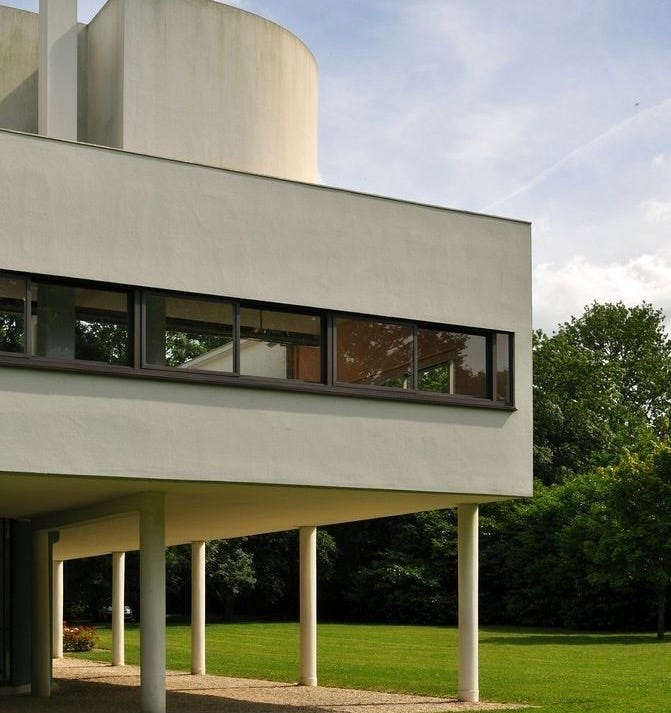
To be fair, Le Corbusier and many of his contemporaries were not indifferent to beauty. They believed architecture could achieve it through proportion, geometry, light, and the arrangement of forms, without relying on traditional decoration. But the kind of beauty they pursued was often very different from what ordinary people had come to associate with beautiful buildings.
Instead of carved stone, decorative columns, pitched roofs, and richly detailed façades, the new architecture increasingly favored flat surfaces, simple geometric shapes, exposed materials, and the elimination of ornament.
What began as an attempt to create a new architectural language eventually became one of the dominant approaches to building throughout the twentieth century.
When Function Became More Important Than Everything Else
The problem was not that modern architects began taking function seriously. Good architects had always cared about whether their buildings worked, whether people could use them comfortably, and whether they would remain standing.
The problem was that function, efficiency, and economy increasingly became the dominant considerations, while beauty was often treated as something secondary.
This was particularly evident in the enormous expansion of cities during the twentieth century. Industrialization, urban migration, population growth, and the destruction caused by two world wars created an urgent need for new housing, offices, schools, and public infrastructure.
Governments and developers needed to build quickly, and modern construction techniques made it possible to produce large numbers of relatively standardized buildings at a scale that earlier generations could scarcely have imagined.

In many circumstances, this was a genuine achievement. Millions of people needed affordable homes, and the priority was understandably to provide safe housing with electricity, plumbing, heating, and other basic necessities.
But something was lost when the same practical approach began to dominate almost every kind of building.
An apartment block could be considered successful because it contained the required number of apartments. An office building could be praised because it maximized rentable floor space. A school could be judged by how efficiently it accommodated students.
Whether any of these buildings contributed something beautiful to the surrounding city often became a much less important question.
And once beauty is treated as an optional extra rather than an essential part of good architecture, it becomes very easy to eliminate it whenever budgets are tight.
Why spend money on a beautiful façade when a plain concrete wall will do the job? Why create an attractive entrance when a simple doorway serves the same practical purpose? Why design a building that complements the surrounding neighborhood when a standardized design can be constructed more cheaply?
If these essays have changed the way you see the world around you, the paid tier goes further.
You get longer, more researched pieces on the places that shaped Western civilization and the stories behind them. Deep dives into tradition, craftsmanship, and what the built world reveals about culture. Travel guides that teach you to actually read the places you visit.
This project is kept alive by people who care about old-world traditions. For a few dollars a month, you can be one of them.
The Real Cost Numbers
In 2026, standard U.S. residential hard costs typically run $150–$220 per square foot. Multifamily podium construction often lands at $200–$275 per square foot hard cost before land and soft costs. In New York and other high-cost cities, all-in figures can exceed $700 per square foot. European residential averages, once converted and with land included, sit in a similar range. Land is frequently the single largest cost. Housing remains unaffordable for large parts of the population, so every extra dollar of construction cost is measured against rent or sale-price targets.
Continue reading below.