

Walk through cities like Turin, Florence, Barcelona, Cologne, or even parts of London and you are walking across a map first drawn nearly two thousand years ago, because beneath medieval churches, Gothic facades, Renaissance palaces, cafes, apartments, and crowded modern streets, the old Roman city still survives today
The street patterns remain
The axes remain
The old walls still shape neighborhoods
Ancient forums became medieval squares.
Roman roads turned into commercial streets that never stopped being used.
And once you start noticing it, you realize something extraordinary about Europe: many medieval cities were not built from scratch after Rome collapsed, but grew slowly on top of Roman foundations so durable and practical that later generations simply kept using them century after century.
That continuity matters because people imagine the fall of Rome as a clean break between two completely separate worlds, with classical civilization disappearing and medieval Europe emerging afterward independently.
But cities rarely work that way.
Cities accumulate
They layer
They adapt slowly
And in many parts of Europe, medieval life settled directly into Roman urban frameworks that had already organized movement, trade, defense, and daily life long before the Middle Ages even began.
Which means that when you walk through many European old towns today, you are moving through Roman geometry disguised beneath medieval architecture.
* * *
1) The Romans Loved Grids Because Grids Worked
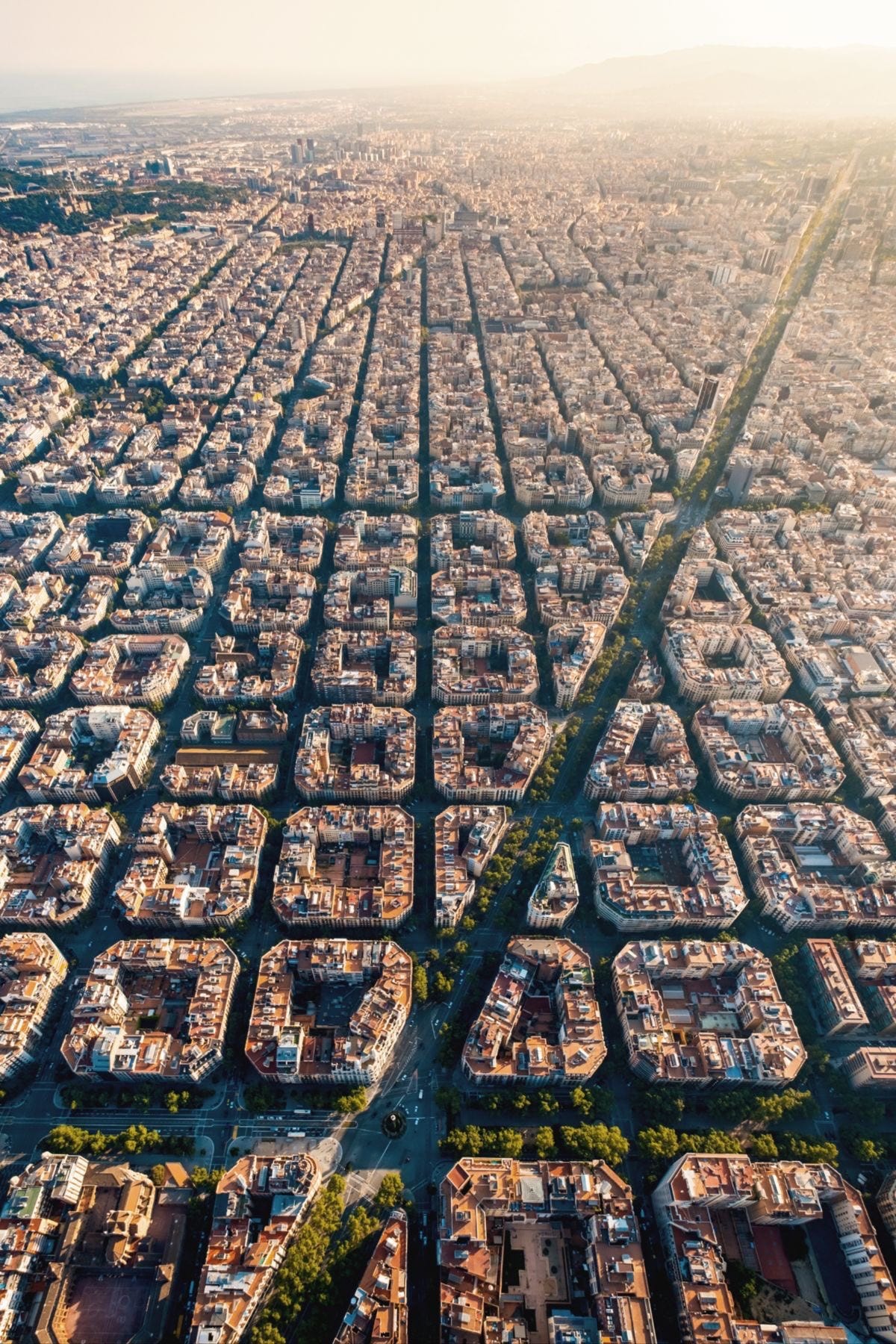
The Romans built cities with extraordinary consistency across their empire because they understood something very simple: organized cities function better
Roman urban planning was practical before it was beautiful.
Most Roman cities were laid out around a grid system centered on two main axes: the cardo maximus, usually running north to south, and the decumanus maximus, usually running east to west.
Where those streets intersected, you normally found the forum, which acted as the political, commercial, and religious center of the city.
Around that framework came baths, temples, markets, administrative buildings, housing blocks, workshops, and defensive walls, all arranged with a level of order unusual in much of premodern urban history.
And importantly, Roman cities were designed for movement.
Soldiers moved efficiently
Goods moved efficiently
Water systems integrated efficiently
Administration worked efficiently
This mattered because Rome governed an empire stretching across three continents, and standardized urban planning made military control, taxation, trade, and infrastructure easier everywhere from Britain to North Africa.
The result was a network of remarkably durable urban foundations spread across Europe.
And when the Western Roman Empire weakened politically, many of those foundations simply remained in place.
* * *
2) Medieval Europe Did Not Destroy Roman Cities - It Moved Into Them
One of the biggest misconceptions about medieval Europe is the idea that people suddenly abandoned Roman civilization entirely after the empire declined in the West.
Some cities certainly shrank dramatically.
Some infrastructure collapsed
Some regions urbanized far less than before
But many Roman cities survived continuously through the early Middle Ages, even during periods of instability, invasion, economic contraction, and political fragmentation.
People still needed defensible settlements.
Markets still mattered
Roads still mattered
Water access still mattered
And Roman cities already provided those things.
So instead of building entirely new urban layouts, medieval populations often adapted the cities already there.
Roman forums became medieval market squares
Roman walls became medieval defensive walls
Roman roads became medieval commercial streets
And perhaps most importantly, Roman street grids remained incredibly difficult to erase completely once large amounts of construction already existed around them.
Because streets create habits.
People continue walking familiar routes
Merchants continue trading in profitable locations
Property boundaries harden over time
Buildings rise beside existing roads rather than against them.
And after enough centuries, entire cities become locked into patterns first established by earlier civilizations.
This is why so many medieval cities still preserve strange geometric order beneath otherwise chaotic-looking street networks.
The Roman skeleton never fully disappeared.
* * *
3) Turin Still Looks Roman From Above
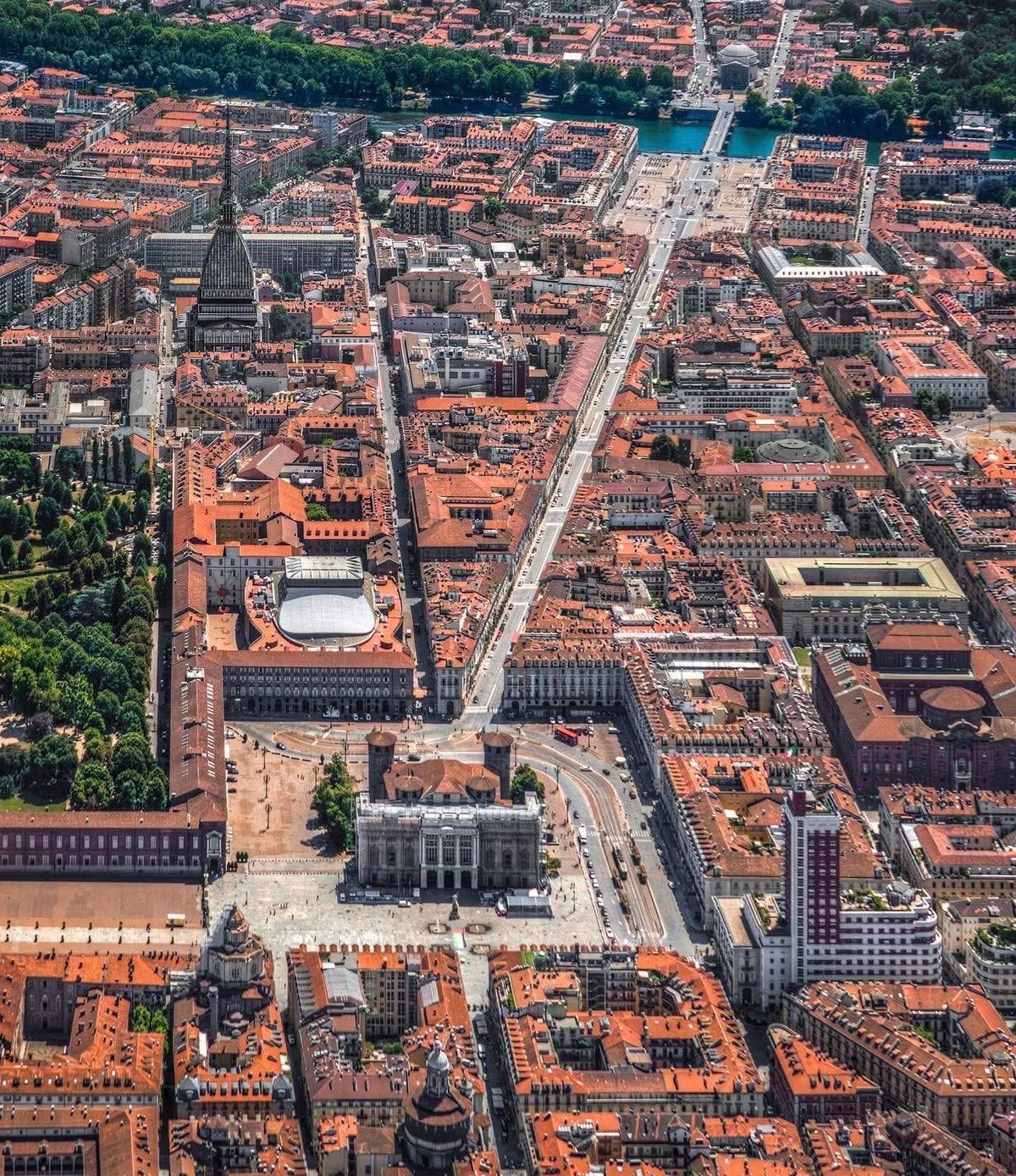
Turin is one of the clearest examples in Europe because the Roman street grid there survived with astonishing clarity.
The city began as the Roman colony of Julia Augusta Taurinorum, founded during the reign of Augustus, and even today large sections of central Turin still follow the original Roman plan closely enough that the ancient layout becomes obvious immediately from aerial view.
The grid remains remarkably regular.
Straight streets intersect cleanly.
The old cardo and decumanus still organize movement through the city center.
And once you know what you are looking at, modern Turin begins feeling ancient in a completely different way.
What makes this especially fascinating is that medieval Turin grew directly inside the Roman framework rather than replacing it.
Churches appeared
Medieval towers appeared
Palaces appeared later
But underneath all of it, the Roman geometry remained stable.
The city changed visually while keeping the same bones.
And honestly, this happens constantly across Europe once you begin recognizing the pattern.
If these essays have changed the way you see the world around you, the paid tier goes further.
Longer, more researched pieces on the places that shaped western civilization
Deep dives into tradition, craftsmanship, and what the built world reveals about culture
Travel guides that teach you to actually read the places you visit
This project is kept alive by people who care about old world traditions. For a few dollars a month, you can be one of them.
* * *
4) Florence Still Follows Roman Logic
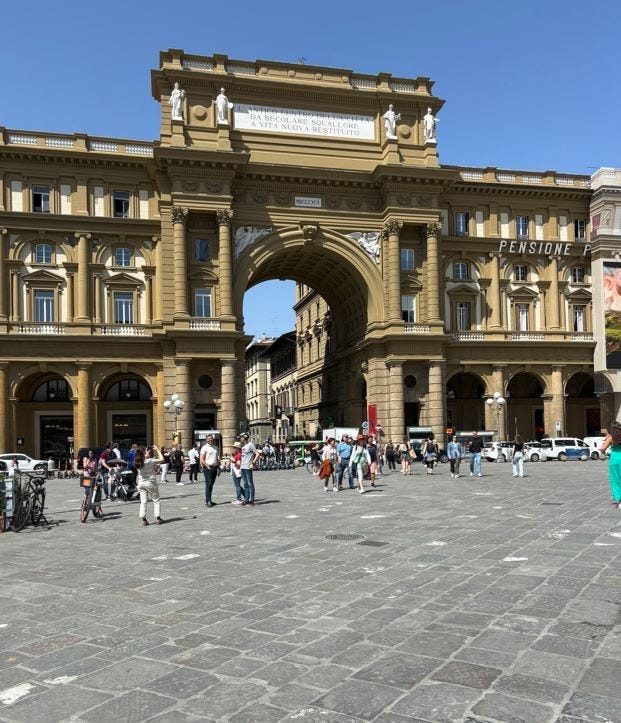
People usually think of Florence primarily as a Renaissance city, which makes sense given its extraordinary artistic and architectural legacy, yet beneath the Renaissance facades and medieval streets there still survives the older Roman colony of Florentia.
The original Roman grid can still be traced clearly through parts of the historic center.
Piazza della Repubblica, for example, roughly marks the site of the ancient forum.
Several major streets still follow Roman alignments.
And the shape of the older city remained heavily influenced by Roman foundations long after imperial authority disappeared.
What makes Florence especially interesting is how medieval and Renaissance construction slowly distorted the old Roman order without fully erasing it.
