

Walk through the older parts of Paris or Vienna and you will eventually come across something that seems rather strange.
You are looking at an apartment building.
Yet the entrance is framed in carved stone and the windows are surrounded by ornament; above them rise balconies with wrought-iron railings while statues or decorative faces stare down from the upper floors. Step through the front door and things can become even more extravagant because you may find marble floors and a staircase that looks as though it belongs inside a palace.
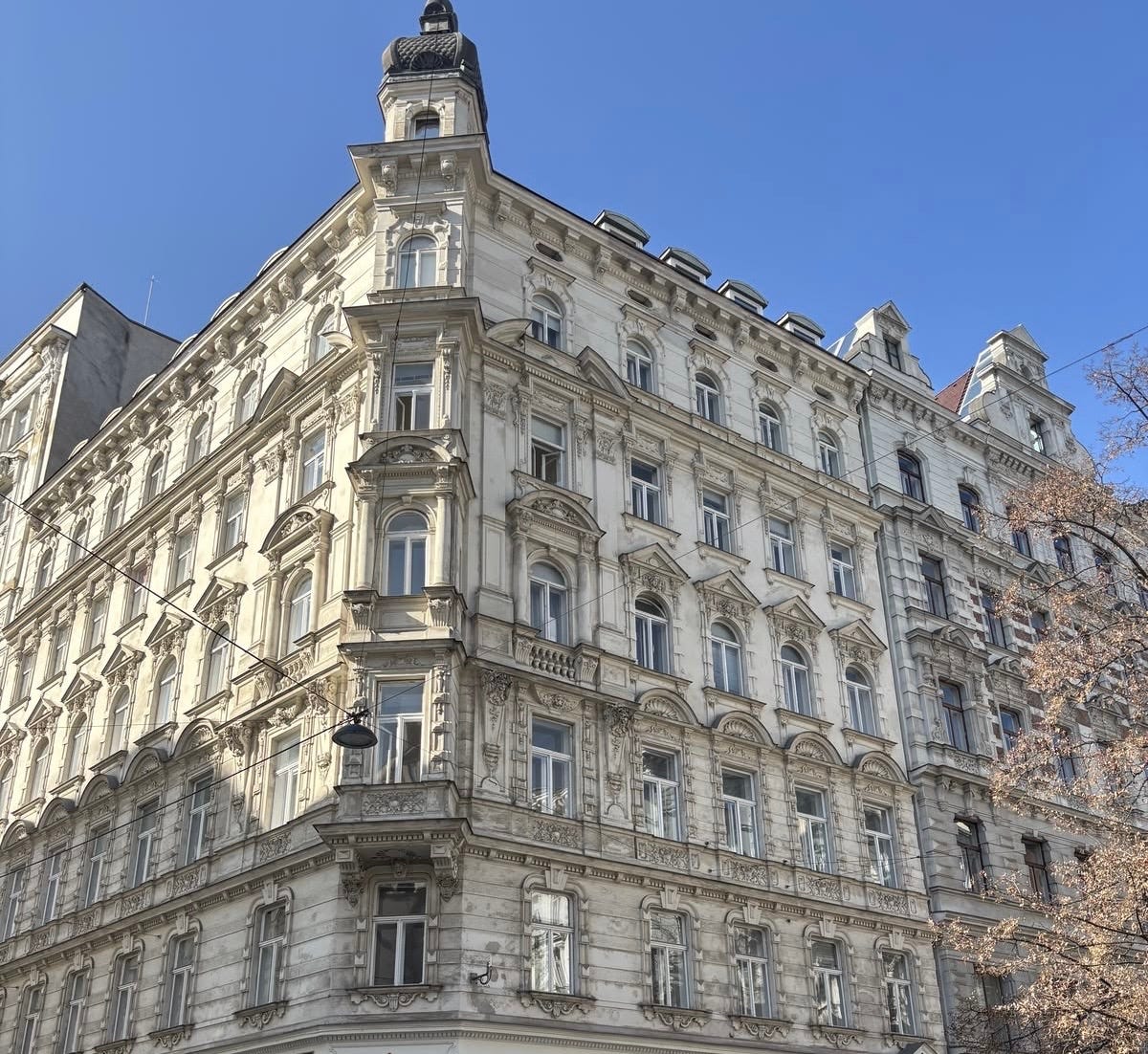
And then you remember that dozens of families lived here.
These buildings were not royal residences and most were never intended to become monuments; they were simply places where people rented apartments in rapidly growing European cities.
So why did they look like this?
The answer begins with one of the greatest changes in European urban history: during the nineteenth century millions of people moved into cities and an entirely new kind of urban housing had to be built for them.
Europe Needed Apartments
Although apartment living existed long before the nineteenth century the Industrial Revolution changed its scale dramatically; cities grew as people arrived looking for work while expanding middle classes wanted homes close to the commercial centers where they worked.
Paris provides perhaps the most famous example.
When Napoleon III appointed Georges-Eugène Haussmann to transform Paris in 1853 the city still contained large areas of narrow medieval streets; over the following decades enormous boulevards were cut through the capital while thousands of new buildings rose along them.
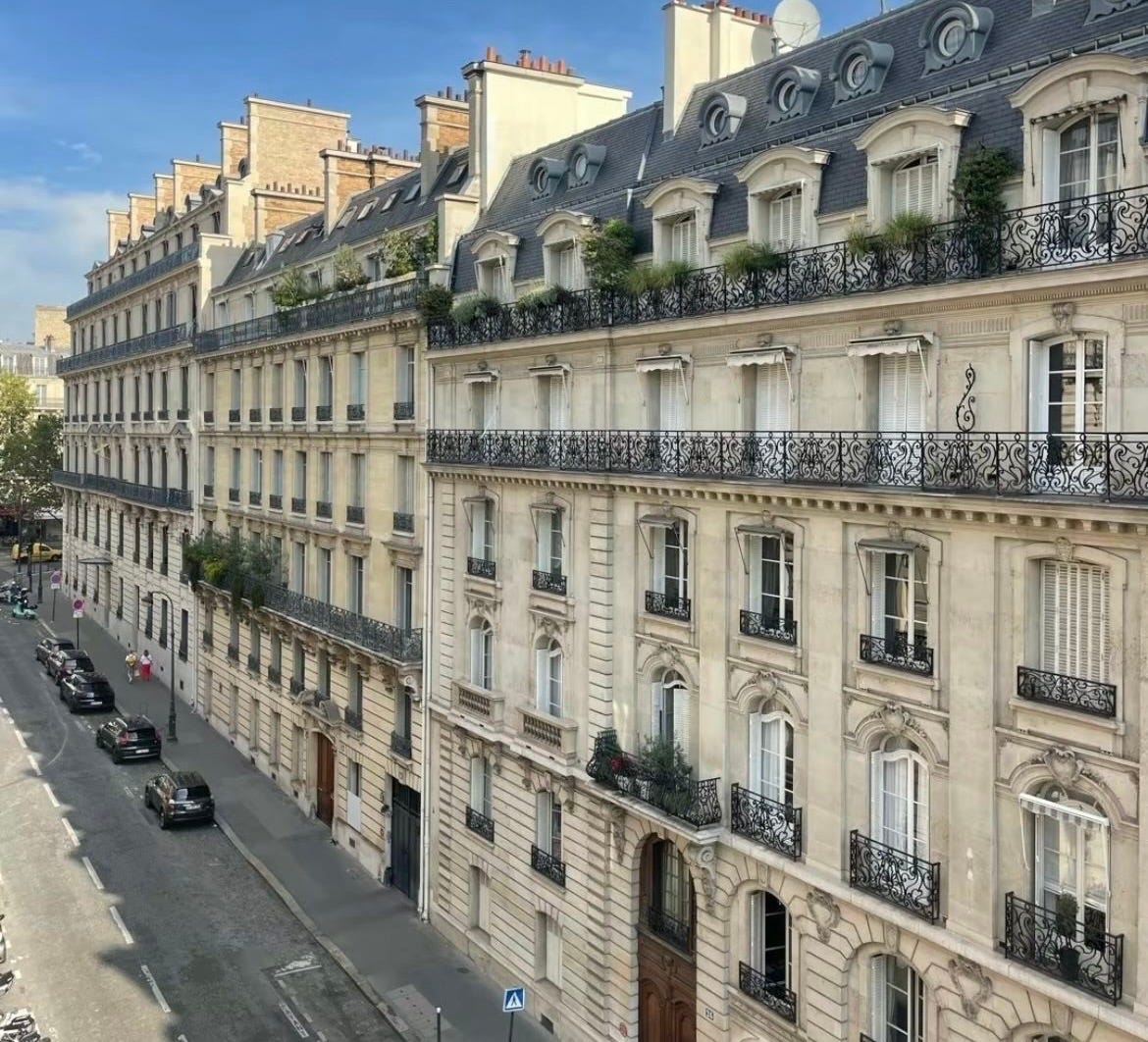
The result was the Paris we recognize today.
Those long streets lined with cream-colored buildings were not produced by constructing one enormous palace after another; they were created largely through private apartment houses built according to regulations that controlled matters such as height and alignment.
Yet nobody seems to have concluded that apartment housing therefore needed to look cheap.
Quite the opposite.
The Façade Belonged to the Street
This is probably the most important thing to understand about old apartment buildings: architects were designing an individual property while also designing part of a street.
A building therefore had responsibilities beyond the rooms inside it.
Its windows had to relate to the windows next door and its cornice contributed to the skyline of the entire block; when dozens of buildings followed similar principles the result was a street that felt coherent even though different owners constructed its individual parts.
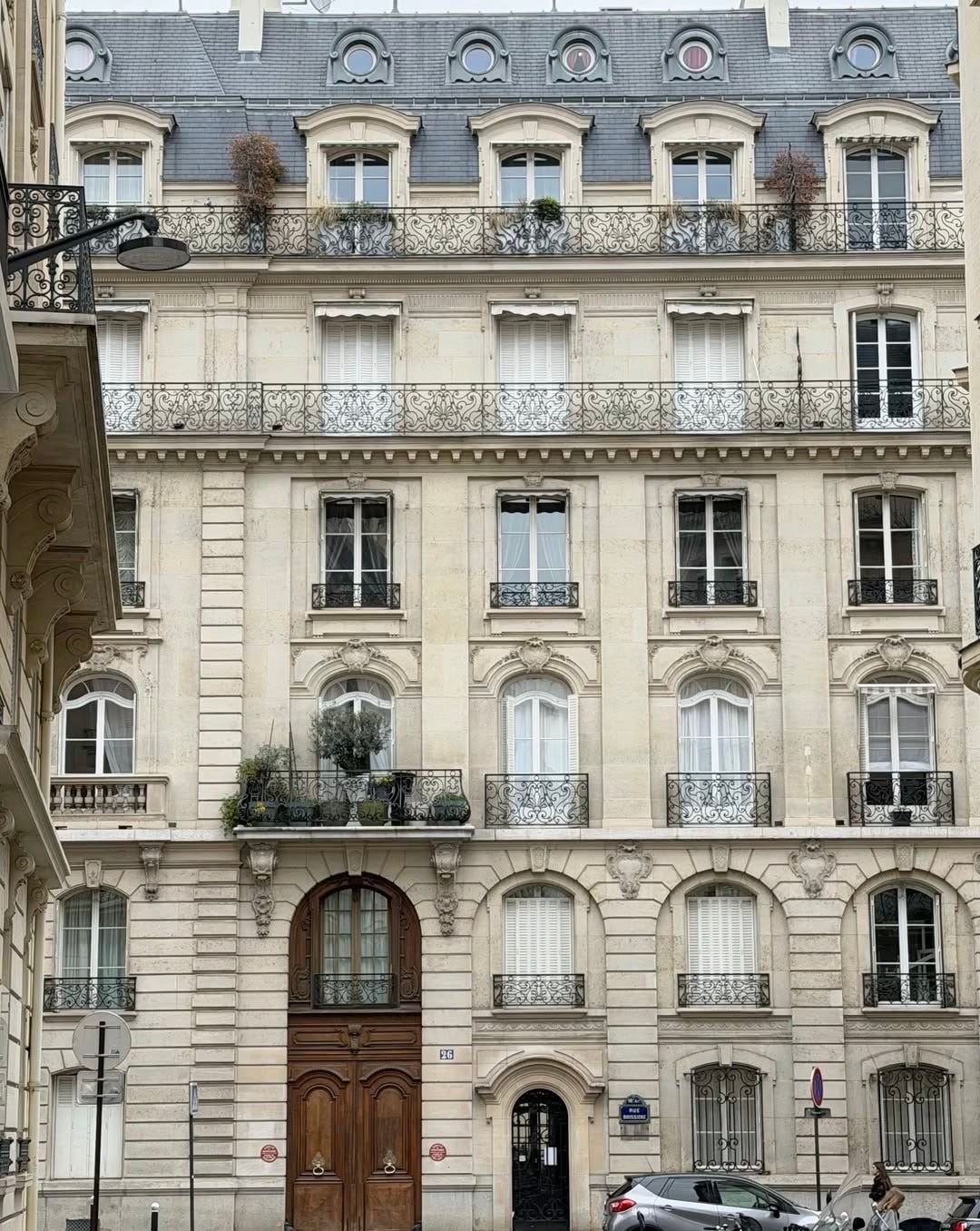
Paris became particularly good at this.
Haussmann-era regulations encouraged consistent building heights and continuous façades along the new boulevards; architects still had considerable freedom to vary entrances and ornament within that larger order.
The building could have its own personality without destroying the street around it.
That simple idea explains a great deal about why these neighborhoods remain so attractive today. The Luxembourg architect and urbanist Léon Krier later put the same civic logic with unusual bluntness:
All buildings, large or small, public or private, have a public face, a facade; they therefore, without exception, have a positive or negative effect on the quality of the public realm, enriching or impoverishing it in a lasting and radical manner. The architecture of the city and public space is a matter of common concern to the same degree as laws and language—they are the foundation of civility and civilisation.
Nineteenth-century apartment houses were private investments. Their faces, however, were public property in everything but legal title.
Then There Was the Entrance
If you want to understand the difference between old and new apartment buildings it is worth looking at the front door.
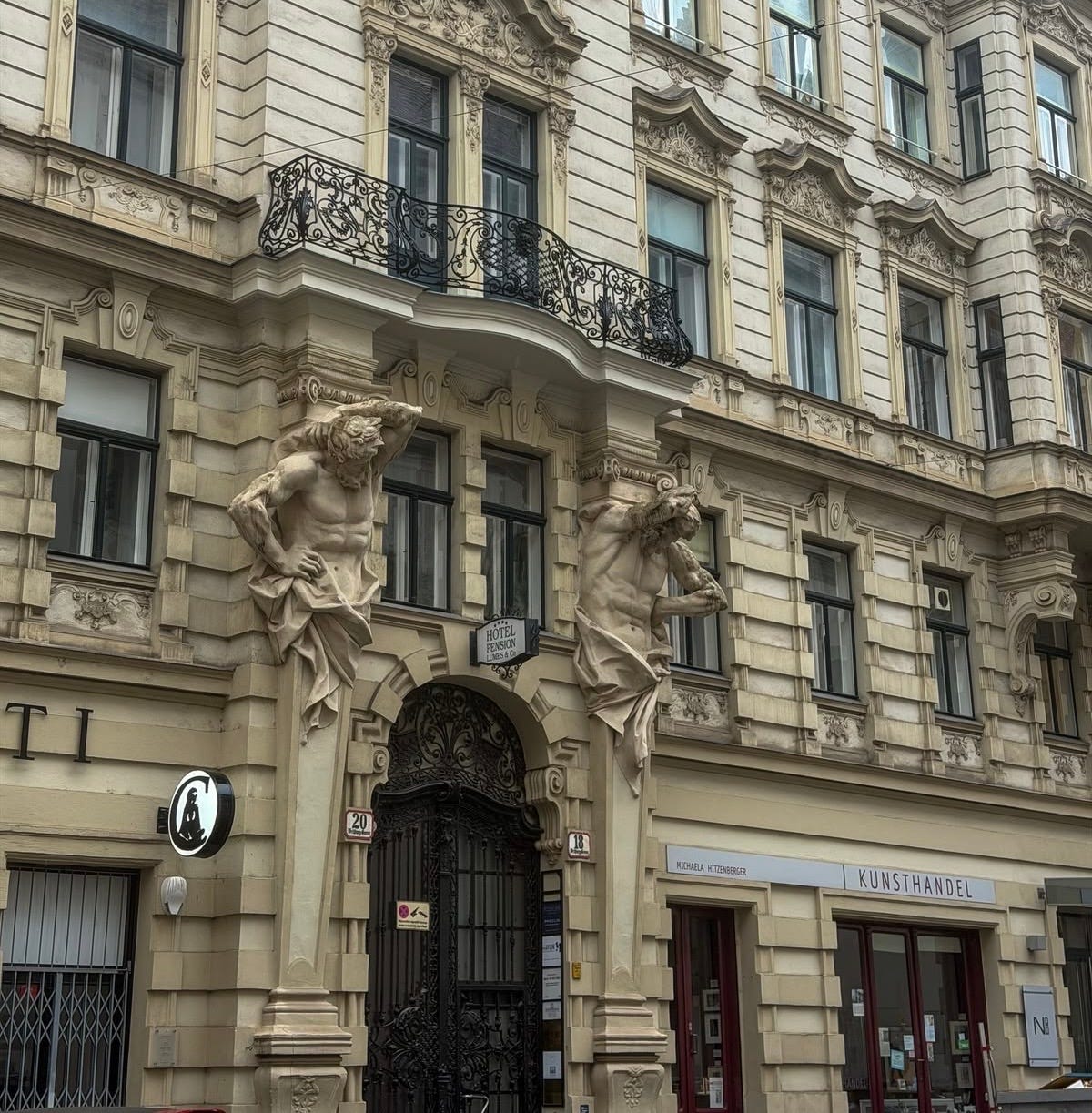
Older architects frequently treated the entrance as one of the most important parts of the façade because it marked the transition from the public street into the private world of the building; this encouraged the use of carved surrounds and substantial wooden doors that made the threshold unmistakable.
Once inside you might pass through a decorated vestibule before reaching a courtyard or staircase.
None of this required the building to be a palace.
It simply meant that arriving somewhere was considered an architectural event.
The doorway told you where to enter and the staircase made moving between floors pleasant; architecture gave ordinary actions a sense of ceremony without preventing the building from doing its practical job.
The Roman architect Vitruvius, whose Ten Books on Architecture remained a European textbook for centuries, had already insisted that usefulness was never enough by itself. In Sir Henry Wotton’s famous seventeenth-century rendering:
The end is to build well. Well building hath three conditions: firmness, commodity, and delight.
A stair that only got you upstairs satisfied commodity. A stair that also made the climb feel like an arrival satisfied delight. The old apartment house tried, often quite cheaply, to do both.
The Staircase Was Meant to Be Seen
Before elevators became common the staircase mattered even more because almost everyone entering an apartment building had to use it.
So architects paid attention to it.
A good staircase could receive an elegant balustrade and carefully proportioned steps; natural light might enter from tall windows or a glazed roof above.
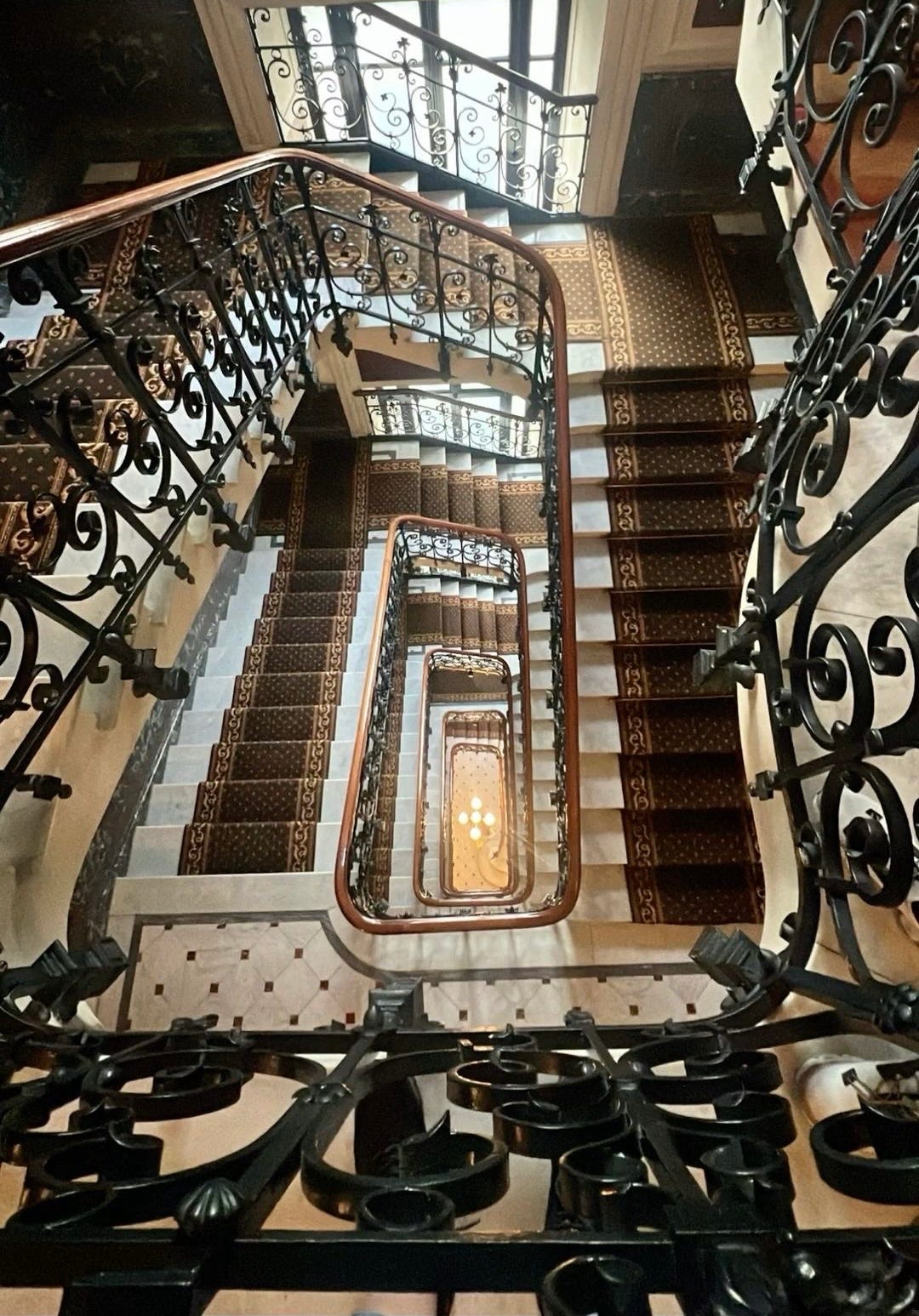
In wealthier buildings the principal staircase could become particularly elaborate because it formed part of the experience offered to desirable tenants. Someone considering an expensive apartment did not first encounter the drawing room; he encountered the entrance and staircase.
Developers understood this.
Spend money on the spaces everyone sees and the whole building feels more prestigious.
Which brings us to an important point: these buildings were beautiful for economic reasons too.
Beauty Helped Sell Apartments
It is easy to imagine that nineteenth-century builders simply cared more about beauty than developers do today; the reality is more interesting because many of these buildings were commercial investments constructed to generate rental income.
Owners wanted tenants.
A handsome façade made the property more desirable while an impressive entrance could signal that respectable people lived inside; architecture therefore became part of the building’s value.
The same principle operated inside individual apartments.
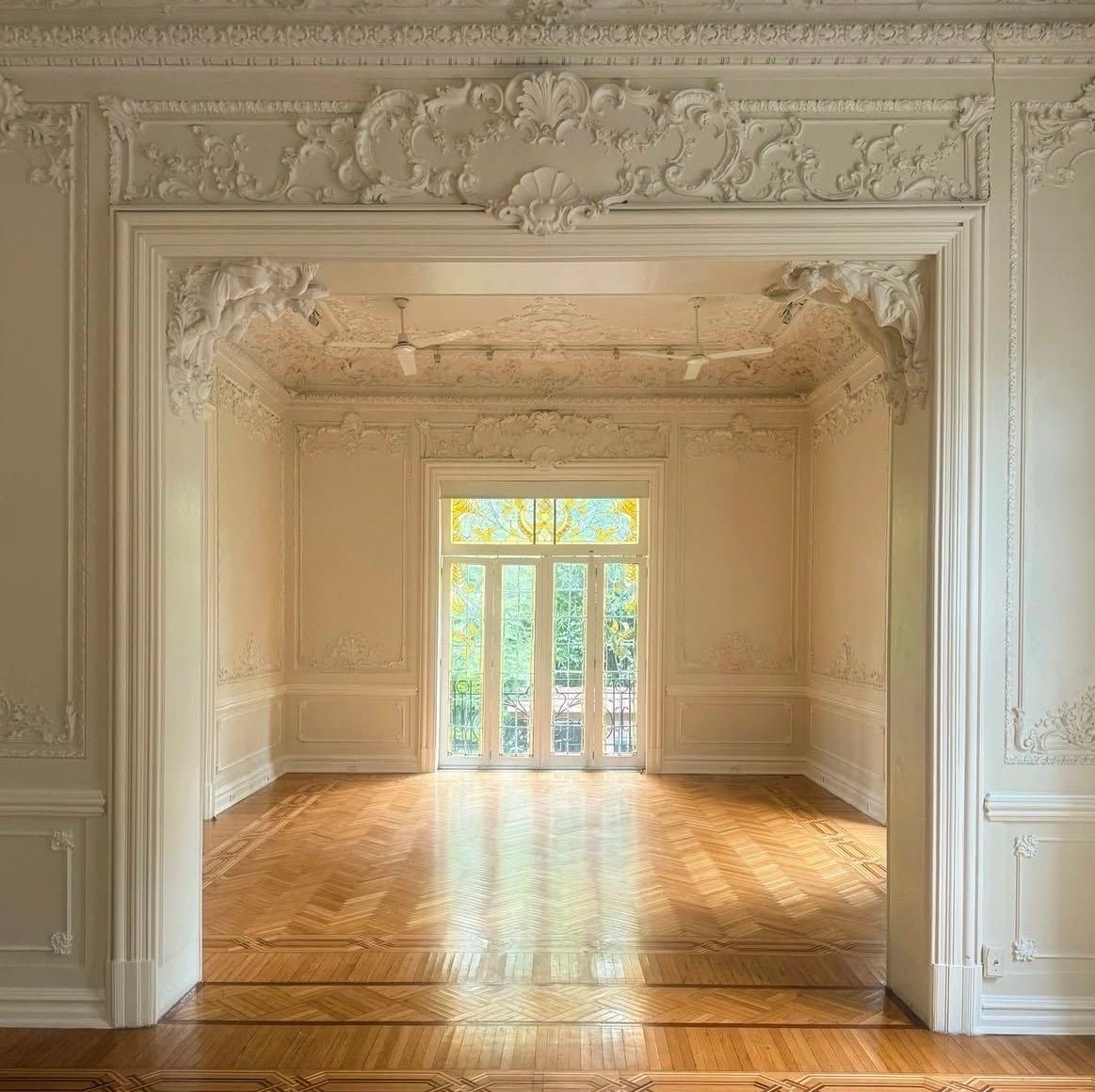
High ceilings made rooms feel generous and large windows brought in light; decorative plasterwork could give even a relatively standardized room a sense of dignity.
Much of this ornament was also cheaper than we might assume.
By the nineteenth century decorative elements could increasingly be produced through molds and repeated across a building; industrial manufacturing therefore helped make ornament available on a scale that earlier generations could scarcely have managed.
Industrialization did not initially kill architectural decoration.
In many cases it helped spread it.
Louis Sullivan, writing in 1892, understood both the temptation to strip a building bare and the cost of doing so after the fact:
I take it as self-evident that a building, quite devoid of ornament, may convey a noble and dignified sentiment by virtue of mass and proportion. It is not evident to me that ornament can intrinsically heighten these elemental qualities. Why, then, should we use ornament? Is not a noble and simple dignity sufficient? Why should we ask more? If I answer the question in entire candor, I should say that it would be greatly for our aesthetic good if we should refrain entirely from the use of ornament for a period of years, in order that our thought might concentrate acutely upon the production of buildings well formed and comely in the nude. … I believe, as I have said, that an excellent and beautiful building may be designed that shall bear no ornament whatever; but I believe just as firmly that a decorated structure, harmoniously conceived, well considered, cannot be stripped of its system of ornament without destroying its individuality. It has been hitherto somewhat the fashion to speak of ornament, without perhaps too much levity of thought, as a thing to be put on or omitted, as the case might be. I hold to the contrary — that the presence or absence of ornament should, certainly in serious work, be determined at the very beginnings of the design.
The old apartment façade was not decoration glued on at the end. Its rustication, window surrounds, and cornice were part of how the building explained itself to the street.
Vienna Built an Entire City This Way
Paris was hardly alone.
When Vienna demolished much of its old fortifications during the nineteenth century the famous Ringstrasse emerged around the historic center; monumental institutions rose along the new boulevard while enormous numbers of apartment buildings filled the expanding districts beyond it.
Vienna’s Gründerzeit apartment houses could be remarkably elaborate.
Their façades borrowed freely from Renaissance and Baroque architecture while interiors developed around courtyards; wealthy tenants might occupy impressive apartments facing the street while less prestigious accommodation appeared elsewhere in the same building.
This is where the palace comparison becomes particularly useful because many apartment architects deliberately borrowed the architectural vocabulary of aristocratic residences.
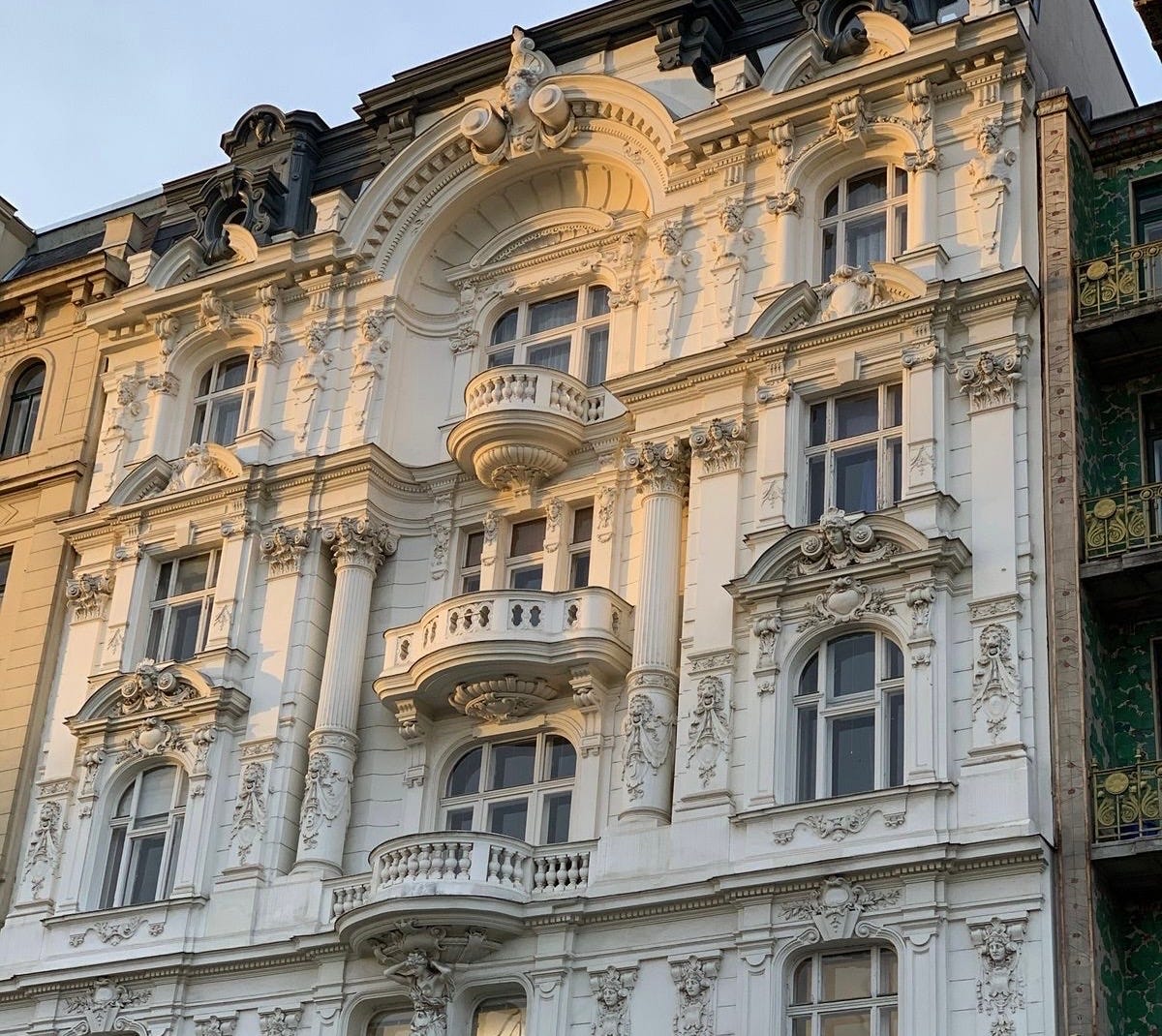
Rusticated ground floors gave buildings visual weight while upper stories received increasingly elaborate window surrounds; the façade could therefore look remarkably grand even though the building behind it was divided among many households.
Architecture once associated with princes was becoming part of middle-class urban life.
Vienna also produced one of the period’s most important critics of the new city. In City Planning According to Artistic Principles (1889), Camillo Sitte argued that not every street needed to be a monument — but the streets that did represent the city should not look like leftover space:
After all, the artist needs for his purpose only a few main streets and plazas; all the rest he is glad to turn over to traffic and to daily material needs. The broad mass of living quarters should be businesslike, and there the city may appear in its work-clothes. However, major plazas and thoroughfares should wear their “Sunday best” in order to be a pride and joy to the inhabitants, to awake civic spirit, and forever to nurture great and noble sentiment within our growing youth. This is exactly the way it is in the old towns. The overwhelming majority of their side streets are artistically unimportant. … Just a few thoroughfares and major plazas in the centers of towns stand up under critical appraisal — those upon which our forefathers lavished wisely, and with all means at their disposal, whatever they could muster of works of civic art.
The Gründerzeit apartment house sat between those two conditions. It housed ordinary life. It also dressed the street as if the street itself were a civic room.
If these essays have changed the way you see the world around you, the paid tier goes further.
You get longer, more researched pieces on the places that shaped Western civilization and the stories behind them. Deep dives into tradition, craftsmanship, and what the built world reveals about culture. Travel guides that teach you to actually read the places you visit.
This project is kept alive by people who care about old-world traditions. For a few dollars a month, you can be one of them.
The Palace Had Become an Apartment Block
Something extraordinary happened during the nineteenth century…