


If we’re being honest, Latin America isn’t exactly known for old-world elegance.
For stone streets, restrained facades, or centuries-old urban harmony.
Nope.
The region is synonymous with the tropics. Beaches, palm trees, crystal clear waters, and warm weather come to mind when thinking south of the border.
However…
There is one region in Latin America that doesn’t exactly fit the mold.
A region where tradition matters, old-world craftsmanship comes to life, and a walk through town can make you question what continent you’re on.
Today, I’m here to introduce…
The Southern Cone
Before we dig deeper, it’s worth getting to know where the Southern Cone actually is and what countries are included.
Simply put, it’s a region down at the southernmost point of South America. A region that has been shaped more by European immigrants than most folks probably realize. Millions of Spanish, Italian, German, Austrian, Swiss, and Portuguese settlers moved down here between the mid-1800s to the early-1900s.
These immigrants from Europe brought all sorts of ideas, traditions, and culture with them — including the craftsmanship of their homelands.
The Southern Cone consists of five countries:
🇦🇷 Argentina
🇨🇱 Chile
🇺🇾 Uruguay
🇵🇾 Paraguay
🇧🇷 Southern Brazil (Rio Grande do Sul, Santa Catarina, Paraná)
A shared European heritage is what ties these countries together — apart from the obvious geography — you can see it in all the plazas, the old cathedrals, the little alpine villages, the cobblestone streets, and the half-timbered houses.
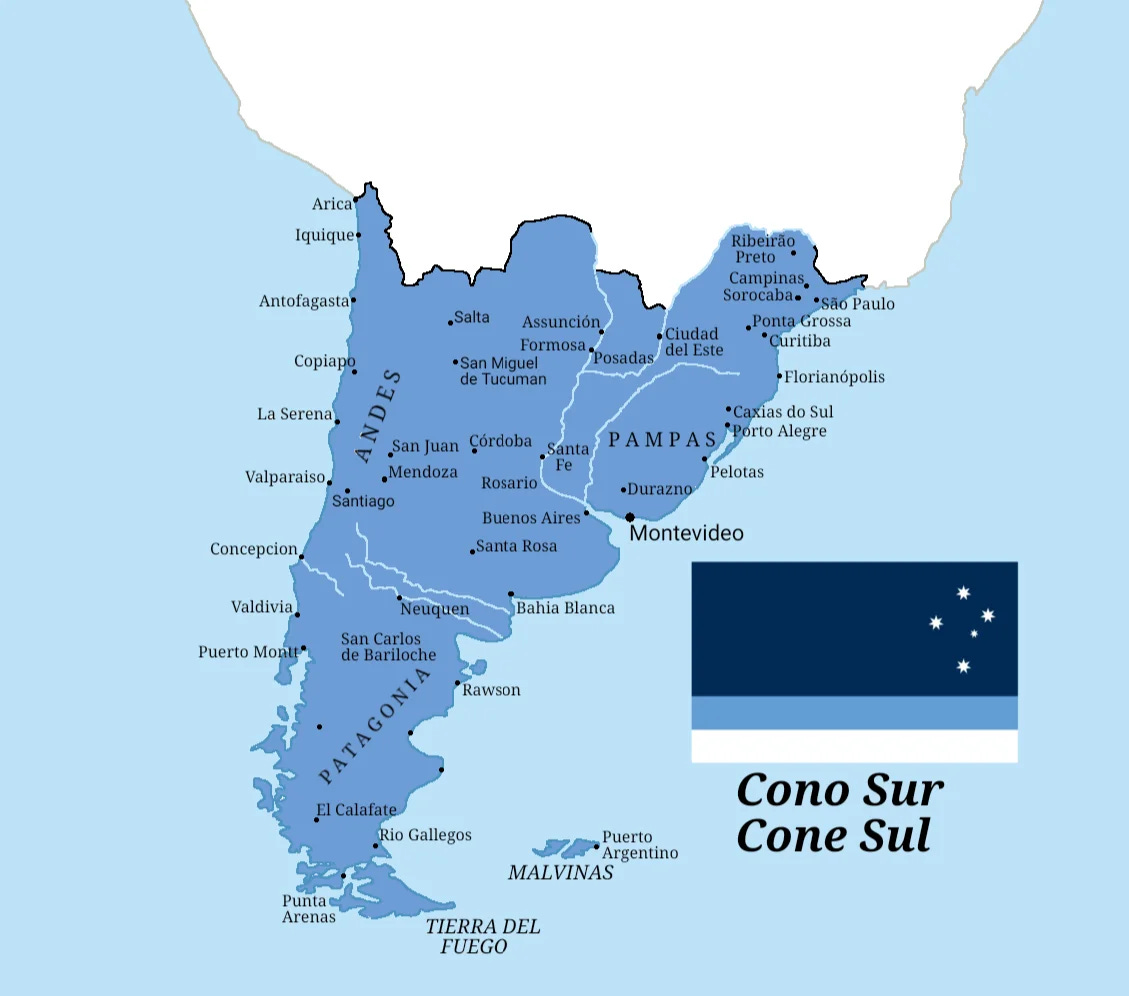
13 Cities and Towns in South America That Feel European
With that context, let’s explore these 13 cities and towns.
Places spread throughout the southernmost parts of South America that could have you questioning whether you’re in Europe or Latin America.
Organized country by country:
Argentina
1. Buenos Aires 🇦🇷


Population: 15.5 million
Founded: 1536
Climate: Humid subtropical = mild winters, warm summers
European influence: French, Italian, Spanish
Key architectural styles: Beaux-Arts, Art Nouveau, Art Deco, Neoclassical
Often referred to as the “Paris of South America” for good reason — Buenos Aires is often considered the most European city in Latin America.
During Argentina’s golden years, Italian and French architects flooded Buenos Aires with Beaux-Arts palaces, ornate Art Nouveau facades, and grand Haussmann-style boulevards.
Take a stroll through Recoleta, Congreso, or Avenida de Mayo and you could almost convince yourself that you’re not in South America any longer.
2. San Carlos de Bariloche 🇦🇷
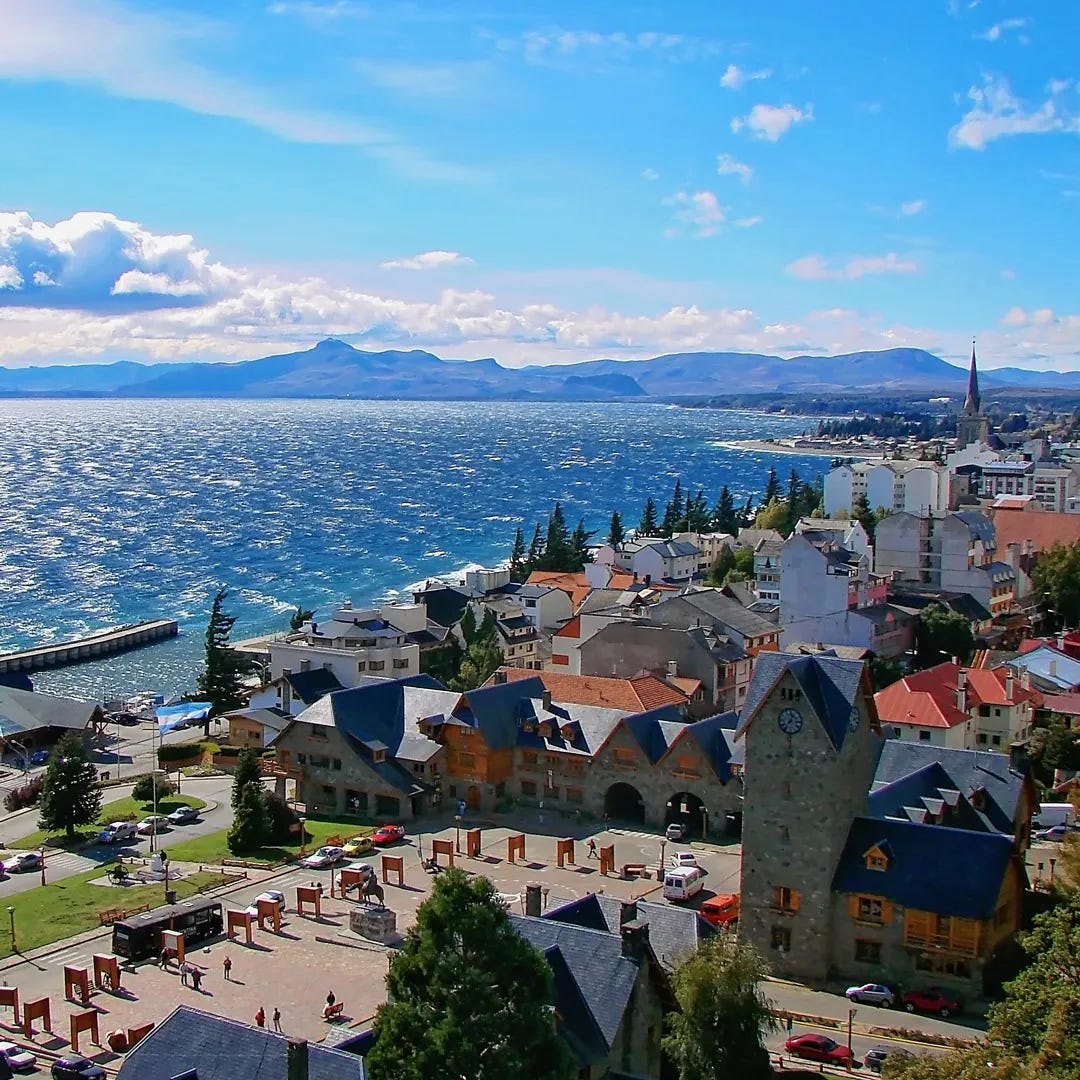
Population: 140,000
Founded: 1902
Climate: Cold oceanic = snowy winters, mild summers
European influence: Swiss, German, Austrian
Key architectural styles: Alpine stone-and-timber, Swiss chalet, Bustillo civic architecture
Known as the ski capital of South America, Bariloche sits on the shores of Lago Nahuel Huapi surrounded by Andean peaks. You’ll find fantastic hiking, beautiful mountains, and a lot of outdoors to explore.
Swiss and German settlers heavily shaped the architecture here. One prime example? The stone-and-timber Centro Cívico, designed by architect Alejandro Bustillo, which looks like it belongs in the Alps.
3. Villa La Angostura 🇦🇷


Population: 12,000
Founded: 1932
Climate: Cold oceanic = heavy snowfall, cool summers
European influence: Swiss, German
Key architectural styles: Alpine chalet, stone-and-timber lodge
Tucked away between lakes and ancient forests, you’ll find Villa La Angostura — one of Patagonia’s best alpine villages.
Timber lodges and stone chalets line the tiny town center, which makes it really feel like a Swiss mountain village.
It’s a lot quieter and more put together than Bariloche next door.
4. San Martín de los Andes 🇦🇷
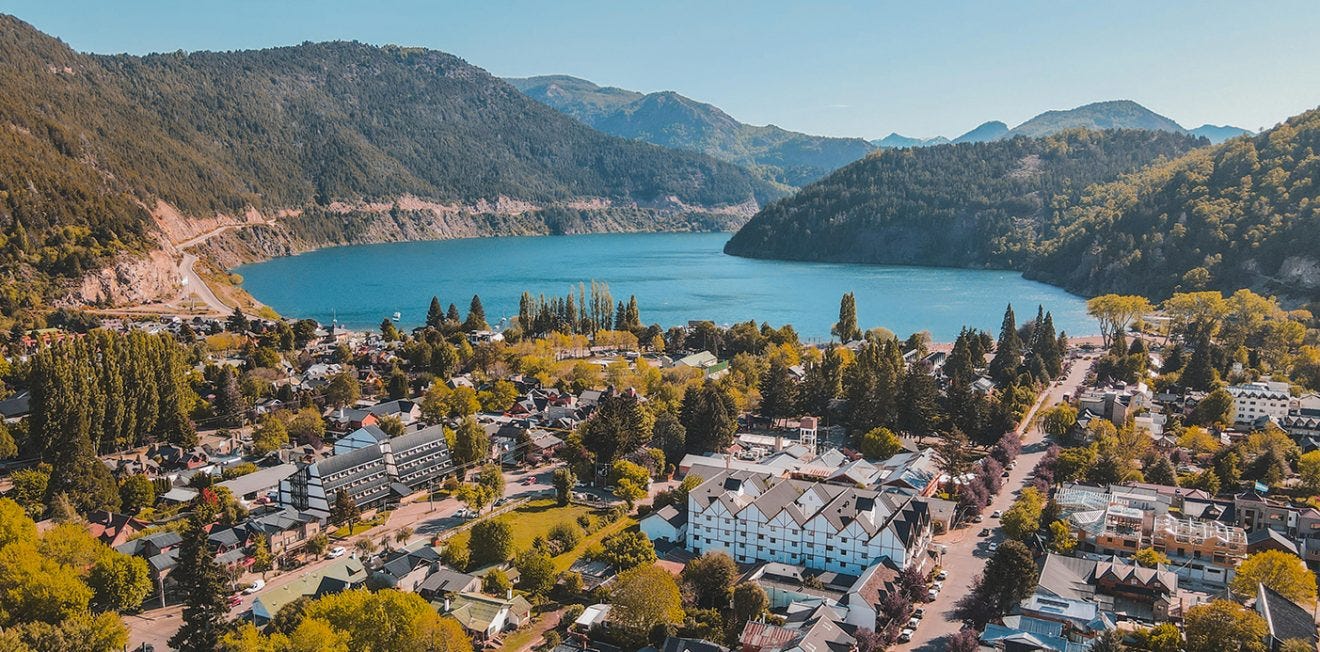
Population: 35,000
Founded: 1898
Climate: Cold oceanic = snowy winters, mild summers
European influence: German, Swiss, Austrian
Key architectural styles: Alpine timber-and-stone, mountain lodge, chalet
Perched on the edge of Lago Lácar with Volcan Lanin towering in the background, San Martín de los Andes is arguably the most charming of all Patagonia’s mountain towns.
There’s an overall alpine look to the whole town center. You’ve got low rise timber buildings with steeply pitched roofs and a scale that feels more Austrian than Argentine.
5. Villa General Belgrano 🇦🇷


Population: 12,000
Founded: 1930
Climate: Temperate = warm summers, mild winters
European influence: German, Austrian, Swiss
Key architectural styles: Bavarian half-timber, Tyrolean alpine
It’s a bit like stumbling upon a Bavarian village, plonked right in the heart of the Argentine sierras.
The main street’s lined with buildings that have the classic half-timber look, flower boxes spilling out, and quaint beer halls that could give some German towns a run for their money.
And to top it all off, Villa General Belgrano hosts the largest Oktoberfest in the world outside of Germany and Brazil.
6. La Cumbrecita 🇦🇷


Population: 1,000
Founded: 1934
Climate: Temperate = cool summers, mild winters
European influence: German, Swiss
Key architectural styles: Black Forest alpine, stone-and-timber cottages
La Cumbrecita is a little German alpine village tucked away in the Sierras de Córdoba. It’s the kind of place that makes you feel like you’ve stumbled into a corner of the Black Forest — but in South America.
There are no cars, no flashing neon signs, and it’s shocking how peaceful and quiet it is here.
Brazil
7. Gramado 🇧🇷
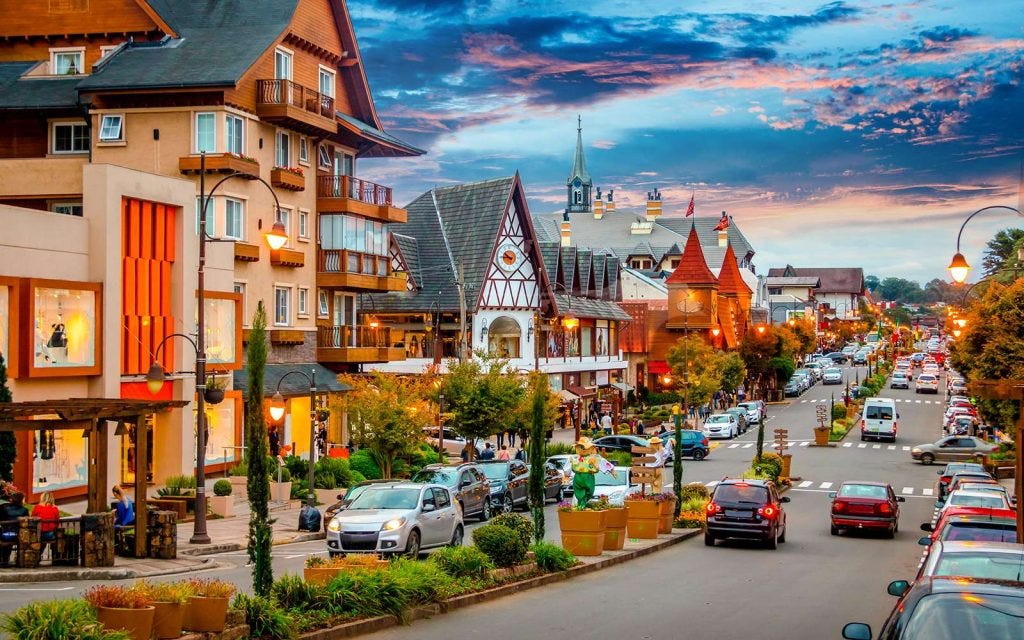
Population: 36,000
Founded: 1913
Climate: Humid subtropical = cool winters, warm summers
European influence: German, Italian, Swiss
Key architectural styles: Bavarian half-timber, European alpine, chalet
Gramado might be Brazil’s most European-feeling town. If we’re being honest, it’s not even close.
You’ve got Bavarian style architecture, neatly manicured gardens, fondue places and an annual Christmas festival that draws in millions.
Sitting in the misty hills of the Serra Gaúcha, Gramado has this weirdly familiar feel to it. Almost like a German countryside village has been reassembled and dropped in southern Brazil.
8. Blumenau 🇧🇷


Population: 365,000
Founded: 1850
Climate: Humid subtropical = warm year-round, heavy rainfall
European influence: German
Key architectural styles: Half-timbered Franconian, Germanic colonial
Blumenau was founded by German pharmacist Hermann Blumenau and that influence still shows over 150+ years later.
You can stroll through the old town center and see half-timbered old buildings, catch a whiff of German conversation, and even experience Brazil’s Oktoberfest — the 2nd largest in the world.
Strip away the palm trees and you’d swear you were in Franconia. Also unique — Blumenau is actually a decent sized city, not just a town. The historic center feels very German, but the rest feels Brazilian.
Chile
9. Puerto Varas 🇨🇱


Population: 45,000
Founded: 1853
Climate: Temperate oceanic = rainy, cool year-round
European influence: German
Key architectural styles: German colonial, timber-and-shingle houses, neo-Gothic
Puerto Varas sits comfortably on the shores of Lago Llanquihue. Volcán Osorno towers above it.
German colonists who arrived in the 1850s gave the town its unique feel. The Iglesia del Sagrado Corazón (a church that they modelled after a Black Forest church) is right at the heart of it all.
10. Frutillar 🇨🇱


Population: 20,000
Founded: 1856
Climate: Temperate oceanic = cool, rainy
European influence: German
Key architectural styles: German colonial timber houses, shingle-clad cottages
Frutillar feels a world away from the bustle of nearby Puerto Varas. It’s like stumbling into a frozen-in-time German lakeside village.
The gardens are immaculately neat, the timber houses have those great steep rooflines, and then there’s the Teatro del Lago — a gem that puts on some fantastic classical music right on the water’s edge.
Uruguay
11. Colonia del Sacramento 🇺🇾
Population: 30,000
Founded: 1680
Climate: Humid subtropical = mild winters, warm summers
European influence: Portuguese, Spanish
Key architectural styles: Portuguese colonial, Spanish colonial, post-colonial
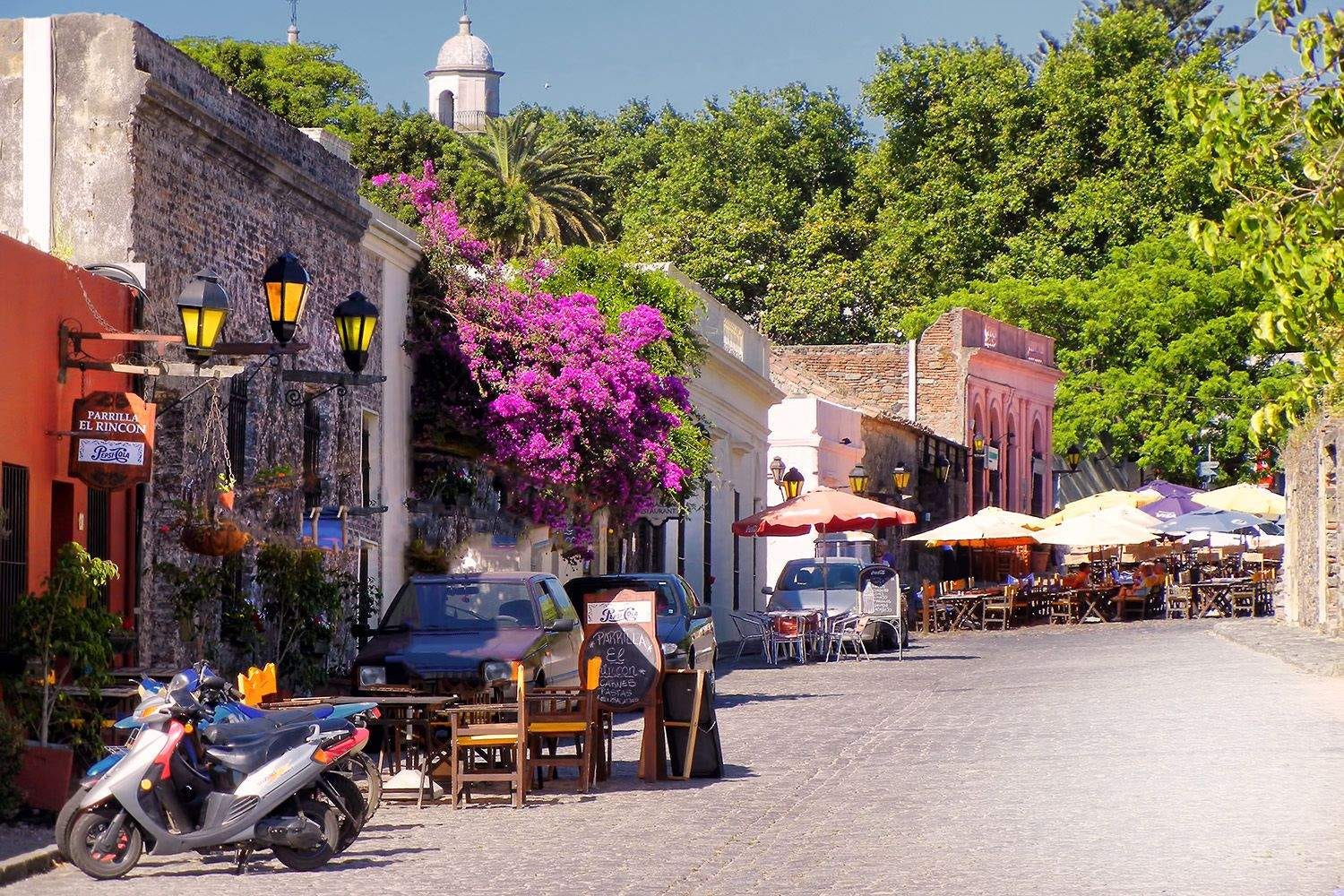
Founded by the Portuguese way back in 1680, Colonia del Sacramento is actually the oldest town in Uruguay. It’s also one of the most photogenic colonial towns in all of South America.
The cobblestone streets, the crumbling stone walls, the old 19th-century lighthouse, and the pastel-colored ruins all overgrown with bougainvillea — all just a 1 hour ferry ride away from Buenos Aires.
12. Montevideo 🇺🇾
Population: 1.8 million
Founded: 1724
Climate: Humid subtropical = mild winters, warm summers
European influence: Spanish, Italian, French
Key architectural styles: Neoclassical, Art Deco, Beaux-Arts, Art Nouveau
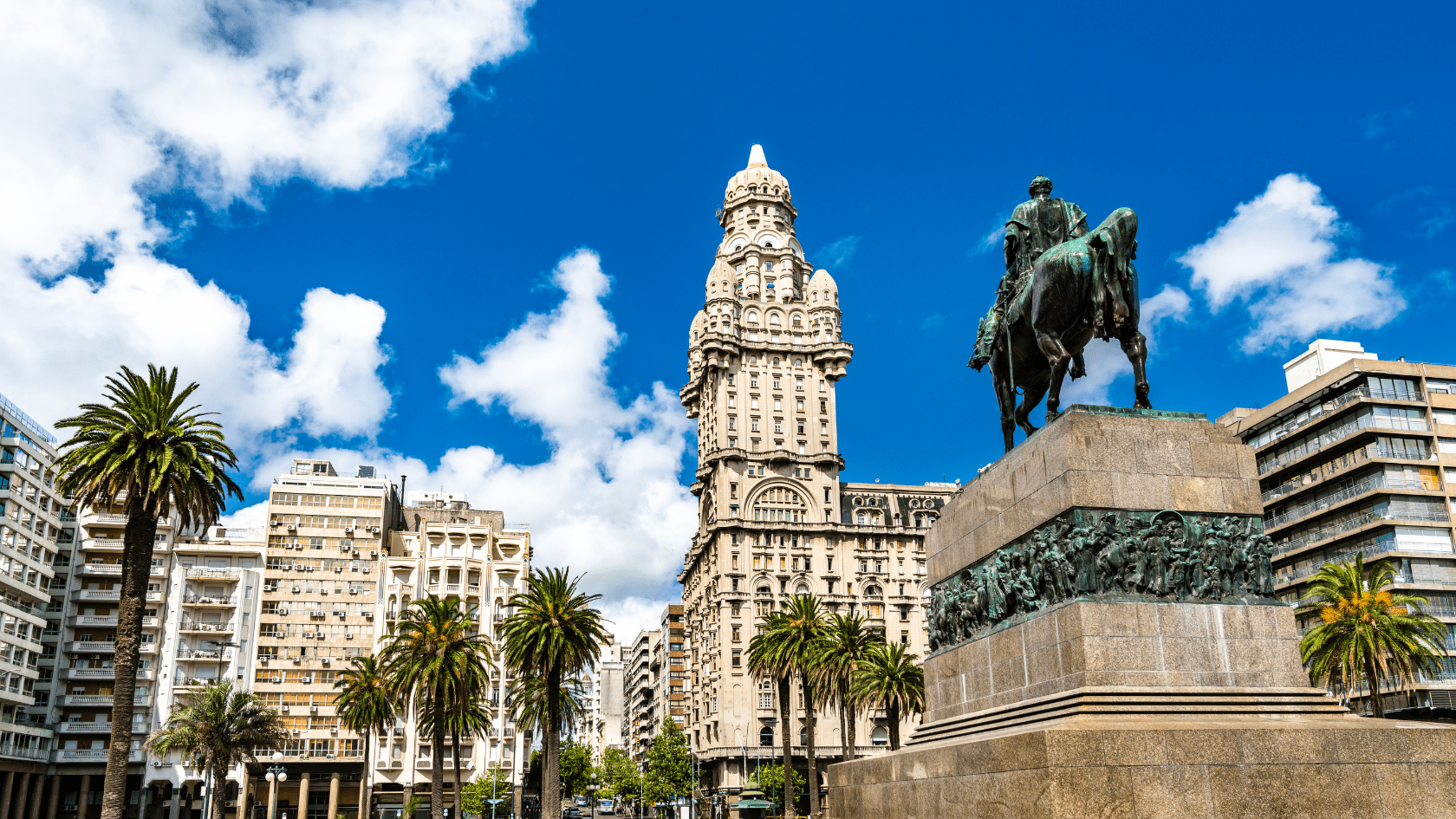
The old town of Montevideo — Ciudad Vieja — is block after block of faded European grandeur. Here you’ll find buildings with neoclassical fronts, wrought iron work that’s been shipped in from France, Portuguese tiles, and all sorts of Italianate detailing.
The Palacio Salvo, which was designed by the same bloke who did the Palacio Barolo in Buenos Aires, is a real skyline stunner that just seems to have sat there looking shapely since it opened in 1928.
It’s got that “Havana meets Lisbon” sort of vibe going on, but without the tourist crowds to spoil the view
13. Punta del Este 🇺🇾


Population: 175,000 (swells to 500,000+ in summer)
Founded: 1907
Climate: Humid subtropical = warm summers, mild winters
European influence: Spanish, Italian, French
Key architectural styles: Mediterranean resort, sculptural modernist
Not colonial, but architecturally unique and European influences everywhere you turn. Casapueblo — Carlos Páez Vilaró’s sculptural masterpiece — looks like it was airlifted from Santorini.
Nearby, Francisco Piria’s medieval-style castle overlooks the coast of Piriápolis like something from the Loire Valley. And L’Auberge, a boutique hotel built in the forest in Punta del Este, channels French countryside elegance.
P.S: Punta del Este is also one of the best places to raise a family in South America.
Where Europe Meets South America...
The Southern Cone is one of the most overlooked regions in the world for lovers of traditional architecture.
From the Beaux-Arts boulevards of Buenos Aires to the half-timbered villages of southern Brazil, from the German lake towns of Chile to the Portuguese cobblestones of Colonia del Sacramento, European heritage is everywhere. It defines the streets, the materials, and the way these places feel.
The Southern Cone is where European immigration left its deepest mark in Latin America. You still see it in the architecture, in the traditions, and in daily life.
I'm currently in the Região Serrana of Rio de Janeiro, so yeah ... this article feels remarkably familiar.
It is worth to say that European-inspired architectural patterns and urban designs are incredibly diverse and extend well beyond the southern part of the continent, reaching into Central America as well.
A very insightful read !
Very cool and informative.