

Walk through the center of almost any old European or American city and sooner or later you will find a building that looks unusually important.
It may have enormous stone columns around the entrance, carved figures above the windows, bronze doors heavy enough to survive a siege, and a banking hall inside covered in marble, mosaics, decorative plasterwork, and polished wood. From the street, you might easily mistake it for a courthouse, parliament building, museum, or palace.
Then you notice the name carved across the façade.
It was a bank.
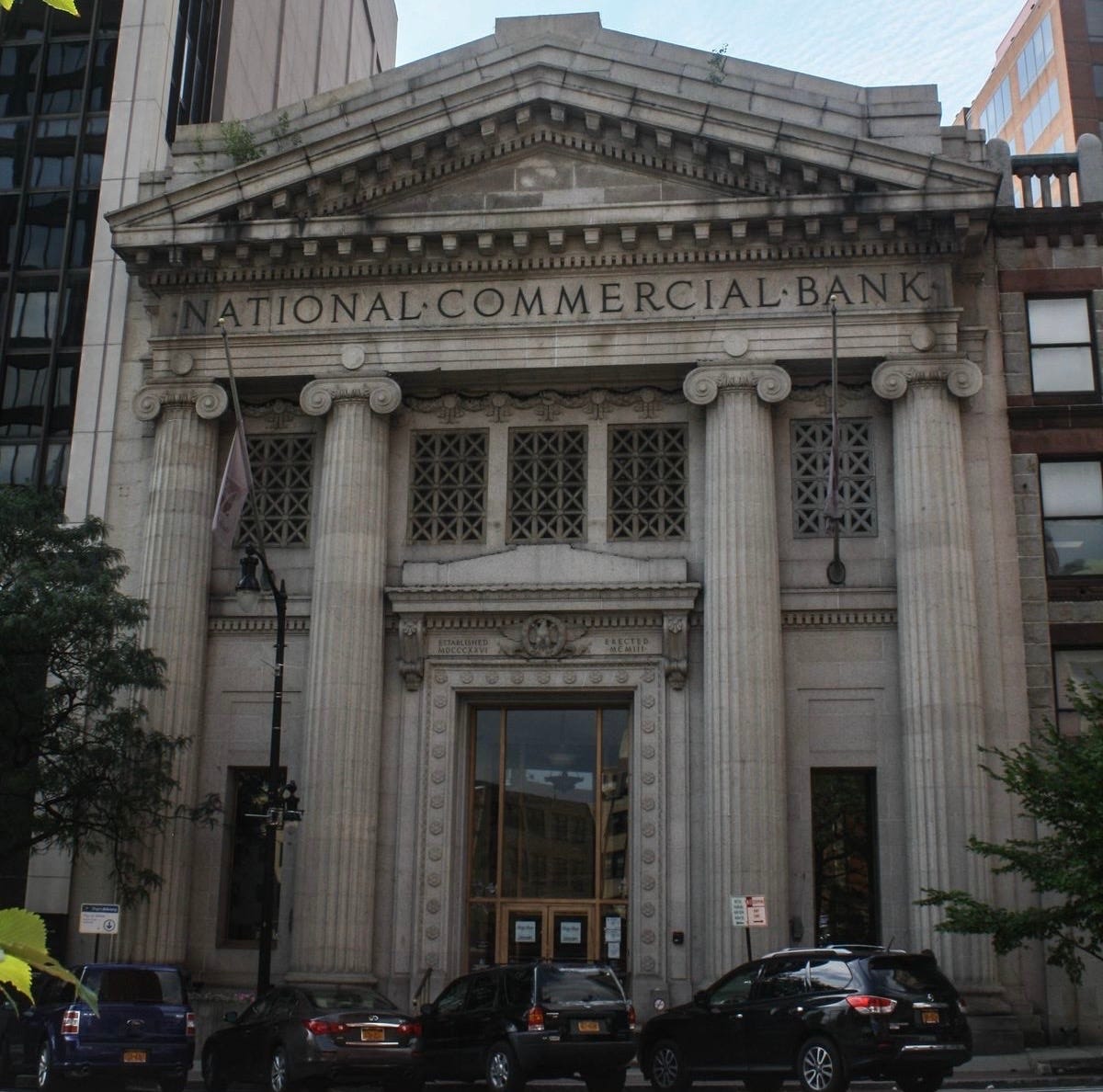
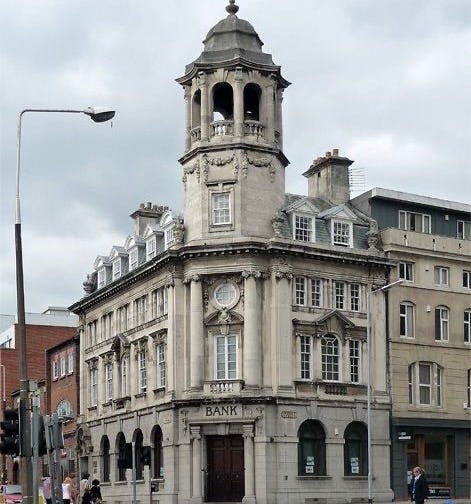
This is one of those things that becomes difficult to ignore once you start noticing it. Banks used to be among the grandest commercial buildings in a city, and some of the greatest architects of the nineteenth and early twentieth centuries designed them with an almost absurd degree of care. Even relatively ordinary provincial banks could have beautiful stone façades, arched windows, carved entrances, decorative clocks, and interiors that made depositing your wages feel like entering a civic institution.
Compare that with the average bank today.
Perhaps it occupies the ground floor of an office block. There is a glass door, a glowing logo, a few machines, some desks, white ceiling panels, and laminated signs explaining how you can download the app.
So what happened?
Why did people once build banks like temples, and why did we stop?
Your Bank Needed You to Trust It
The first thing to understand is that an old bank building had another job besides holding money.
It had to convince you that your money was safe.
This mattered enormously during the nineteenth century, when modern banking expanded alongside industrialization, international trade, railways, growing cities, and an increasingly wealthy middle class. Banks collected deposits, issued credit, financed businesses, moved money across countries, and became deeply involved in the economic life of towns and cities.
Yet banking ultimately depended upon something remarkably fragile.
Trust.
If you handed a bank your savings, you needed to believe the institution would still be there tomorrow. If enough customers stopped believing that and demanded their money simultaneously, the result could be a bank run.
Architecture became one way of answering that anxiety.
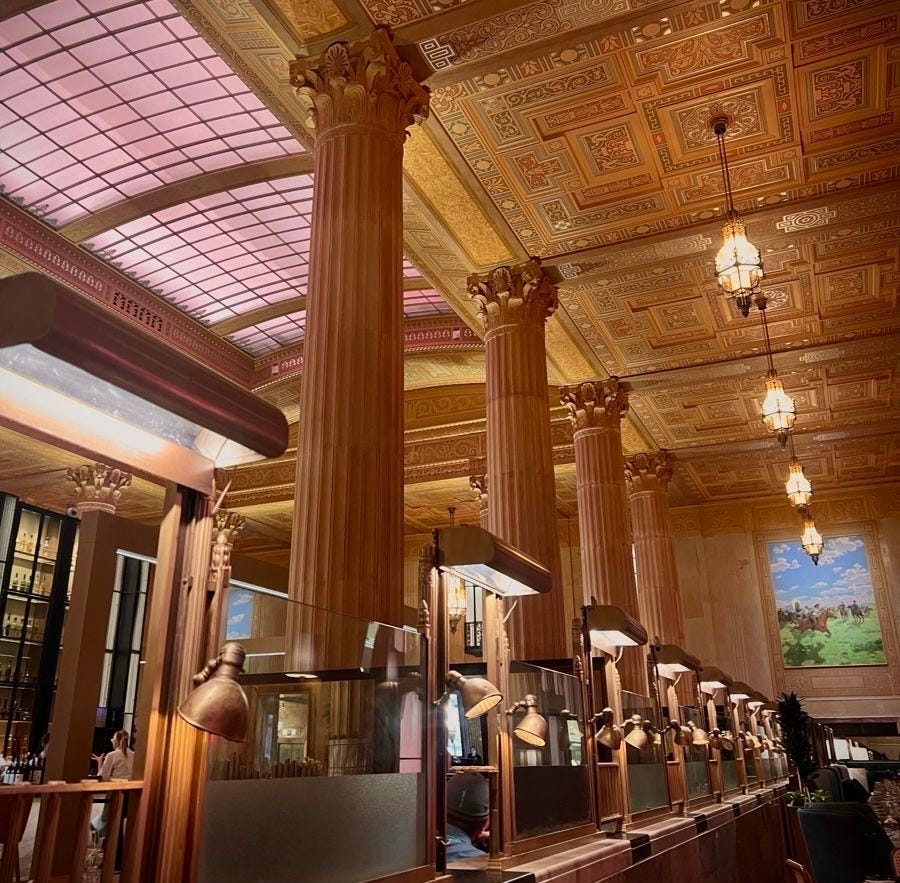
A bank could not simply tell you it was permanent. It could look permanent.
So banks built in stone.
They raised enormous columns. They placed heavy doors at their entrances. They gave their buildings thick walls, monumental staircases, symmetrical façades, and windows arranged with almost mathematical order. The message was obvious before you even stepped through the door.
This institution is serious.
It is stable.
It will still be here in fifty years.
The critic Anthony Paletta later described how little of that architecture was strictly necessary to the work of moving money, and how much of it was meant to settle the nerves:
For all the caprices of architects, common sense tends to prevail when it comes to the design of buildings that have a specific task to carry out. The retailer will balk at a building where he can’t easily display his wares; the cinema operator at a building without a marquee. Exceptions always happen but many buildings have specific things to do which means that their look will incline towards whatever arrangement makes that easiest. There’s another kind of building whose form is familiar but whose appearance has—when you actually think about it—fairly little to do with its function. A bank is one of these.
As architectural historian Daniel Abramson notes, the word “bank” derives from the Italian term for a merchant’s counter. “Thus from its very beginnings the idea of a bank connotes a physical thing or space across which human exchange takes place,” he writes. “Across the space of the banco, in its literal and later architectural forms, client and bank assay each other’s character and the authenticity of the coin and paper that passes between them.”
The fundamental fulcrum remains an interaction with a banker across a desk or a counter. (There were once days when your doubloons might all have been literally in the basement, thus encouraging fortress-like elements, but that age is long gone.) The central aim of bank design has thus been impressionistic from the start: to inspire trust in the client. For most of banking’s history, this was not especially easy. The point of multiple fairy tales is do not give your coins to a stranger in exchange for magic beans or a piece of paper. Bank architecture sought to overcome this hesitation. Critic Brendan Gill described this pursuit as “cunning stagecraft,” writing: “whether a given bank was sound or unsound, it took care to put up what was literally a good front—a façade that, whatever happened to life behind it, proclaimed an impregnable fiscal integrity.”
And because architects already possessed a language associated with permanence, authority, and public importance, they borrowed it.
They looked to Greece and Rome.
Why So Many Banks Look Like Temples
This is why the classical bank became such a familiar sight.
Greek and Roman architecture carried centuries of associations with government, law, civilization, wealth, and endurance, while the Renaissance and later Neoclassical architects developed those forms into a language Europeans and Americans could immediately understand.
Columns suggested dignity. Stone suggested permanence. Symmetry suggested order. Monumental entrances announced importance.
Banks loved all of it.
The resemblance reached much further back than the nineteenth-century high street. In ancient cities, treasure and sacred architecture had already been bound together. Catesby Leigh, writing about the American classical bank, made the longer historical argument this way:
In ancient Greece, as in Egypt and Mesopotamia, banking started with the temple, where the god’s treasure was loaned out at a high rate of interest. Classical architecture likewise had its beginnings in the temple. In transforming mud-brick and wood structures into more emphatically monumental buildings of stone, the Greeks developed a sacramental architectural language closely related to the human body. It’s as if human anatomy were transfigured, or recast, as an architectural vocabulary embracing the column and the superstructure it supports. At the same time the temple was designed to stand apart from ordinary construction and symbolize community ideals and aspirations.
Over time, this sacramental conception of architecture was extended to secular buildings—city council chambers, commercial structures, houses of justice, palaces, and so on. Hence the classical bank, whose monumental form should remind us that prosperity is not an end unto itself, but a means whereby a civilization’s ideals and aspirations are pursued. The grandeur of many an American banking hall, however paradoxically, has exposed many an ordinary American citizen to the idea that there is more to life, and to architecture, than the bottom line.
One of the most famous examples appeared in London with the Bank of England.
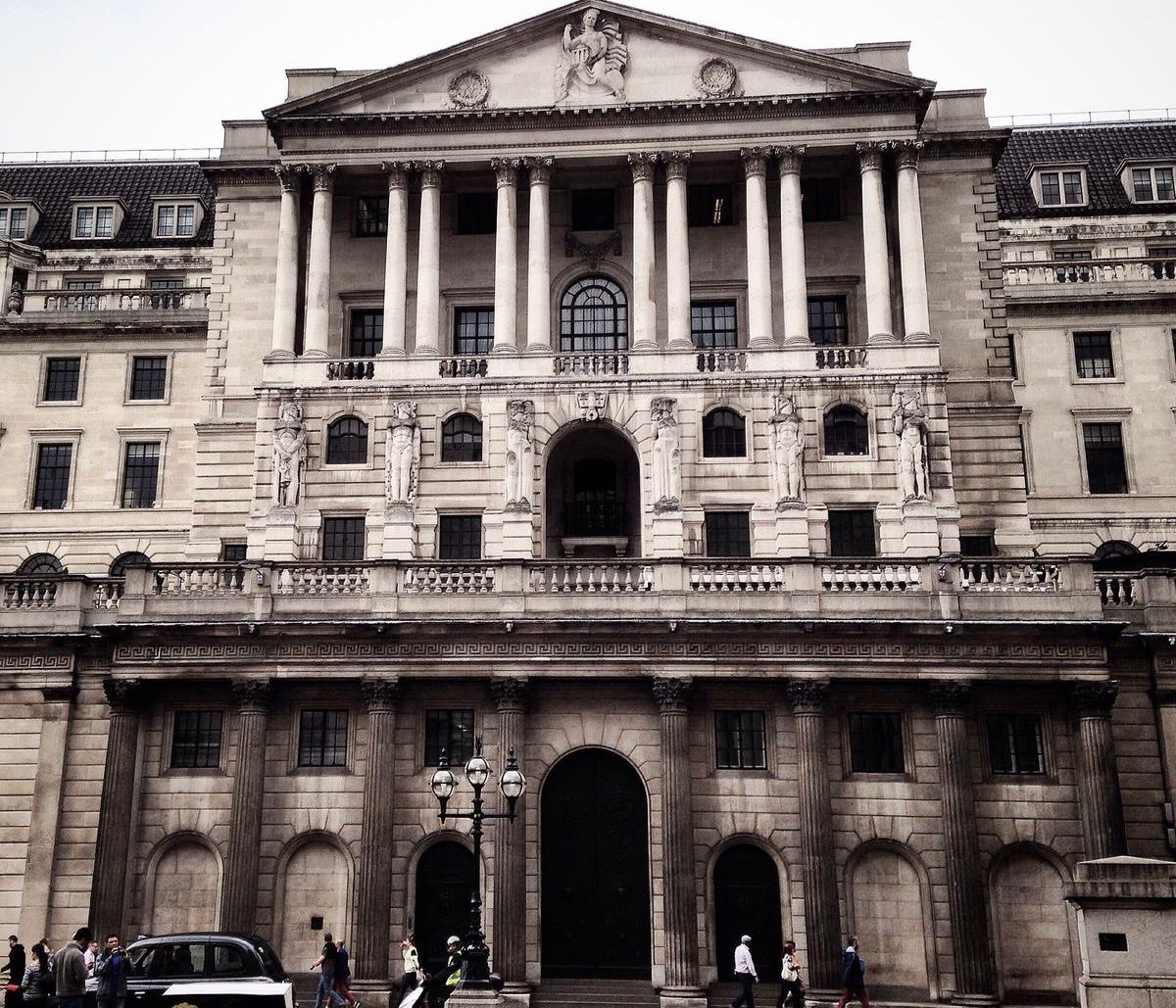
The institution was founded in 1694, but its architectural identity became particularly associated with Sir John Soane, who worked on the complex for decades from the late eighteenth into the early nineteenth century. Soane created banking halls, courts, offices, and ingenious top-lit interiors behind the great perimeter walls of the bank.
Most of his complex was later demolished, which is a painful story of its own, although the surviving exterior still gives you some sense of the institution’s extraordinary physical presence.
And the basic idea spread everywhere.
By the nineteenth century, a prosperous city almost needed a handsome bank.
Continue reading below…
If these essays have changed the way you see the world around you, the paid tier goes further.
You get longer, more researched pieces on the places that shaped Western civilization and the stories behind them. Deep dives into tradition, craftsmanship, and what the built world reveals about culture. Travel guides that teach you to actually read the places you visit.
This project is kept alive by people who care about old-world traditions. For a few dollars a month, you can be one of them.