

Walk into an old grand hotel and one of the first things you notice is how much space they were willing to give away.
Before you reach your room you might pass beneath a painted ceiling or climb a staircase designed to impress everyone who entered. The lobby could occupy some of the most valuable space in the entire building; yet hotel owners decorated it with marble and filled it with furniture where guests could sit for hours.
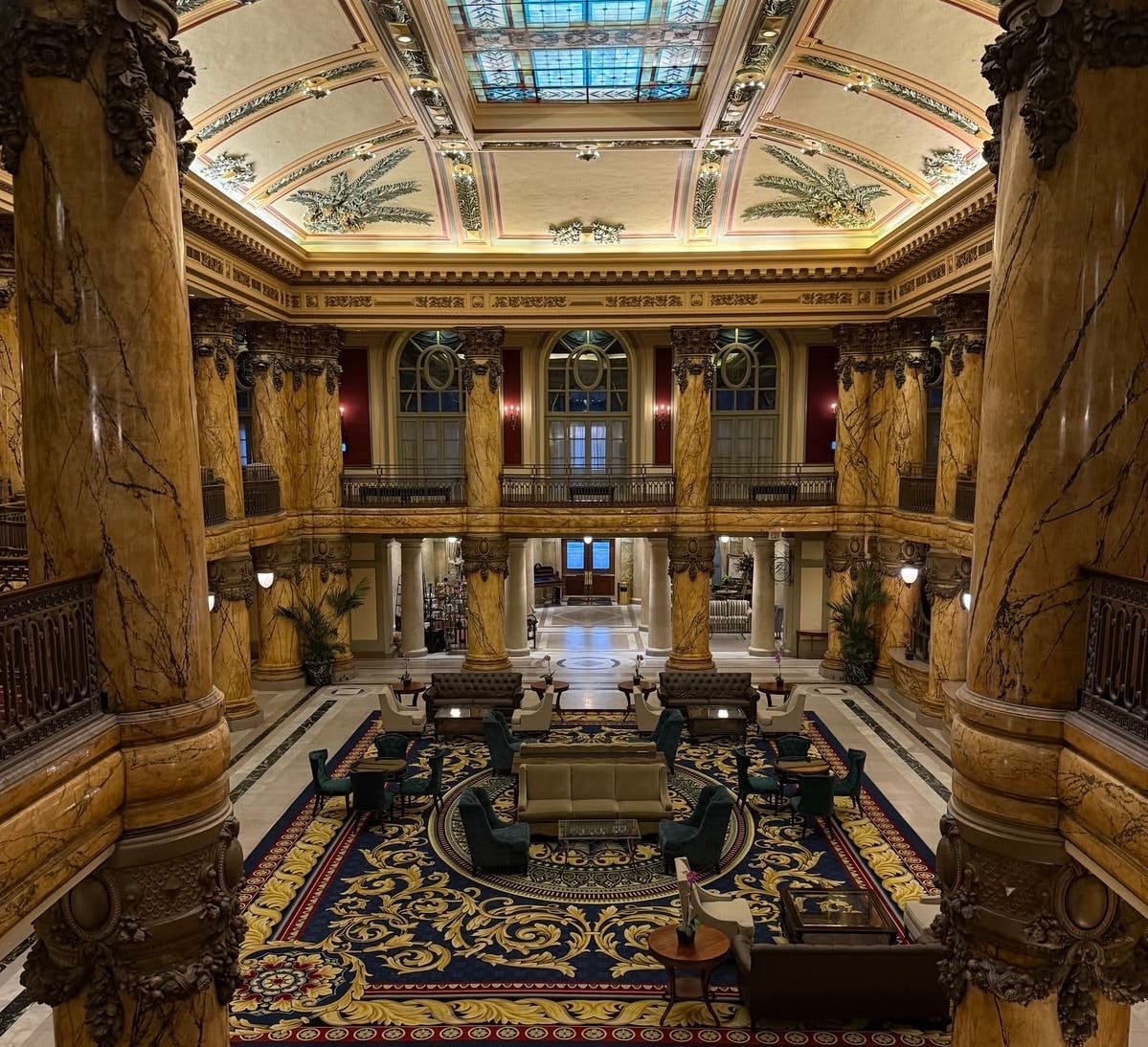
Today many hotel lobbies work very differently.
You enter and find the reception desk almost immediately. There may be a few chairs and somewhere to leave your luggage; within a few minutes you are expected to be on your way upstairs.
So why did hotels once spend so much money on a room where nobody slept?
The answer is that the hotel lobby used to do much more than check you in.
The architect Philip Johnson, who spent a lifetime arguing that buildings should do more than merely enclose useful rooms, put the point with characteristic bluntness:
“Architecture is the art of how to waste space. All architecture is shelter, all great architecture is the design of space that contains, cuddles, exalts, or stimulates the persons in that space.”
The old lobby was that kind of waste: space given away so that arrival itself could become an experience.
The Hotel Was Becoming Something New
Before the great hotels appeared travellers usually stayed in inns or smaller lodging houses. These buildings could be comfortable but their main purpose was fairly simple; you needed somewhere to eat and somewhere to sleep.
During the nineteenth century that began to change.
Railways brought growing numbers of travellers into European cities while industrial wealth created a new class of customers willing to pay for comfort. Hotels became larger and more luxurious; eventually the finest examples began borrowing the scale and decoration of palaces.
The lobby became part of that transformation.
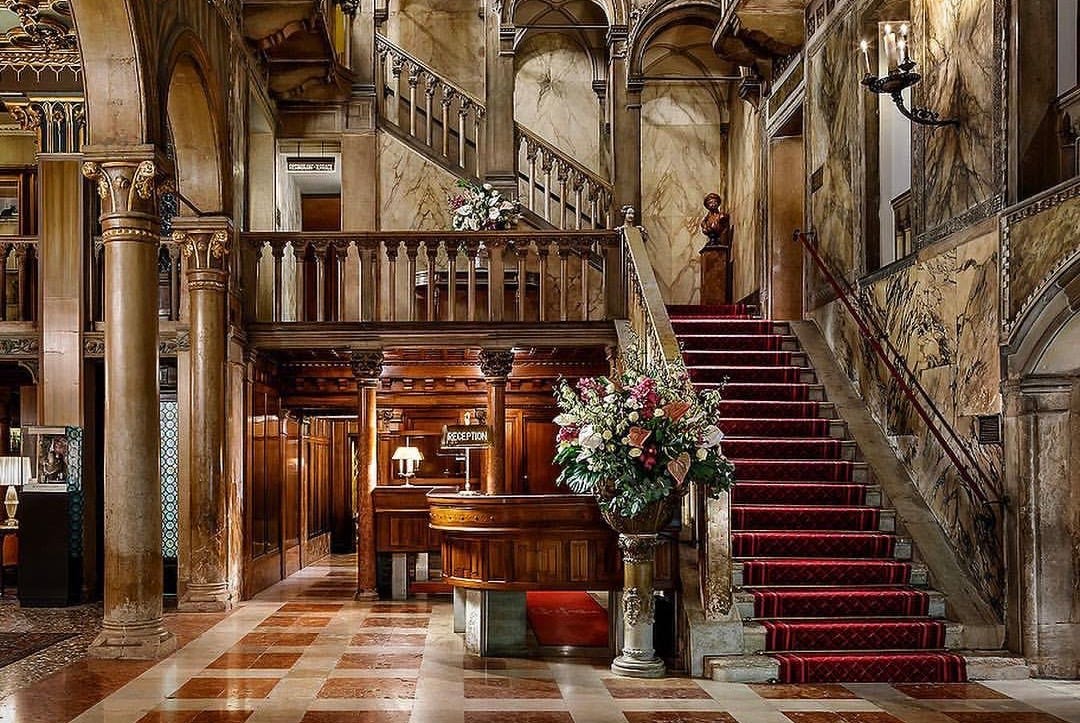
A guest needed to understand what sort of hotel he entered before seeing his room. The entrance therefore became the hotel’s introduction; beautiful materials and generous proportions told you almost immediately that you arrived somewhere expensive.
This was architecture doing the advertising.
John Ruskin had already insisted that a building is never only a practical object. In The Poetry of Architecture he wrote:
“It is not merely a science of the rule and compass, it does not consist only in the observation of just rule, or of fair proportion: it is, or ought to be, a science of feeling more than of rule, a ministry to the mind, more than to the eye. If we consider how much less the beauty and majesty of a building depend upon its pleasing certain prejudices of the eye, than upon its rousing certain trains of meditation in the mind, it will show in a moment how many intricate questions of feeling are involved in the raising of an edifice; it will convince us of the truth of a proposition, which might at first have appeared startling, that no man can be an architect, who is not a metaphysician.”
If these essays have changed the way you see the world around you, the paid tier goes further.
You get longer, more researched pieces on the places that shaped Western civilization and the stories behind them. Deep dives into tradition, craftsmanship, and what the built world reveals about culture. Travel guides that teach you to actually read the places you visit.
This project is kept alive by people who care about old-world traditions. For a few dollars a month, you can be one of them.
Then Came the Grand Hotel
By the late nineteenth century the grand hotel became one of the great building types of the modern city.
London’s Savoy gives us a wonderful example..
Continue reading below.