

For decades, architects have been told that progress means abandoning the past. But a growing movement of traditional architects is challenging that assumption and proving that beauty, craftsmanship, and architectural tradition still have a place in the modern world.
There is something deeply frustrating about walking through a beautiful old European town and suddenly encountering an enormous glass-and-concrete building that seems to have been designed with absolutely no consideration for its surroundings. On one side of the street, you have centuries-old houses with beautiful façades, carefully proportioned windows, decorative stonework, and charming little details that give the town its distinctive character. On the other, you have a featureless rectangular structure that could just as easily have been built in Berlin, London, Dubai, or Shanghai. It contributes nothing to the character of the place. It has no relationship with the architectural traditions of the region. And yet, somewhere along the way, we have been taught to regard this kind of architecture as progress.
I have never understood why.
When I visit places like Florence, Prague, Bruges, Vienna, or the little medieval towns scattered throughout Bavaria, I am constantly reminded of just how beautiful our ancestors managed to make the places in which they lived. Their buildings were not always grand or expensive. Many were ordinary houses, shops, inns, schools, and churches. Yet even relatively modest buildings were often designed with an appreciation for proportion, ornament, craftsmanship, and the surrounding streetscape. They belonged to their towns. They contributed to a coherent architectural character. And centuries later, people still travel from around the world to admire them.
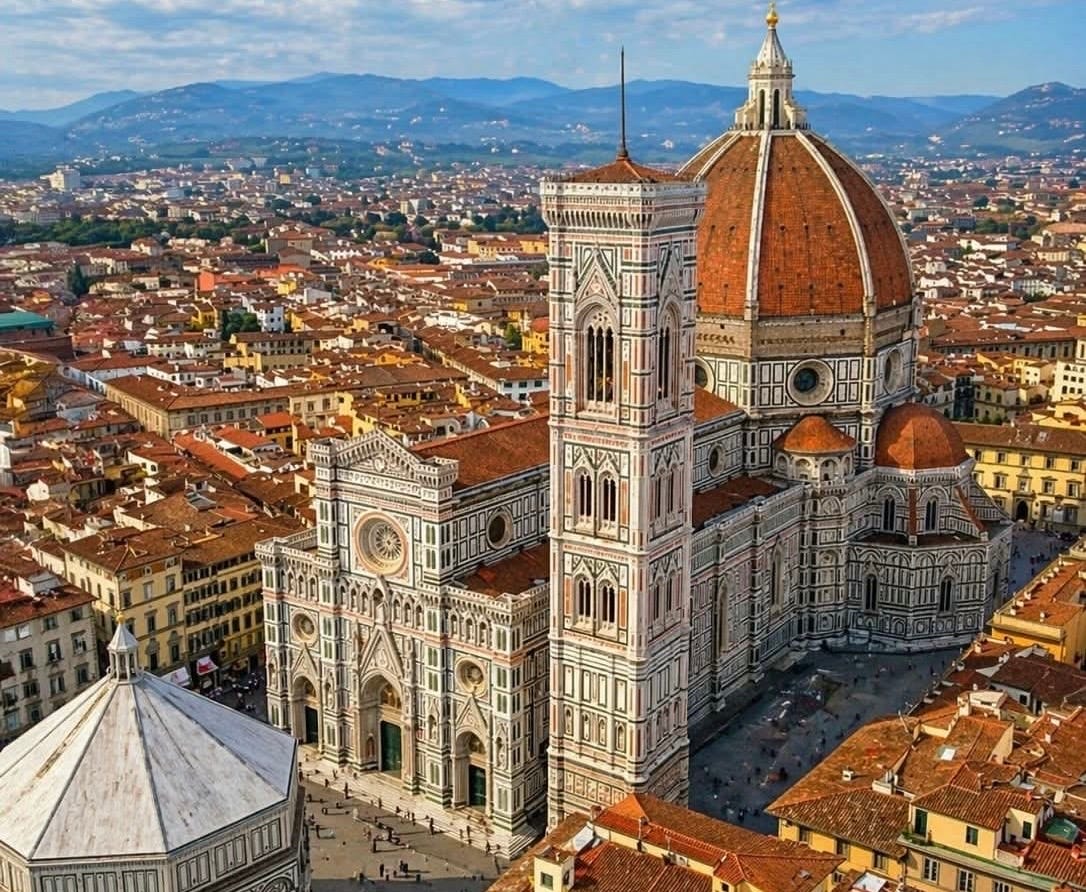
Now compare that with so many contemporary developments. Endless rows of anonymous apartment blocks, enormous glass office buildings, concrete shopping centres, and public buildings that look more like industrial facilities than places intended for human beings. We possess extraordinary technology, advanced engineering, sophisticated construction machinery, and access to materials that our ancestors could scarcely have imagined. Yet much of what we build today seems incapable of inspiring the affection that people feel towards buildings constructed hundreds of years ago.
Surely something has gone terribly wrong.
Fortunately, not everyone in the architectural profession has accepted this state of affairs. Across Europe and North America, a growing number of architects, urban planners, craftsmen, and patrons are rediscovering the principles of traditional architecture. They are building beautiful churches, designing classical houses, creating walkable neighbourhoods, reviving traditional craftsmanship, and demonstrating that the architectural achievements of our ancestors are not merely relics to be admired in museums.
They are a reminder that we can still build beautiful things. We simply have to decide that beauty matters again.
Léon Krier, the Luxembourg-born architect and urban theorist whose work helped inspire the revival of traditional urbanism and the planning of Poundbury, has articulated the underlying problem with characteristic force:
Authentic architecture is not the incarnation of the spirit of the age but of the spirit, full stop.
Modernist architecture and town planning is inimical to human beings… based on the Darwinian concept that evolution is open ended, that there must always be something new and better.
In fact, the public will accept any city plan and skyline provided that its architecture is traditional.
Architectural and urbanist modernism belong—like communism—to a class of errors from which there is little or nothing to learn or gain. They are ideologies which literally blind even the most intelligent and sensitive people to unacceptable wastes, risks, and dangers. Modernism’s fundamental error, however, is to propose itself as a universal (i.e. unavoidable and necessary) phenomenon, legitimately replacing and excluding traditional solutions.
Traditional architecture and urbanism is not an ideology, religion, or transcendental system. It cannot save lost souls or give meaning to empty lives. It is part of technology rather than style; it is a body of knowledge and know-how allowing us to build practically, aesthetically, socially, and economically satisfying cities and structures in the most diverse climatic, cultural, and economic situations.
Modernism’s declaration of war against tradition was not just a rejection of obsolete traditions but it included all knowledge and know-how which does not fit its reductive vision of humanity, history, technology, politics, and economy. It is a systematic rape of man’s psychological and physiological make-up.
How Did We Become So Comfortable With Ugliness?
For centuries, Western architects understood that beauty was one of the essential purposes of architecture. The Roman architect Vitruvius famously identified three fundamental qualities of a good building: firmitas, utilitas, and venustas—strength, usefulness, and beauty. A building should be structurally sound, fulfil its intended purpose, and be pleasing to behold. These principles influenced European architecture for generations, shaping everything from Renaissance palaces and Baroque churches to Georgian townhouses and magnificent civic buildings.
Our ancestors did not consider beauty an unnecessary luxury. They understood that the appearance of buildings mattered because architecture shaped the environments in which people lived, worked, worshipped, and raised their families. A beautiful church could inspire religious devotion. A magnificent library could encourage intellectual curiosity. A carefully designed public square could become the centre of a community’s social life. Even an ordinary house could contribute to the beauty of an entire street.
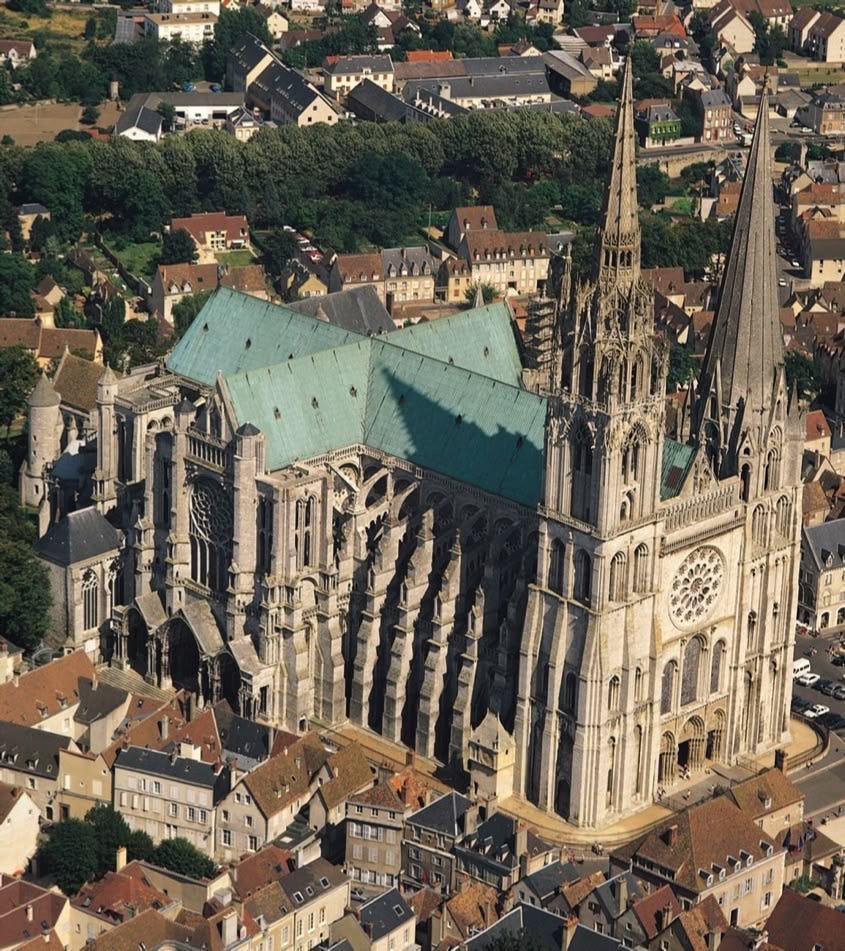
This understanding produced some of the most extraordinary architectural achievements in human history. Think of Chartres Cathedral, the historic centre of Florence, the Gothic churches of Prague, the Baroque monasteries of Austria, or the beautiful townhouses of eighteenth-century London. These places were built in different periods, using different materials, and according to different architectural traditions. Yet they share a remarkable concern for proportion, harmony, ornament, and the relationship between individual buildings and their surroundings.
Then came the twentieth century, and with it a profound transformation in architectural thinking.
Modernist architects such as Le Corbusier, Walter Gropius, and Ludwig Mies van der Rohe promoted a radically different approach to design. Historical ornament was increasingly dismissed as unnecessary. Traditional architectural styles were regarded by many influential designers as outdated. Industrial materials, abstract forms, functional planning, and technological innovation became central to a new architectural philosophy.
Of course, modernism did not emerge without good reasons. Rapid urbanisation, industrial development, housing shortages, and the destruction caused by two world wars created enormous practical challenges. Modern architects sought solutions that could make buildings more affordable, hygienic, efficient, and accessible. These were legitimate concerns, and some modernist buildings remain impressive achievements.
But somewhere along the way, the architectural profession began treating the rejection of tradition as a virtue in itself.
Instead of asking how we might improve upon the beautiful architectural traditions we had inherited, influential architects increasingly asked how they could break with them. Ornament became something to eliminate. Classical proportions became something to abandon. Regional architectural character became less important than expressing the latest architectural theory.
The consequences are visible in countless European cities.
Historic streets interrupted by enormous concrete structures. Traditional neighbourhoods replaced by anonymous apartment blocks. Beautiful old buildings demolished to make room for developments that often seem to possess little architectural character. Churches constructed with almost no connection to the extraordinary sacred architectural traditions of Christianity.
And perhaps most frustratingly, the public has often been expected to accept these changes as evidence of architectural progress.
I find this attitude extraordinary. If ordinary people consistently admire traditional towns, beautiful façades, Gothic cathedrals, and classical architecture, why should their preferences be dismissed simply because they do not correspond to the latest fashions within the architectural profession?
Architecture should serve the people who live among it, not merely the ambitions of the people who design it.
The Architects Who Refused to Give Up on Beauty
One of the most encouraging developments in contemporary architecture is the renewed interest in traditional design. A number of architects have spent decades challenging the assumption that classical architecture and traditional urban planning belong permanently to the past.
Among the most influential is Léon Krier, whose work has helped inspire a revival of traditional urbanism. Krier has spent much of his career criticising the enormous scale, functional separation, and car-dependent planning characteristic of many modern developments. In their place, he has advocated the recovery of traditional urban principles: walkable streets, recognisable neighbourhoods, public squares, mixed-use buildings, and architecture that contributes to a coherent sense of place.
His involvement in the planning of Poundbury, the urban extension of Dorchester developed on land belonging to the Duchy of Cornwall, brought many of these ideas into practice. Supported by the then Prince of Wales, now King Charles III, Poundbury was conceived as an alternative to conventional suburban development. Its streets, squares, houses, shops, and workplaces draw upon the architectural traditions of historic English towns.
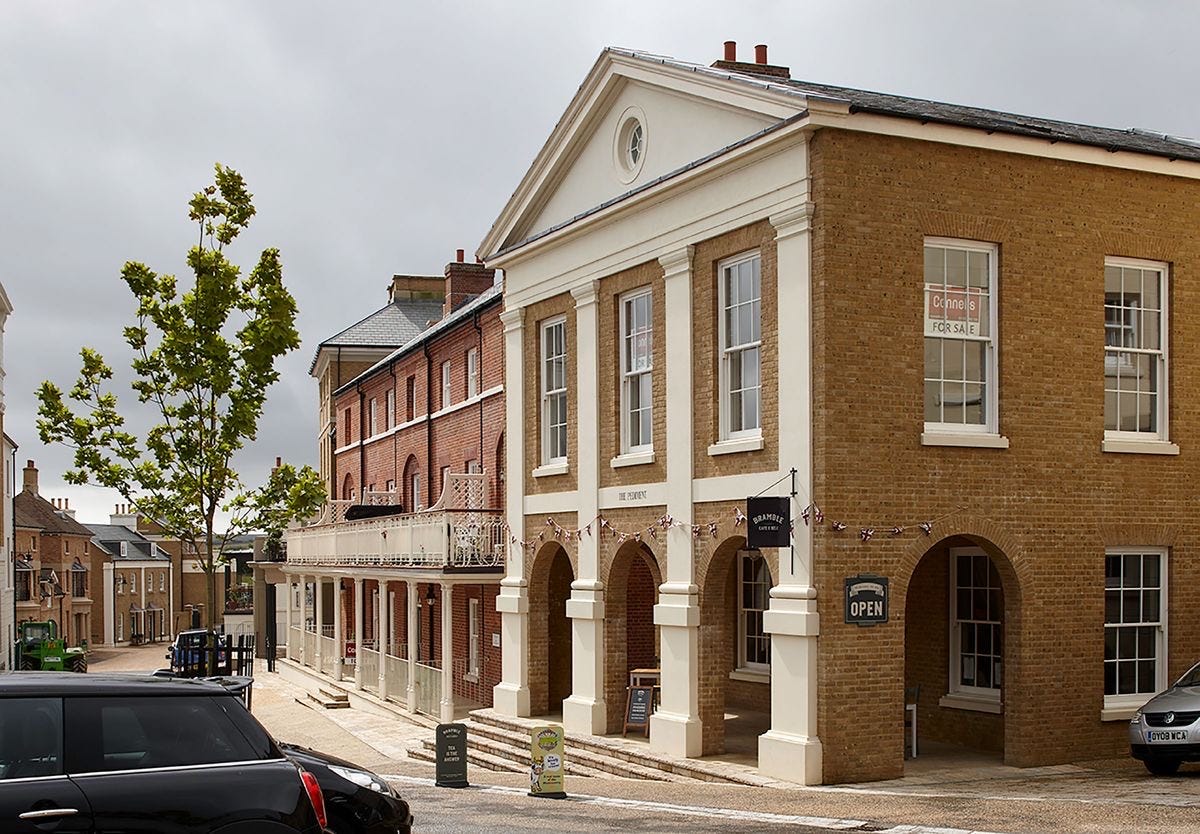
Poundbury has certainly attracted criticism, and not every aspect of the development is beyond reproach. But I find the underlying ambition enormously admirable. Here was an attempt to build a new neighbourhood that looked and functioned more like a traditional town than an anonymous modern housing estate.
Why should that be considered controversial?
Another important figure is Quinlan Terry, one of Britain’s best-known contemporary classical architects. Terry has spent decades designing buildings rooted in the classical tradition, demonstrating that columns, pediments, symmetry, traditional materials, and carefully considered proportions remain perfectly suitable for contemporary construction.
In his essay “Seven Misunderstandings about Classical Architecture,” Terry addresses the practical objections head-on:
I try to practice as a classical architect today, and I enjoy it. I have come to this position not by listening to lectures or intellectual arguments (because it is not primarily an academic subject), but by working for eleven years side by side with a great architect, Raymond Erith RA…
A popular misconception is that classical architecture is pastiche; it is often said that it is a simple matter of cribbing from the pattern books… It is only in the doing that we learn.
It is said that in a democratic age, the greater or lesser importance of such a simple thing as a door is no longer relevant… Every large municipal building has to serve different groups of people, and it is helpful if the main public entrance is easily distinguished from the office staff entrance… The old rules relating to relative importance (the hierarchy) of doors and their architraves still apply and fulfil an important function.
We have been thinking of the play of light, the light of the sun, on the simplest geometrical solids. It gives pleasure to the eye and makes us feel good—simple pleasures caused by natural things and in no way dependent on artificial light and the consumption of energy or the world’s resources. Classical architecture comes from a natural world which valued light and air more highly than we do today…
How can you, some ask, expect airports, multi-storey car parks, factories and office blocks to be part of the classical tradition? I will admit that the architect has no ready-made answer and will have to do a lot of thinking. But had Bramante not thought hard about the juxtaposition of the circular pagan temple with an early Christian basilica, we might not have known the Renaissance church typified by St Peter’s. Bramante approached a new problem along the well-travelled lines of classical principles, and he produced an entirely new and highly successful type of building. Is there not an opportunity and a challenge today to approach each new problem from old principles rather than from a childish desire to produce an elevation hitherto unknown?
I am often asked why I don’t use modern materials… There is little doubt that, quite apart from their appearance and cheapness, the materials [of modern construction] have a shorter life than those [of traditional construction]. This means that if you use them you will have higher maintenance costs… Think of the Pantheon in Rome, built in brick and lime mortar. It has a diameter of 142 ft and has stood for nearly two thousand years. No reinforced concrete structure could last anything like so long…
People ask, “How can you find men to do your class of work these days?” as if men no longer can or want to produce skilled work. The truth is that whenever there is good work to be done, there are men to do it… I have noticed that we are all far less covetous when we are working on a job we enjoy… it is the boredom of repetitive work, work which requires nothing from you, that makes for an empty mind.
His work is a welcome reminder that classical architecture did not suddenly become obsolete when the twentieth century began. The architectural language that produced some of Europe’s most beautiful buildings can still be used to create attractive houses, institutions, and public spaces today.
The same can be said of Robert Adam, whose work has contributed to the revival of classical architecture and traditional urban design in Britain. Architects working in this tradition understand something that much of contemporary architectural culture seems to have forgotten: innovation does not always require the rejection of inherited wisdom.
Sometimes progress means recovering principles that previous generations understood remarkably well.
Robert Adam has described classical architecture itself as a living language:
Living languages are not scrapped and reinvented every fifty years. We may express ourselves a little differently from Charles II or Nicholas Hawksmoor but we can use their expressions today because what they were is part of what we are. Our civilisation and means of expression are modern but they carry their past with them and we are the richer for it.
We are not limited to the use of the past. We can use the latest technology. It is no longer necessary to learn a special language to use a computer… As new technology becomes “user friendly,” we can, quite literally, make it speak our language…
Architecture is rather different. There has been a cultural elite trying to change its language. Speaking their own made-up architectural language, they think we all ought to learn it. But why should we? We’re fine the way we are. Put another way, imagine a game of charades where the other players keep saying “no”: they can’t guess what you are trying to be. Eventually you lose. Some people, unfortunately, never admit they’ve lost.
As the Modern Movement sinks under an accelerating barrage of “no’s” we should be thankful that the full apparatus of the living Classical language has survived. Perhaps our profession will now realise that nobody but architects ever bothered to learn their language and will take up Classicism, the true International Style.
Why Traditional Architecture Is Worth Defending
There is a tendency to dismiss traditional architecture as nostalgic, as though anyone who admires Georgian terraces, Gothic churches, or Renaissance palaces must secretly wish to return to the eighteenth century.
I find this argument rather silly.
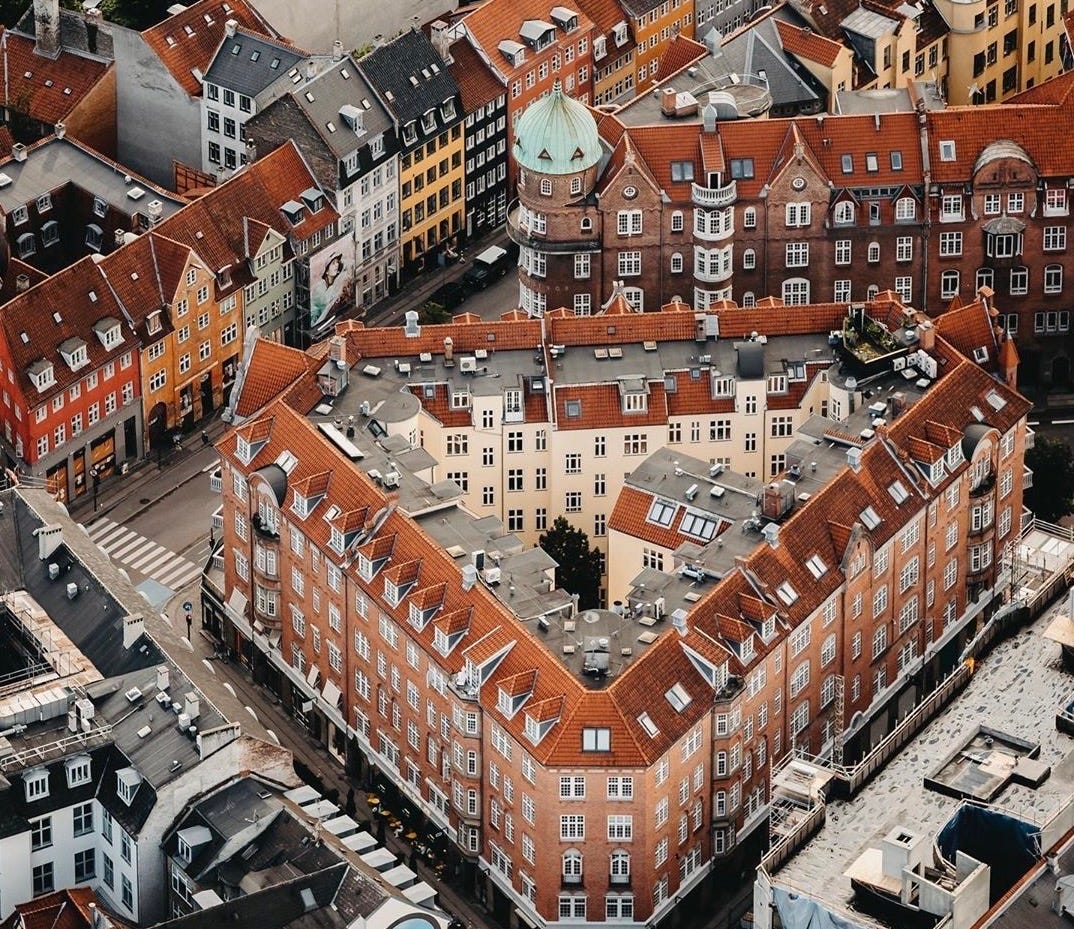
Nobody seriously believes that constructing a beautiful traditional house requires us to abandon electricity, central heating, modern sanitation, or contemporary engineering. Nobody argues that building a Gothic-inspired church means we must reject modern structural calculations or accessibility standards. And nobody suggests that a new neighbourhood with charming streets and traditional façades cannot also possess excellent public transport, efficient insulation, and modern infrastructure.
Traditional architecture is not a rejection of technological progress.
It is a rejection of the idea that technological progress requires aesthetic decline.
We can construct buildings that are comfortable, efficient, environmentally responsible, and beautiful. We can use contemporary construction methods while respecting regional architectural traditions. We can design modern neighbourhoods around principles that have made European towns pleasant places to live for centuries.
Indeed, one could argue that the durability and enduring appeal of traditional buildings should make us more interested in studying them, not less.
Consider the enormous number of historical buildings that have survived for centuries and continue to be loved by the communities around them. People maintain them, restore them, adapt them to new purposes, and fight to prevent their demolition. Their beauty gives people a reason to preserve them.
By contrast, how many ordinary contemporary buildings inspire that kind of affection?
This is not merely an aesthetic question. It has implications for sustainability, community identity, and the long-term value of our built environment. Buildings that people love are often buildings they want to preserve.
A genuinely sustainable architectural culture should therefore take beauty seriously.
Christopher Alexander, the architect and theorist whose writings on patterns and the “quality without a name” have influenced a generation of designers seeking more humane environments, captured the difference between living places and dead ones:
It is not possible to make great buildings, or great towns, beautiful places, places where you feel yourself, places where you feel alive, except by following this way. And, as you will see, this way will lead anyone who looks for it to buildings which are themselves as ancient in their form, as the trees and hills, and as our faces are.
The more living patterns there are in a place—a room, a building, or a town—the more it comes to life as an entirety, the more it glows, the more it has that self-maintaining fire which is the quality without a name.
Everyone is aware that most of the built environment today lacks a natural order, an order which presents itself very strongly in places that were built centuries ago.
This is a fundamental view of the world. It says that when you build a thing you cannot merely build that thing in isolation, but must repair the world around it, and within it, so that the larger world at that one place becomes more coherent, and more whole; and the thing which you make takes its place in the web of nature, as you make it.
If these essays have changed the way you see the world around you, the paid tier goes further.
You get longer, more researched pieces on the places that shaped Western civilization and the stories behind them. Deep dives into tradition, craftsmanship, and what the built world reveals about culture. Travel guides that teach you to actually read the places you visit.
This project is kept alive by people who care about old-world traditions. For a few dollars a month, you can be one of them.
The Return of Traditional Craftsmanship
One of the most important aspects of the traditional architecture revival is the renewed appreciation for craftsmanship.
Continue reading below.