

When the first great railway stations appeared in the nineteenth century, they were treated like cathedrals.
That might sound strange today.
A railway station is a place people rush through. We arrive, check the departure board, find our platform, and leave as quickly as possible.
But the Victorians saw something completely different.
The railway was one of the greatest transformations in human history. For thousands of years, traveling from one city to another meant days or even weeks of slow and uncomfortable movement. Suddenly, steam engines could carry thousands of people across entire countries in a fraction of the time.
To many people, the railway represented the future itself.
And the buildings created to welcome that future were designed accordingly.
They were not simple shelters for passengers.
They were monuments.

The great railway stations of Europe were built with the same ambition that earlier generations had brought to churches, palaces, and civic buildings. Architects wanted people to feel that they were entering something important. Iron, glass, and stone were combined to create enormous spaces that celebrated engineering, progress, and human achievement.
One of the finest examples was St Pancras Station in London.
When it opened in 1868, it was one of the largest buildings in the world. The Midland Railway wanted a station that would announce its arrival in the capital, and architect George Gilbert Scott created something far more ambitious than a transport hub.
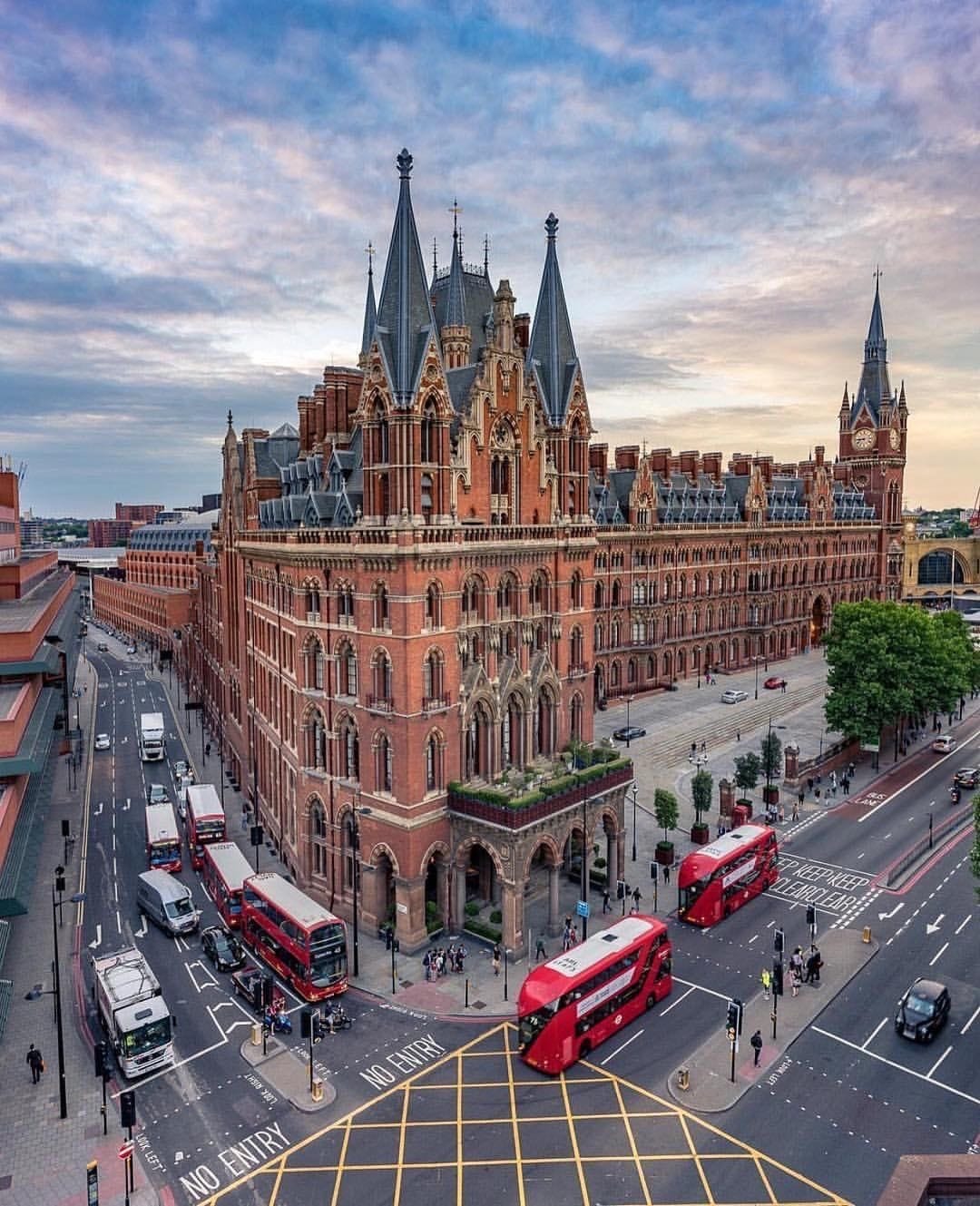
The red brick Gothic Revival facade looked like a medieval palace. Behind it stood the great train shed, an enormous iron and glass structure that pushed the limits of engineering at the time.
The message was clear.
Modern technology did not have to mean ugliness.
The industrial age could create beauty too.
The same idea appeared across Europe.
In Paris, railway stations became gateways into the city. Gare du Nord, opened in 1846 and later expanded, welcomed travelers arriving from northern Europe with a grand classical facade decorated with statues representing French cities and destinations.
If these essays have changed the way you see the world around you, the paid tier goes further.
You get longer, more researched pieces on the places that shaped western civilization and the stories behind them. Deep dives into tradition, craftsmanship, and what the built world reveals about culture. Travel guides that teach you to actually read the places you visit.
This project is kept alive by people who care about old world traditions. For a few dollars a month, you can be one of them.
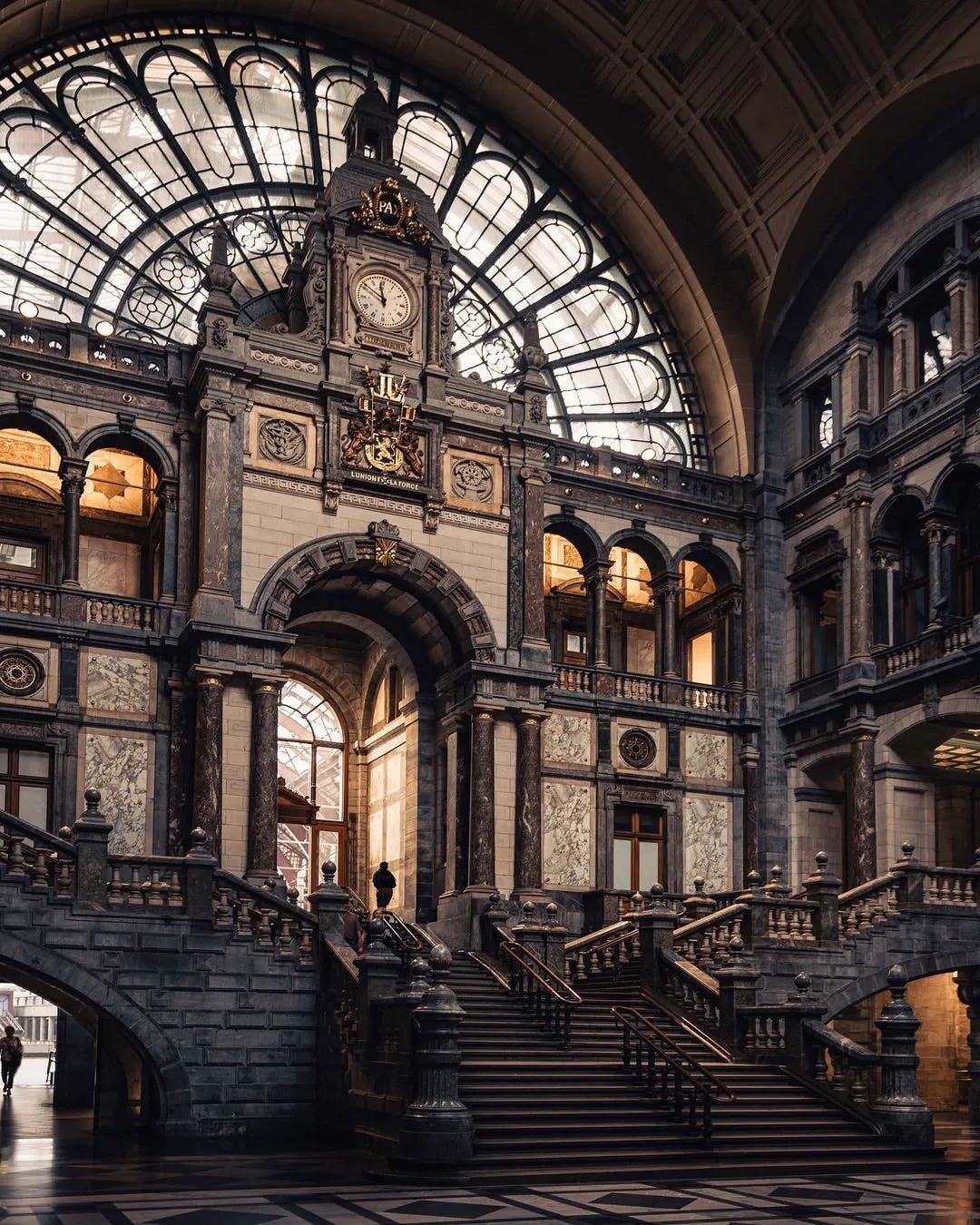
In Antwerp, Belgium, the railway station built at the beginning of the twentieth century became known as the “Railway Cathedral.” Architect Louis Delacenserie created a building that combined marble, iron, glass, and an enormous dome, turning the arrival of a train into almost a ceremonial experience.
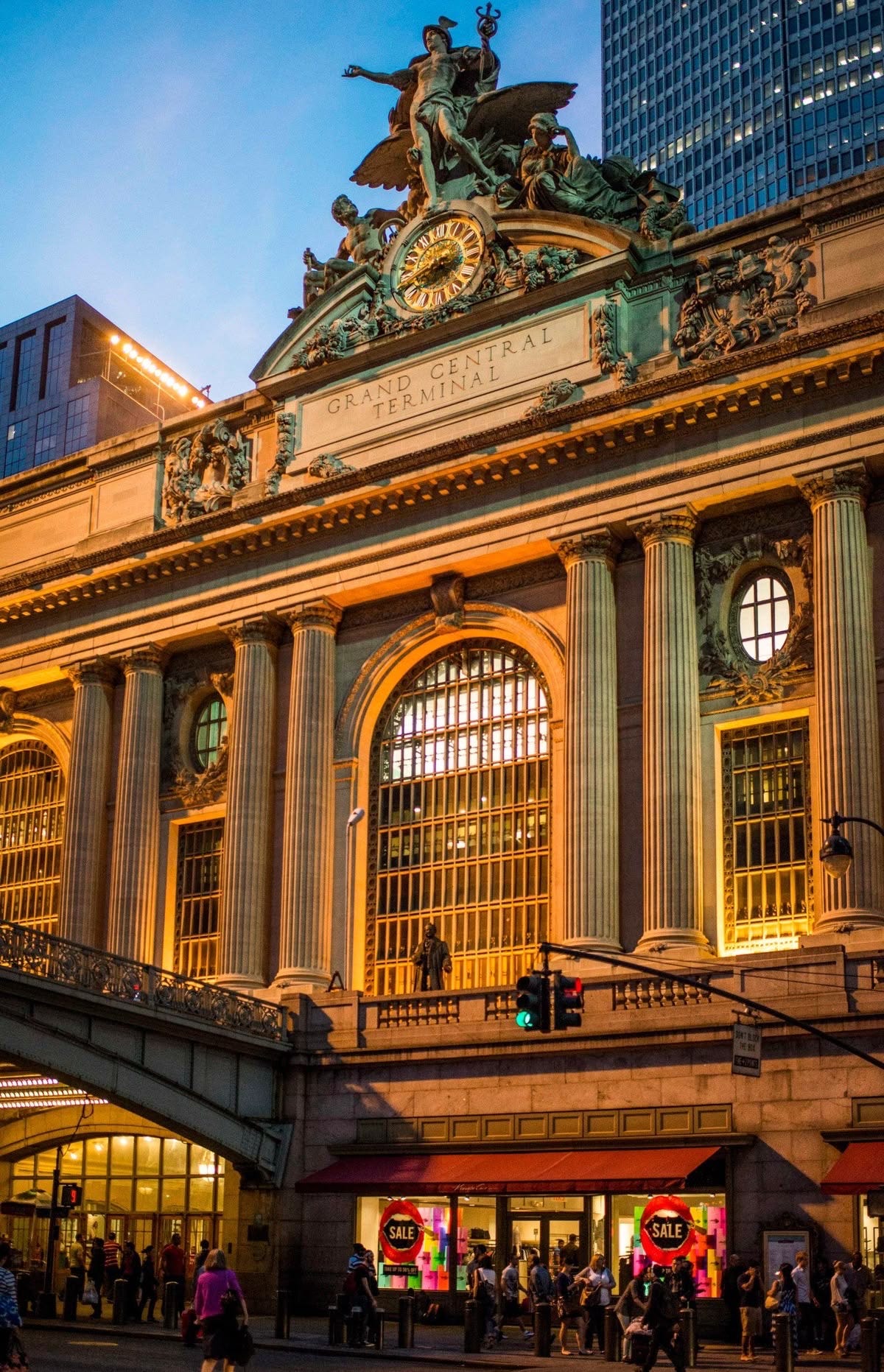
Then there was Grand Central Terminal in New York.
Completed in 1913, it was designed during the golden age of American confidence. Its famous main concourse was meant to inspire awe, with its vast ceiling painted as a representation of the night sky. Millions of passengers have walked beneath it, yet the building still feels closer to a civic monument than a place of transportation.
What makes these stations fascinating is that they reveal something about how earlier generations viewed public life.
They believed ordinary experiences deserved beauty.
Traveling to work.
Meeting a friend.
Arriving in a new city.
These moments were worthy of architecture.
A person did not need to enter a palace or cathedral to encounter grandeur. A railway station could provide that experience.
This was part of a wider nineteenth-century belief that cities themselves could educate people. Beautiful surroundings encouraged order, dignity, and pride. A well-designed public building reminded citizens that they belonged to something larger than themselves.
The railway station became the great symbol of this idea.
It stood between worlds.
Behind you was the old city.
Ahead of you was the modern one.
Yet by the twentieth century, that confidence began to fade.
As cars and airplanes became more popular, railway stations lost some of their importance. Many magnificent buildings were neglected, altered, or threatened with demolition. The same societies that had once built them as monuments began treating them as outdated infrastructure.
Perhaps the most famous example was Penn Station in New York. When it opened in 1910, it was considered one of the greatest buildings in America. Inspired by Roman imperial architecture, it contained enormous waiting rooms, grand staircases, and vast spaces filled with natural light.
Then, in the 1960s, it was demolished.
The decision shocked many people and became a turning point in the preservation movement. A building that had once represented the confidence of an entire age disappeared in only a few years.
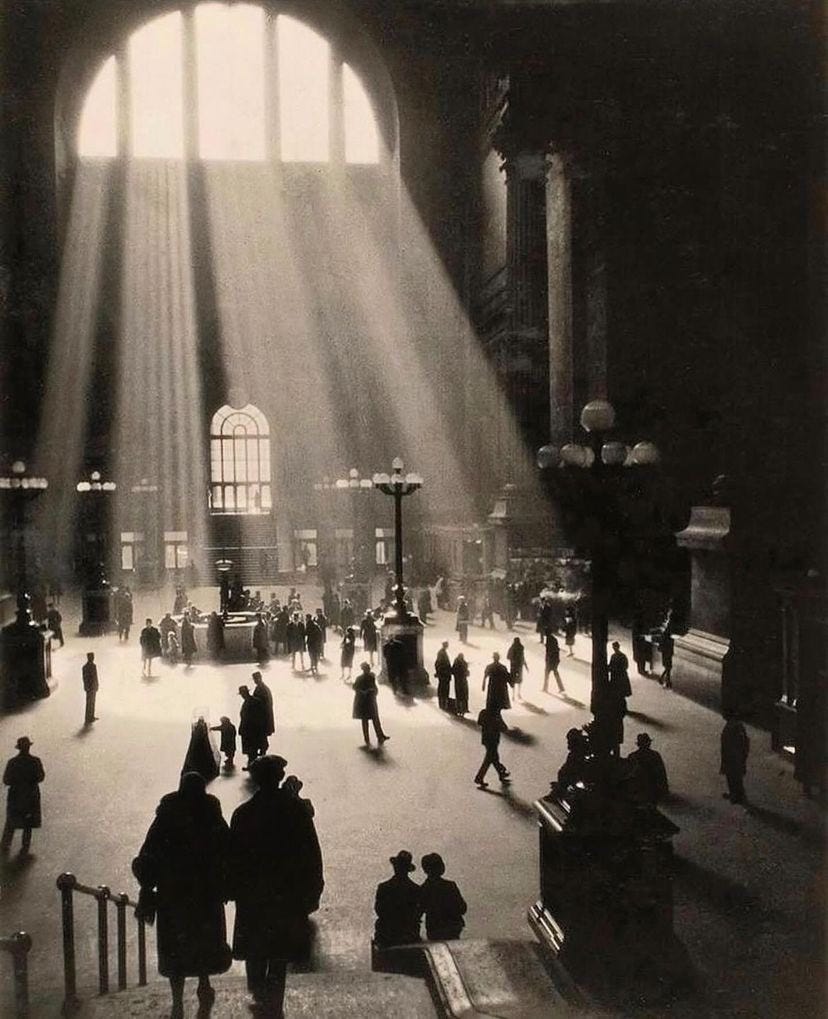
The loss changed how people thought about historic architecture.
They realized that once a great building was gone, it could not simply be replaced.
Today, many of these railway stations are experiencing a revival. St Pancras was restored and transformed into one of London’s most beautiful public spaces. Grand Central remains one of New York’s most beloved landmarks. Stations across Europe are once again being appreciated not only as places to catch trains but as achievements of architecture.
Perhaps the reason these buildings continue to fascinate us is that they represent a very particular moment in Western history.
A time when technology and beauty were not seen as opposites.
When engineers and architects worked together.
When a building designed for ordinary people could still inspire wonder.
Even the most practical parts of life can be elevated into something beautiful...
Thanks for posting the photos and the background on these world-class train stations. My husband and I travel in Europe often and we've often remarked on how beautiful the stations are compared to most U.S. train stations. Some stations in England, France, and Spain have beautiful buildings to admire from the outside, and inside, a variety of restaurants and shops to accommodate and entertain passengers waiting for their train. Always a pleasure to ride the rails in Europe.
Great article, thank you. Only missing the credit for those two magnificent lantern bearers, 'Lyhdynkantajat', but I appreciate you making me use my hypothalamus and look it up myself.
https://grokipedia.com/page/lyhdynkantajat
Lyhdynkantajat, also known as the Lantern Bearers or Stone Men (Kivimiehet), is a group of four monumental granite sculptures adorning the main entrance of Helsinki Central Station in Finland.
Created by Finnish sculptor Emil Wikström in 1914, the figures depict muscular, stern-faced humanoids holding illuminated lanterns, with their lower bodies merging into stone columns reminiscent of ancient Egyptian and Assyrian styles.