

When people think of the architects who shaped Europe, the same names always appear. Antoni Gaudí transformed Barcelona into a city unlike any other. Sir Christopher Wren rebuilt London after the Great Fire. Gian Lorenzo Bernini gave Rome some of its most celebrated churches and piazzas, while Baron Haussmann reshaped Paris with its broad boulevards and grand avenues.
Yet hidden between the Alps and the Adriatic is another architect whose work deserves to stand beside theirs.
His name was Jože Plečnik.
Outside Central Europe, few people recognize his name, yet almost everyone who visits Ljubljana notices his work without realizing it. Walk through Slovenia’s capital for a single afternoon.. The bridges belong exactly where they are. The markets spill naturally toward the river. The churches, libraries, embankments, parks, staircases, and colonnades speak the same architectural language. Nothing shouts for attention, and yet everything feels carefully considered.
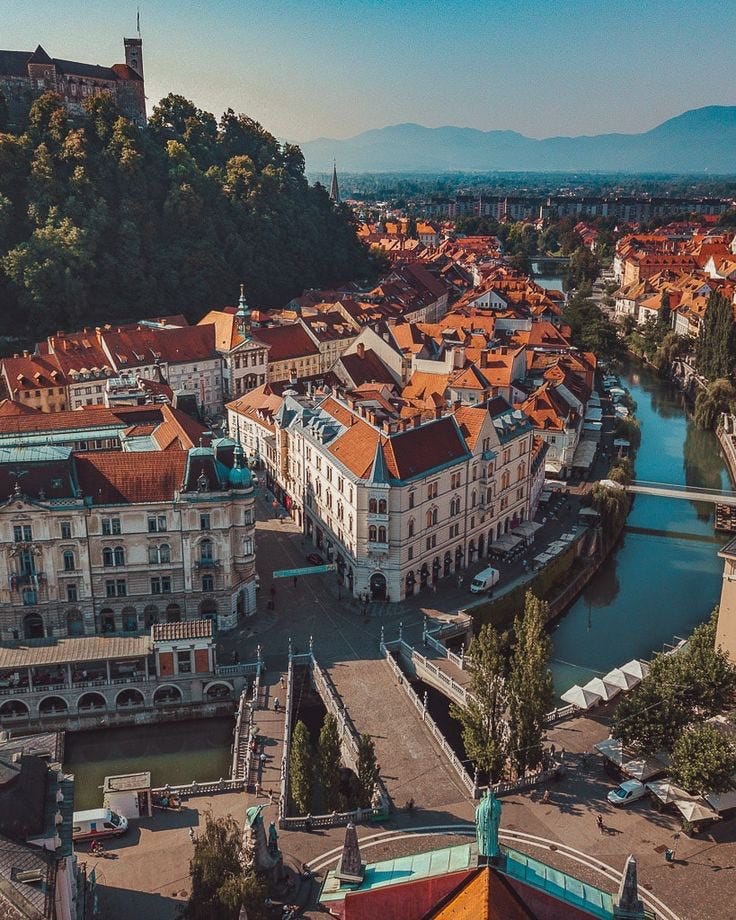
It is difficult to explain until you learn that much of what you are seeing came from the imagination of one remarkably patient man.
Unlike many famous architects, Plečnik never sought to build the tallest building, the grandest palace, or the most extravagant monument. His ambition was much quieter than that. He wanted to create a city where ordinary people encountered beauty every single day, whether they were crossing a bridge on their way to work or buying vegetables at the local market.
It was an idea that consumed much of his life.
Jože Plečnik was born in Ljubljana in 1872, when the city was little more than a provincial town of the Austro-Hungarian Empire. Vienna dominated the empire politically and culturally, while Prague, Budapest, and Trieste attracted far more attention than the sleepy Slovenian capital.
His father was a cabinet maker, and from an early age Plečnik developed an appreciation for craftsmanship. He watched wood carefully shaped by hand, joints fitted together with precision, and furniture built to last generations. Long before he became an architect, he learned that beautiful things were not accidents. They were the result of patience.
That lesson never left him.
If these essays have changed the way you see the world around you, the paid tier goes further.
You get longer, more researched pieces on the places that shaped western civilization and the stories behind them. Deep dives into tradition, craftsmanship, and what the built world reveals about culture. Travel guides that teach you to actually read the places you visit.
This project is kept alive by people who care about old world traditions. For a few dollars a month, you can be one of them.
Years later, when he began designing buildings, he paid as much attention to a door handle or a stone column as other architects devoted to entire façades. Every detail mattered because every detail contributed to the experience of the whole.
As a young man, Plečnik left Ljubljana to study in Vienna under Otto Wagner, one of Europe’s most influential architects. The Austrian capital stood at the centre of an extraordinary cultural flowering. Gustav Klimt was redefining painting. Gustav Mahler was transforming music. Sigmund Freud was exploring the human mind. Vienna had become one of Europe’s great intellectual capitals, and architecture was changing just as rapidly.
Plečnik quickly distinguished himself..