

If you travel through the Alps long enough, you start noticing something interesting.
Cross from Bavaria into Tyrol, continue through Switzerland, then head south toward the Dolomites, and the language, food, and even nationality may change, yet the villages somehow continue to feel related. There are steep roofs hanging over wooden balconies, painted façades facing narrow streets, flower boxes overflowing beneath the windows, enormous farmhouses sitting against the mountains, and church towers rising above almost every settlement.
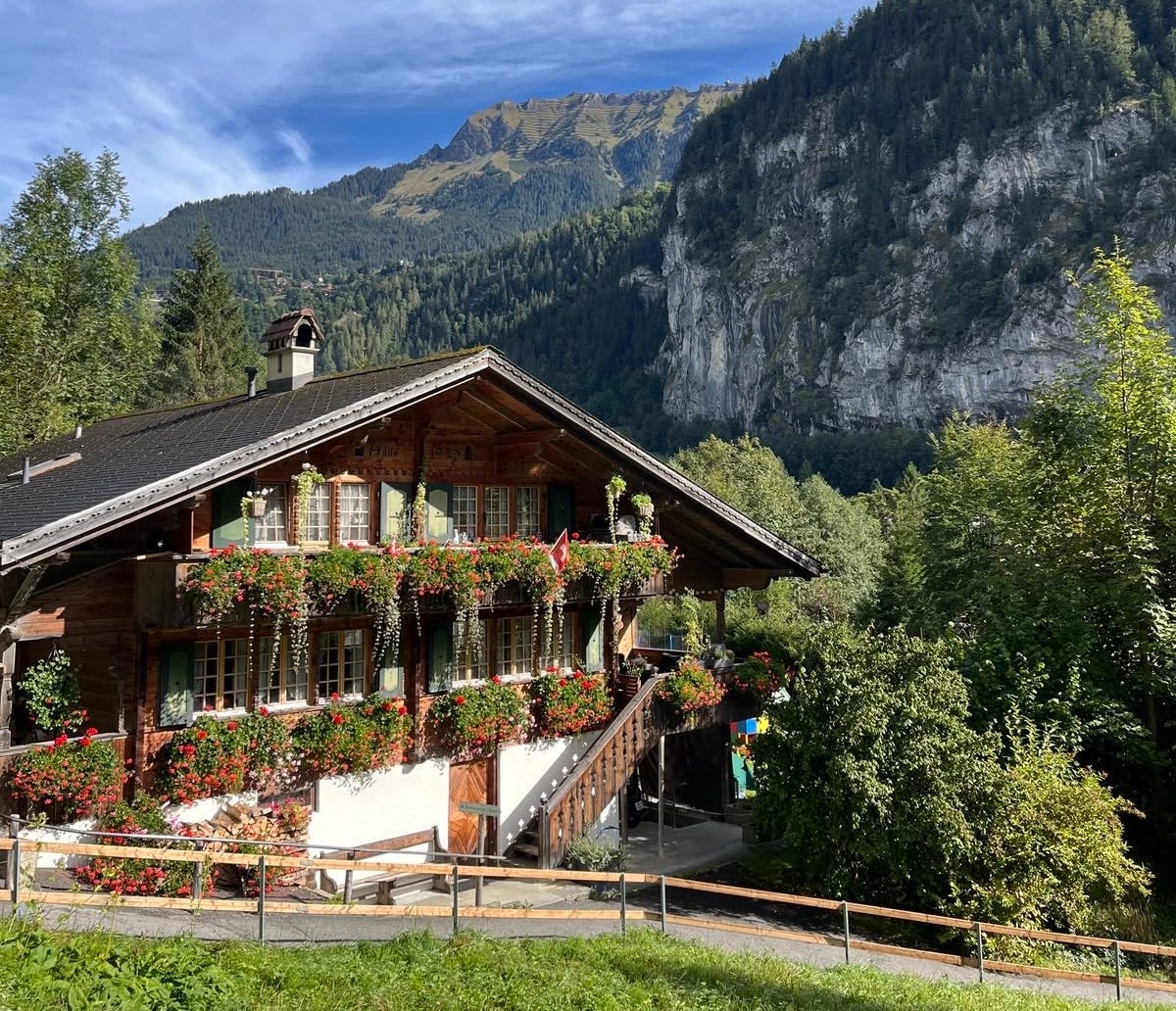
This is Alpine architecture, and what makes it so beautiful is that nobody sat down one day and invented it.
It developed over centuries as generations of people tried to answer the same basic question:
How do you build a good home in the mountains?
The Mountains Designed the Houses
The first thing you have to understand about Alpine architecture is the environment.
Life at 1,000 meters above sea level creates very different requirements from life beside the Mediterranean. Winters are long, snow can become incredibly heavy, temperatures fall far below freezing, and families historically needed enough space for animals, hay, firewood, tools, food, and everything else required to survive months of winter.
The house developed around these realities.
Roofs became steep enough to deal with snow and rain, while broad overhanging eaves helped protect walls, balconies, entrances, and stored materials from the weather. Lower floors were commonly built from stone or masonry, providing a solid base and helping resist moisture, while timber became especially important higher in the structure because the surrounding forests provided an abundant local building material.
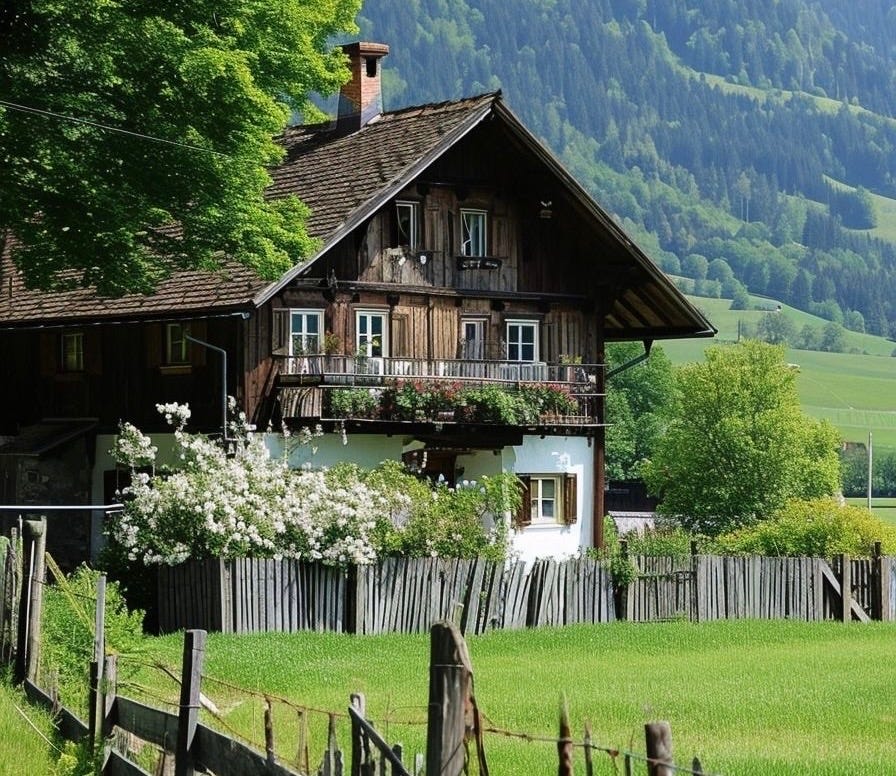
Then there was the farmhouse itself.
In many Alpine regions, the house, barn, storage areas, and sometimes stables were combined into one enormous building, which makes perfect sense once you imagine living through a mountain winter several centuries ago. Every journey outside required effort, so bringing the necessities of agricultural life together beneath one roof made the household far more practical.
And slowly, practicality developed into a recognizable architectural language.
Frank Lloyd Wright described this relationship between building and place with precision:
“No house should ever be on a hill or on anything. It should be of the hill. Belonging to it. Hill and house should live together each the happier for the other. A building should appear to grow easily from its site and be shaped to harmonize with its surroundings if Nature is manifest there, and if not try to make it as quiet, substantial and organic as She would have been were the opportunity Hers. It is in the nature of any organic building to grow from its site, come out of the ground into the light—the ground itself held always as a component basic part of the building itself.”
Where Did the Famous Alpine Balcony Come From?
Perhaps nothing says “Alps” more immediately than the long wooden balcony running across the front of a house.
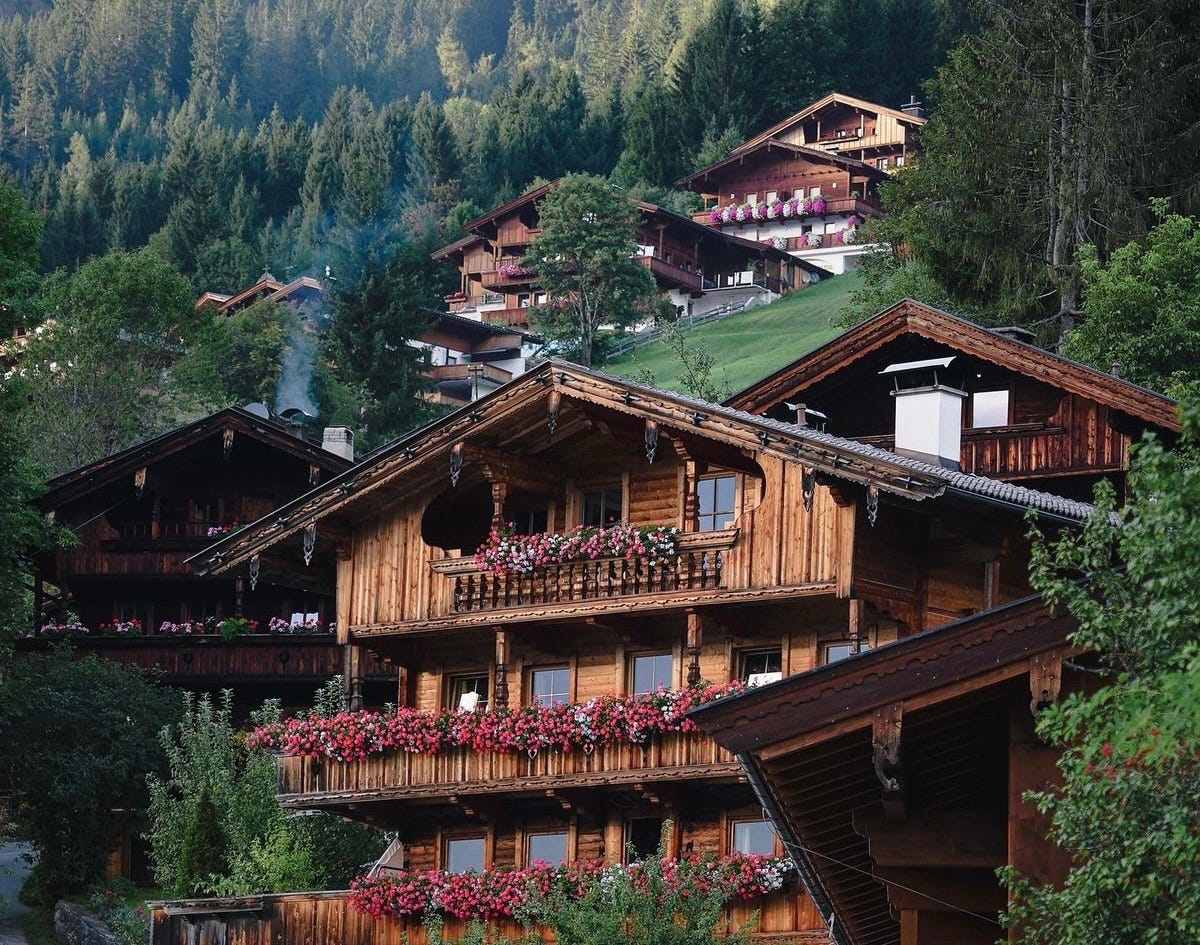
Today we associate these balconies with geraniums and summer holidays, yet historically they were useful working spaces, providing sheltered areas where agricultural products, laundry, timber, and other household goods could dry while remaining protected beneath the enormous roof above.
Over generations, carpenters became increasingly elaborate with them.
Railings were carved into patterns, timber brackets became decorative, shutters were painted, and the functional balcony gradually became one of the defining features of the Alpine home.
This happens constantly in traditional architecture.
A practical solution survives for generations, craftsmen refine it, local families add their own details, and eventually something created out of necessity becomes beautiful.
Christopher Alexander observed the same process in the great traditional buildings of the world:
“There is one timeless way of building. It is a thousand years old, and the same today as it has ever been. The great traditional buildings of the past, the villages and tents and temples in which man feels at home, have always been made by people who were very close to the center of this way. It is not possible to make great buildings, or great towns, beautiful places, places where you feel yourself, places where you feel alive, except by following this way. And, as you will see, this way will lead anyone who looks for it to buildings which are themselves as ancient in their form, as the trees and hills, and as our faces are.”
Then They Started Painting the Houses
Travel through Bavaria and Tyrol and you will eventually encounter houses covered in painted decoration.
Some have simple borders around the windows, while others contain elaborate religious scenes, sundials, saints, flowers, architectural illusions, or entire painted façades.
In Bavaria, one famous form became known as Lüftlmalerei, particularly associated with Upper Bavaria and towns such as Mittenwald and Oberammergau.
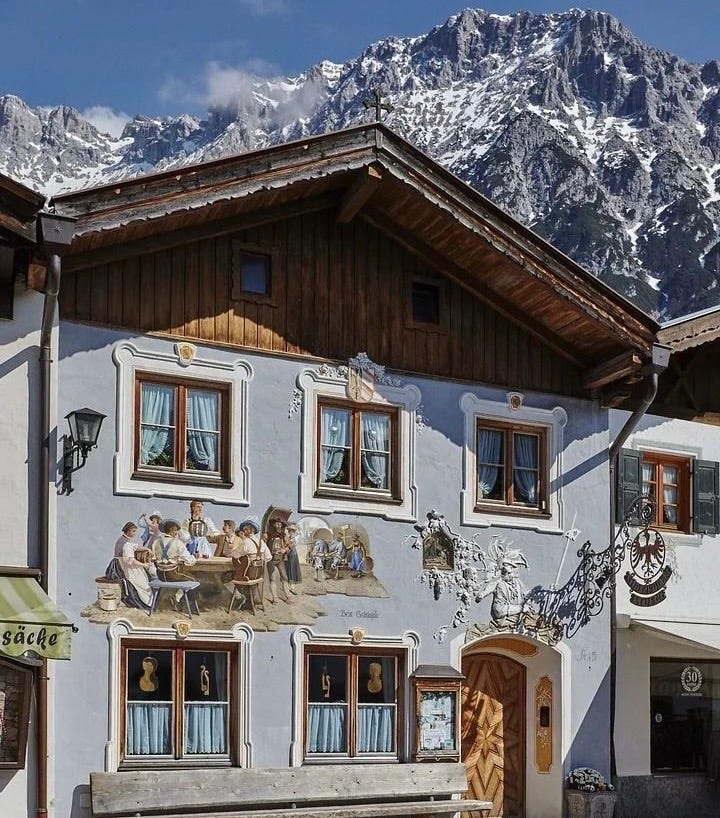
These paintings tell you something important about traditional architecture because the house was understood as more than shelter. Its exterior could express the faith, identity, occupation, prosperity, and tastes of the family living inside.
A saint painted above the doorway meant something.
So did a crucifix attached to the façade.
So did the date carved into a timber beam.
The building became part of the family’s story.
If these essays have changed the way you see the world around you, the paid tier goes further.
You get longer, more researched pieces on the places that shaped Western civilization and the stories behind them. Deep dives into tradition, craftsmanship, and what the built world reveals about culture. Travel guides that teach you to actually read the places you visit.
This project is kept alive by people who care about old-world traditions. For a few dollars a month, you can be one of them.
Every Valley Developed Its Own Version
The term “Alpine architecture” can make the region sound more uniform than it really is.
A Swiss chalet, a Tyrolean farmhouse, a Bavarian house, and a stone building in the Italian Alps belong to related mountain traditions, while each developed according to local materials, climate, farming practices, and culture.
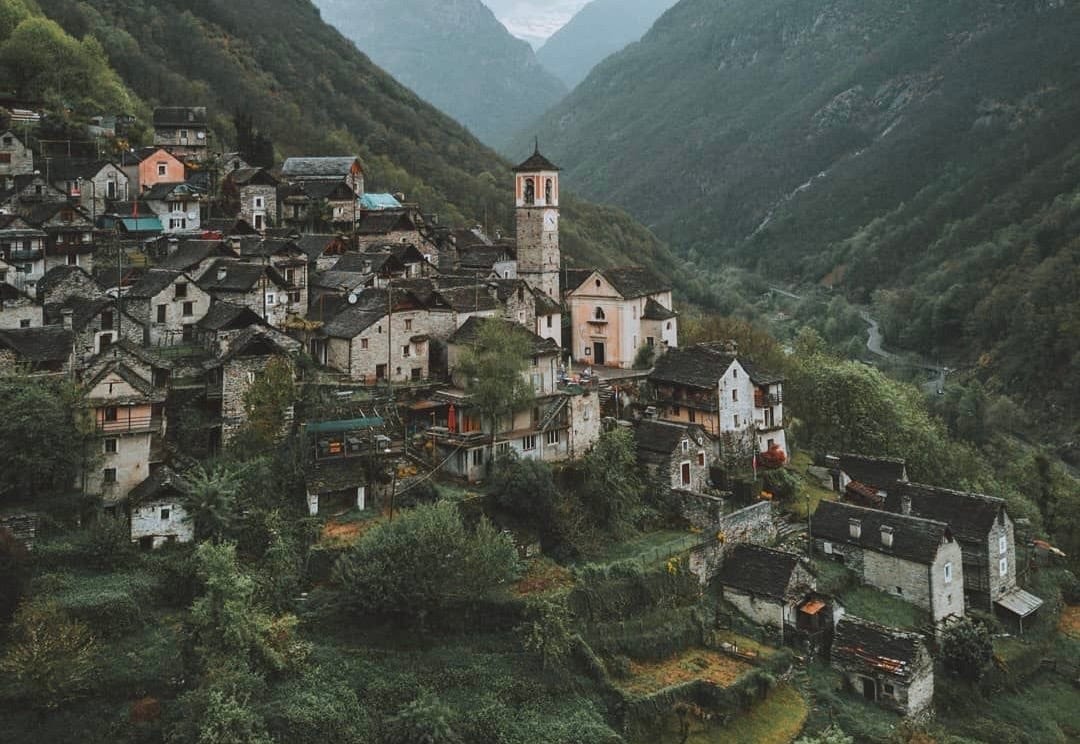
In heavily forested areas, timber naturally became dominant. In other regions, stone and plaster played a greater role. The Engadin in Switzerland developed its own remarkable houses with thick masonry walls, deep-set windows, decorated plasterwork, and enormous arched entrances, while settlements farther east and south developed another mixture of Germanic, Italian, Ladin, and Slavic influences.
You can sometimes travel only a few valleys and watch the architecture change.
That is part of its beauty.
The builders worked with what existed around them, which gave each place an architectural identity connected directly to its landscape.
John Ruskin wrote of this deep connection between building, landscape, and lasting presence:
“It is in their lasting witness against men, in their quiet contrast with the transitional character of all things, in the strength which, through the lapse of seasons and times, and the decline and birth of dynasties, and the changing of the face of the earth, and of the limits of the sea, maintains its sculptured shapeliness for a time insuperable, connects forgotten and following ages with each other, and half constitutes the identity, as it concentrates the sympathy, of nations: it is in that golden stain of time, that we are to look for the real light, and colour, and preciousness of architecture; and it is not until a building has assumed this character, till it has been entrusted with the fame, and hallowed by the deeds of men, till its walls have been witnesses of suffering, and its pillars rise out of the shadows of death, that its existence, more lasting as it is than that of the natural objects of the world around it, can be gifted with even so much as these possess, of language and of life.”
And in the Middle of Everything Was the Church
Now look at an old Alpine village from a distance.
Your eye will probably find the church first.
A cluster of houses sits together in the valley, fields spread outward from them, mountains rise behind everything, and somewhere near the center stands a church tower considerably taller than the surrounding buildings.
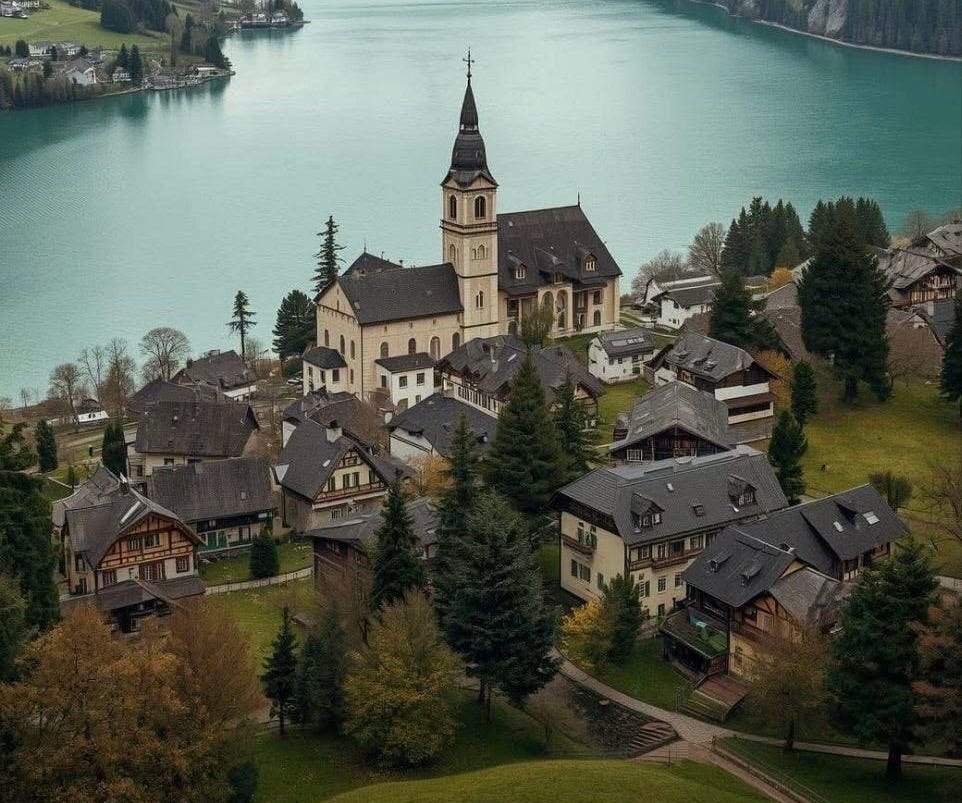
That arrangement tells you how these communities understood themselves.
The church provided a physical center for the settlement as well as a religious one, with houses gathering around it and roads naturally converging nearby. Sunday Mass, baptisms, marriages, funerals, feast days, processions, and village celebrations all brought people back to the same place throughout their lives.
This is why the onion-domed church towers of Bavaria and Austria feel so inseparable from the Alpine landscape today.
Architecture gave the village a hierarchy.
The individual house belonged to the family.
The farm belonged to working life.
The square belonged to the community.
And the church rose above all of them.
The Village Grew Rather Than Being Designed
This may be the most important part.
Many of the beautiful Alpine villages we admire today were built incrementally over generations.
A road followed the easiest route through the terrain, houses appeared beside it, another lane connected a farm to the church, buildings adapted to slopes and streams, and the settlement gradually took its shape.
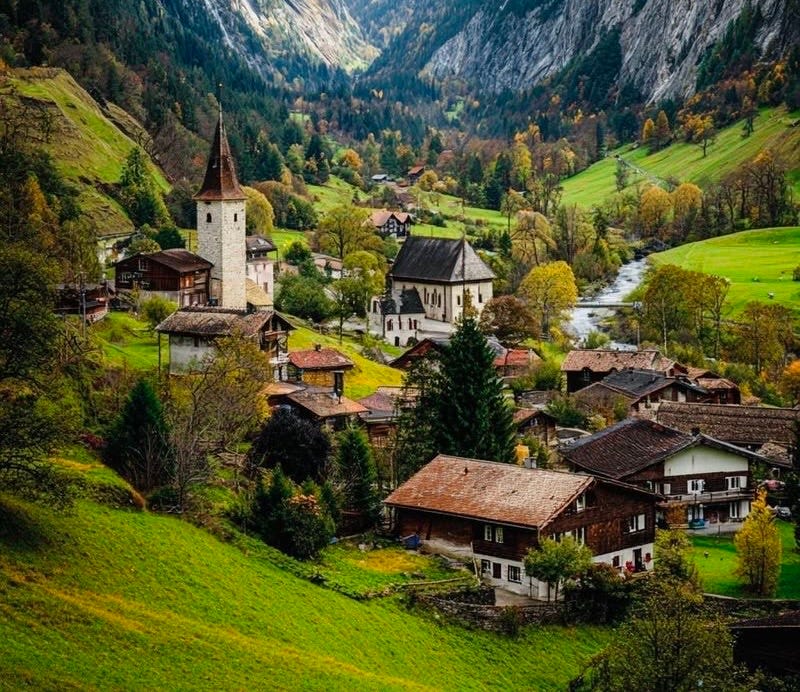
That is why old villages have such wonderful irregularity.
One house sits slightly forward.
Another turns toward the road.
A lane suddenly narrows.
A fountain appears where several paths meet.
The church tower becomes visible between two roofs and disappears again as you turn the corner.
The village feels natural because its form records hundreds of small decisions made by people responding to the same landscape.
The House Was Built to Last
There is another reason these villages possess so much character: families expected buildings to survive.
A farmhouse could pass through generations, and every generation might repair it, enlarge it, repaint it, replace timber, add another room, or carve another date above the entrance.
This created buildings with visible histories.
You can walk through an Alpine village today and find a house whose masonry is centuries old, whose balcony came from another period, whose façade was repainted later, and whose flower boxes were planted that morning.
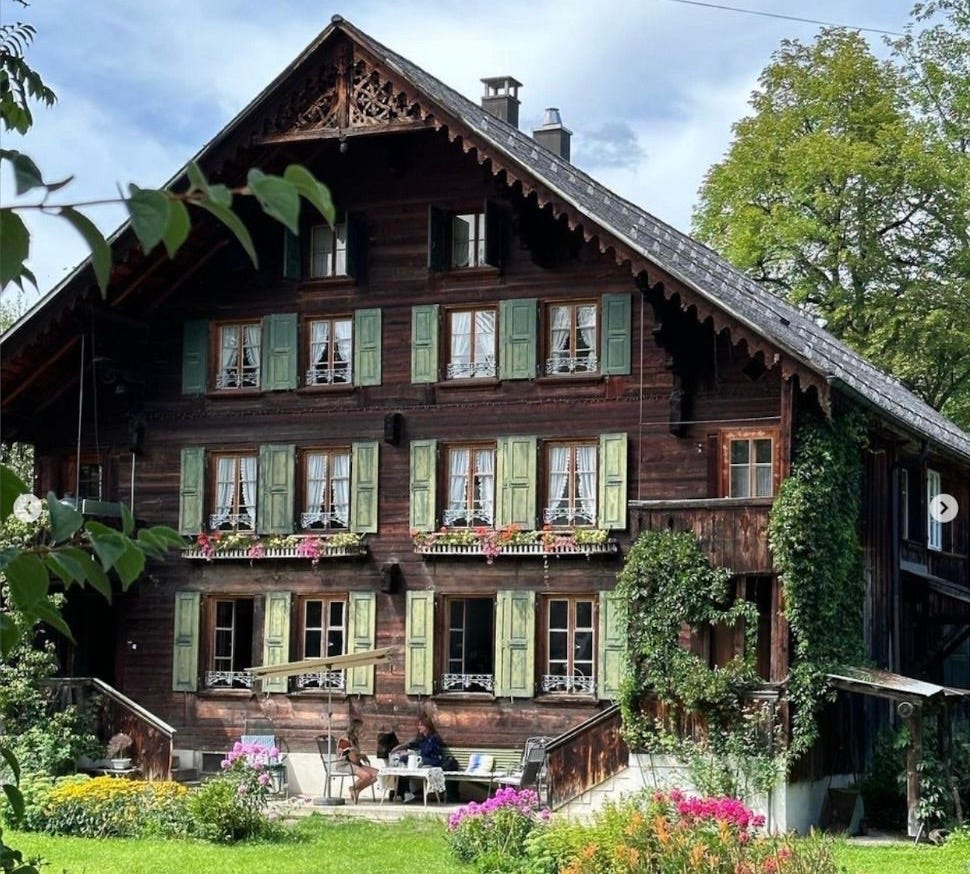
The building remains alive because people continue using it.
And perhaps this is one of the great lessons traditional Alpine architecture can teach us.
Vitruvius stated the enduring requirements of good building with clarity that still holds:
“All these must be built with due reference to durability, convenience, and beauty. Durability will be assured when foundations are carried down to the solid ground and materials wisely and liberally selected; convenience, when the arrangement of the apartments is faultless and presents no hindrance to use, and when each class of building is assigned to its suitable and appropriate exposure; and beauty, when the appearance of the work is pleasing and in good taste, and when its members are in due proportion according to correct principles of symmetry.”
What the Alps Got Right
The beauty of Alpine architecture came from the relationship between place, materials, craftsmanship, family, and tradition.
The mountain determined what the building needed to withstand, the surrounding landscape supplied stone and timber, craftsmen developed solutions suited to their region, families embellished those solutions over generations, and the Christian village gave all those individual buildings a larger order.
That is how you end up with places that feel as though they belong exactly where they stand.
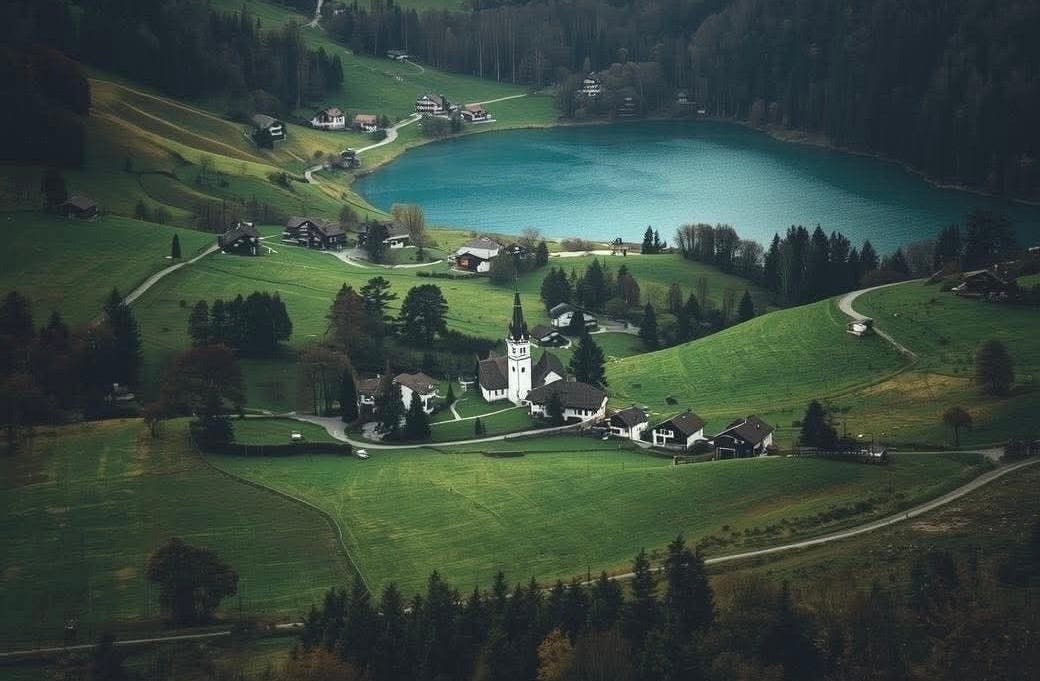
The farmhouse looks right beneath the mountain because its materials came from that landscape and its shape developed in response to it. The village looks right in the valley because its streets grew with the terrain. The church looks right above the rooftops because it was built to represent the center of communal life.
Nobody needed to invent an “Alpine aesthetic.”
They built according to the mountains, their faith, their work, and the traditions they inherited, and beauty followed.
I should have been an architect. Thank you!
Wonderful!