

If these essays have changed the way you see the world around you, the paid tier goes further.
You get longer, more researched pieces on the places that shaped Western civilization and the stories behind them. Deep dives into tradition, craftsmanship, and what the built world reveals about culture. Travel guides that teach you to actually read the places you visit.
This project is kept alive by people who care about old-world traditions. For a few dollars a month, you can be one of them.
If you have ever driven through Bavaria, you have probably noticed that the beauty does not end when you leave Munich.
In fact, I would argue that the real Bavaria begins when you leave the city behind and start passing through the smaller towns and villages, where onion-domed church towers rise above red roofs, enormous farmhouses sit beneath the Alps, balconies overflow with flowers, religious paintings cover the sides of houses, and even an ordinary village fountain looks as though somebody cared about making it beautiful.
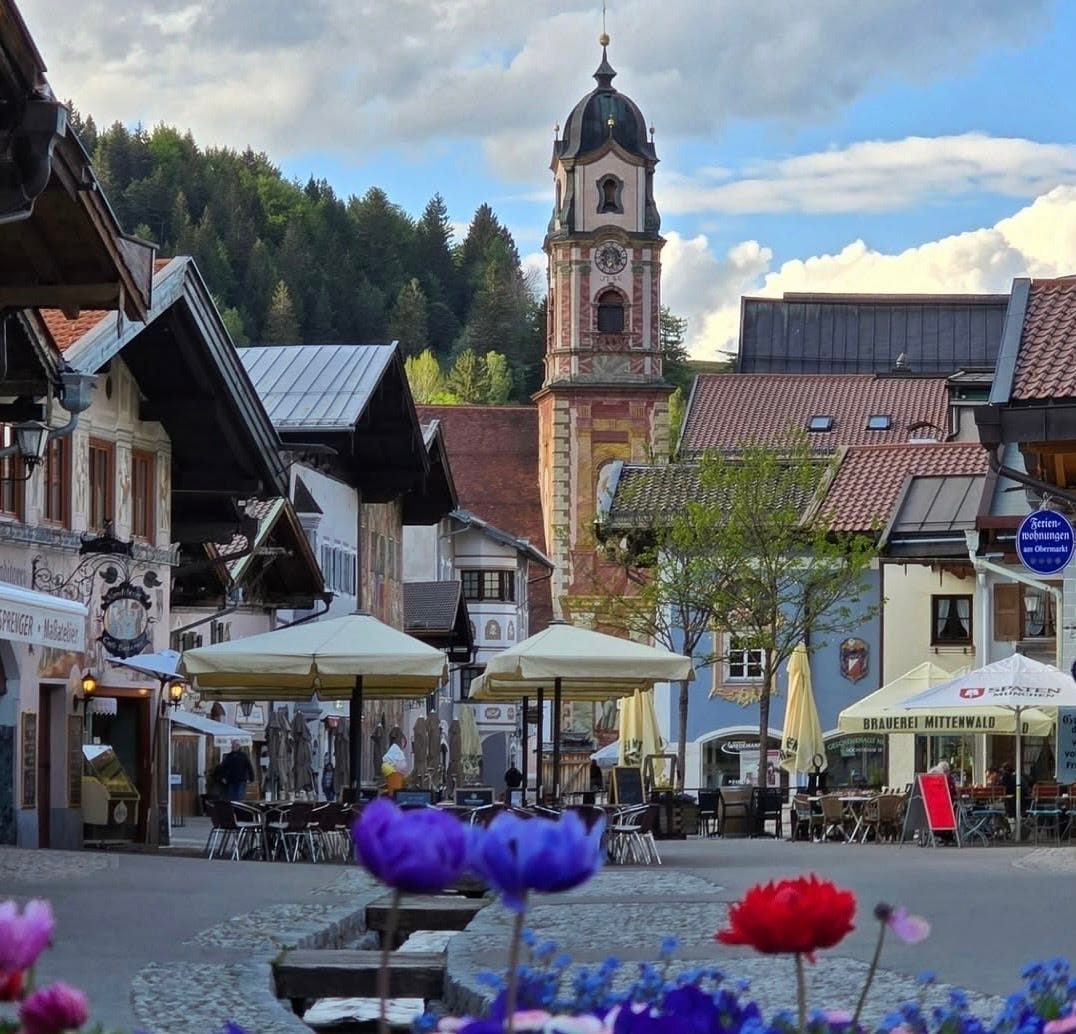
Visit places like Mittenwald, Oberammergau, Ramsau, Bamberg, Regensburg, Rothenburg ob der Tauber, or the villages surrounding the Tegernsee, and you begin to realize that this beauty cannot be explained by one architectural style or one particularly successful period of construction. Bavaria looks the way it does because generation after generation built upon what came before them, using local materials, adapting buildings to the landscape, placing churches at the center of community life, and treating decoration as a normal part of architecture.
King Ludwig I, the monarch who turned Munich into a city of museums and monumental streets, understood that beauty was not an accident of taste but a public duty. At the unveiling of the Bavaria statue he said:
“I am sixty-four years old. I have seen much that is beautiful — never anything so beautiful. I have known many joys — never a joy like this.”
And of his capital he declared:
“I want to make Munich a city that so honors Germany that no one knows Germany who has not also seen Munich.”
That same conviction — that a place should be made worthy of being seen — runs through the villages as surely as through the boulevards.
So how did Bavaria become so beautiful?
It Begins With the Village
To understand Bavaria, start with the village.
For centuries, most Bavarians lived in agricultural communities where the house, farm, church, inn, road, fountain, and surrounding fields belonged to the same little world, and because these settlements developed gradually rather than appearing according to a single master plan, they acquired the irregularity we now find so attractive.
The road might curve around an older farmhouse, widen beside the church, narrow between two buildings, then suddenly open onto a square containing a fountain or an inn. Houses faced the street because the street was where village life happened, while barns, workshops, orchards, gardens, and fields spread outward behind them.
And above almost everything stood the church.
This is one of the first things you notice when looking at an old Bavarian village from a distance. The houses remain relatively low, the roofs form a clustered landscape beneath them, and then the parish church rises above the settlement, its tower telling you where the center is before you have even entered the village.
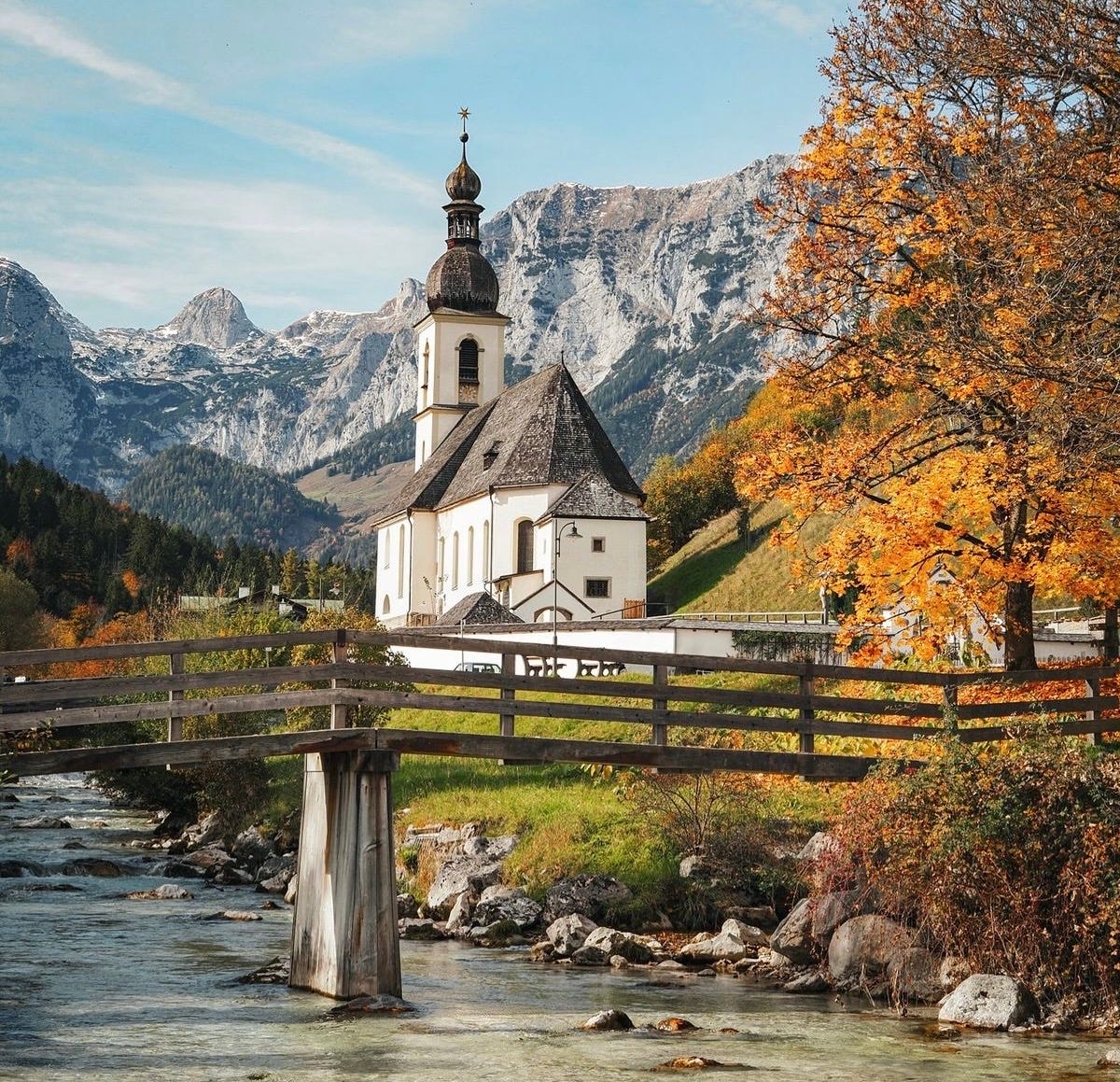
That arrangement was hardly accidental.
The church stood at the center because the Catholic faith stood at the center of Bavarian communal life, with baptisms, marriages, funerals, Sunday Mass, feast days, processions, and the rhythms of the Christian calendar repeatedly bringing generations of villagers back to the same building.
Architecture simply made that hierarchy visible.
Then Came the Bavarian Farmhouse
Once you leave the larger towns and head toward Upper Bavaria and the Alps, another building begins to dominate the landscape: the traditional farmhouse.
And these houses make much more sense when you understand what they were built to do.
A farming family living through a Bavarian winter needed room for people, animals, tools, hay, food, firewood, and the enormous amount of material required to keep an agricultural household functioning, which encouraged the development of large buildings with broad roofs and generous overhangs capable of protecting walls, balconies, entrances, and stored goods from rain and snow.
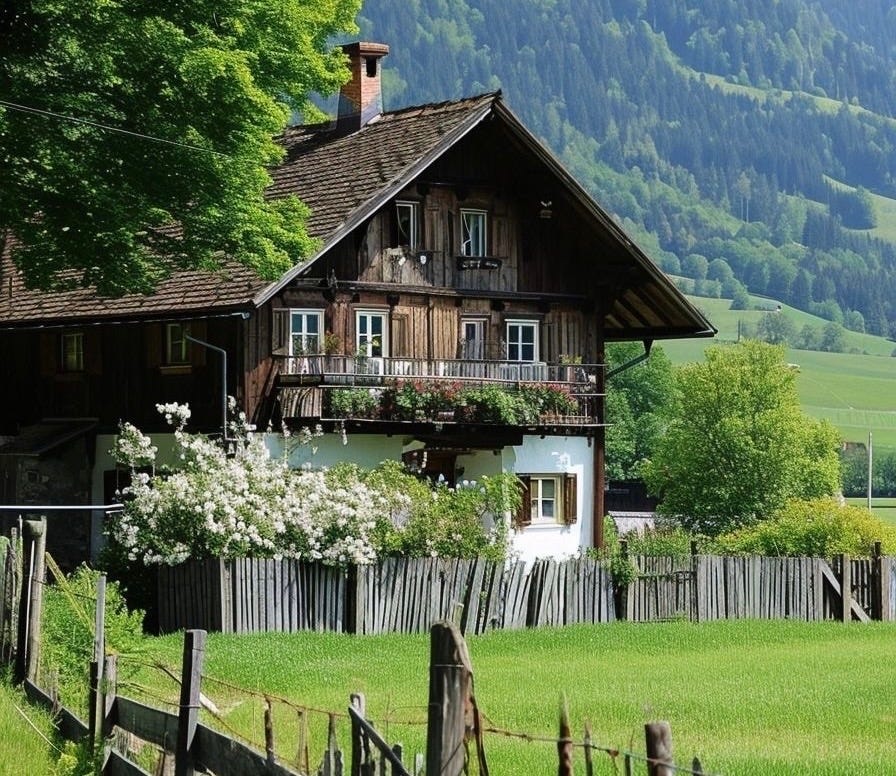
Timber was readily available from the surrounding forests, while stone and plaster provided durable walls below, and over generations these practical solutions became the architectural vocabulary we now associate with Bavaria.
The deep roof became beautiful.
The balcony became decorative.
The timberwork became increasingly elaborate.
Shutters gained color, window boxes filled with geraniums, carved railings appeared along balconies, and the farmhouse gradually became something far richer than a machine for agricultural survival.
This is one of the recurring themes in traditional architecture: usefulness and beauty grew together.
When Johann Wolfgang von Goethe crossed the Bavarian Alps on his way to Italy in September 1786, he stopped in Mittenwald and then wrote, from the Brenner, of the landscape that such houses inhabit:
“At six o’clock I left Mittenwald; a sharp wind had completely cleaned the clear sky. It was a cold such as is only permitted in February. But now, in the long light of the rising sun, the dark fir-covered foregrounds, the grey limestone cliffs between them, and behind them the snow-covered highest peaks against a deep heavenly blue — those were precious, ever-changing pictures.”
The farmhouse was built for that climate and that view. The picture and the building belong to each other.
Bavarians Painted Their Houses
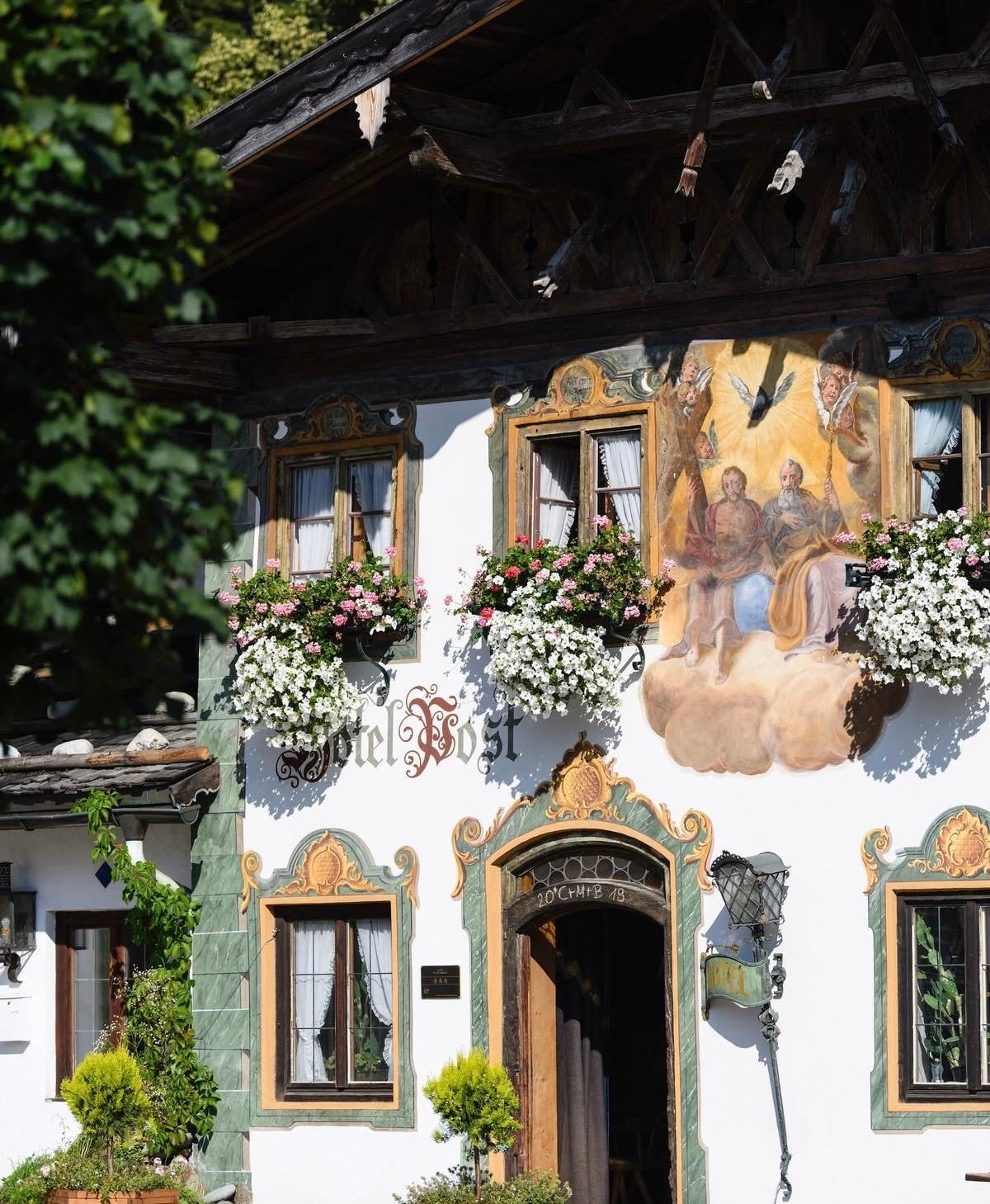
Then you arrive somewhere like Mittenwald or Oberammergau and discover that Bavarians were perfectly happy to use the entire façade of a house as a canvas.
This tradition is commonly associated with Lüftlmalerei, the elaborate façade painting for which Upper Bavaria became famous, particularly during the eighteenth century. Some houses received decorative borders and architectural illusions, while others were covered with enormous religious scenes showing Christ, the Virgin Mary, saints, biblical events, or figures connected to the occupation and history of the family living inside.
And this is where Bavarian architecture becomes inseparable from Bavarian Catholicism.
Walk through an old village and Christianity appears everywhere: a crucifix attached to a farmhouse, a statue of the Virgin beside the road, a saint painted above a doorway, a chapel standing beside a field, a wayside shrine at a crossroads, or a biblical scene covering the façade of somebody’s home.
Faith entered the landscape.
A house could tell you what the family believed before you ever stepped through the door.
The Baroque Changed Everything
If medieval Bavaria gave the region its churches, monasteries, towns, and basic settlement patterns, the seventeenth and eighteenth centuries gave much of southern Bavaria the exuberant Catholic character we recognize today.
Following the upheavals of the Reformation and Thirty Years’ War, Bavaria remained firmly Catholic, and the Counter-Reformation and subsequent Baroque period transformed churches and monasteries across the region.
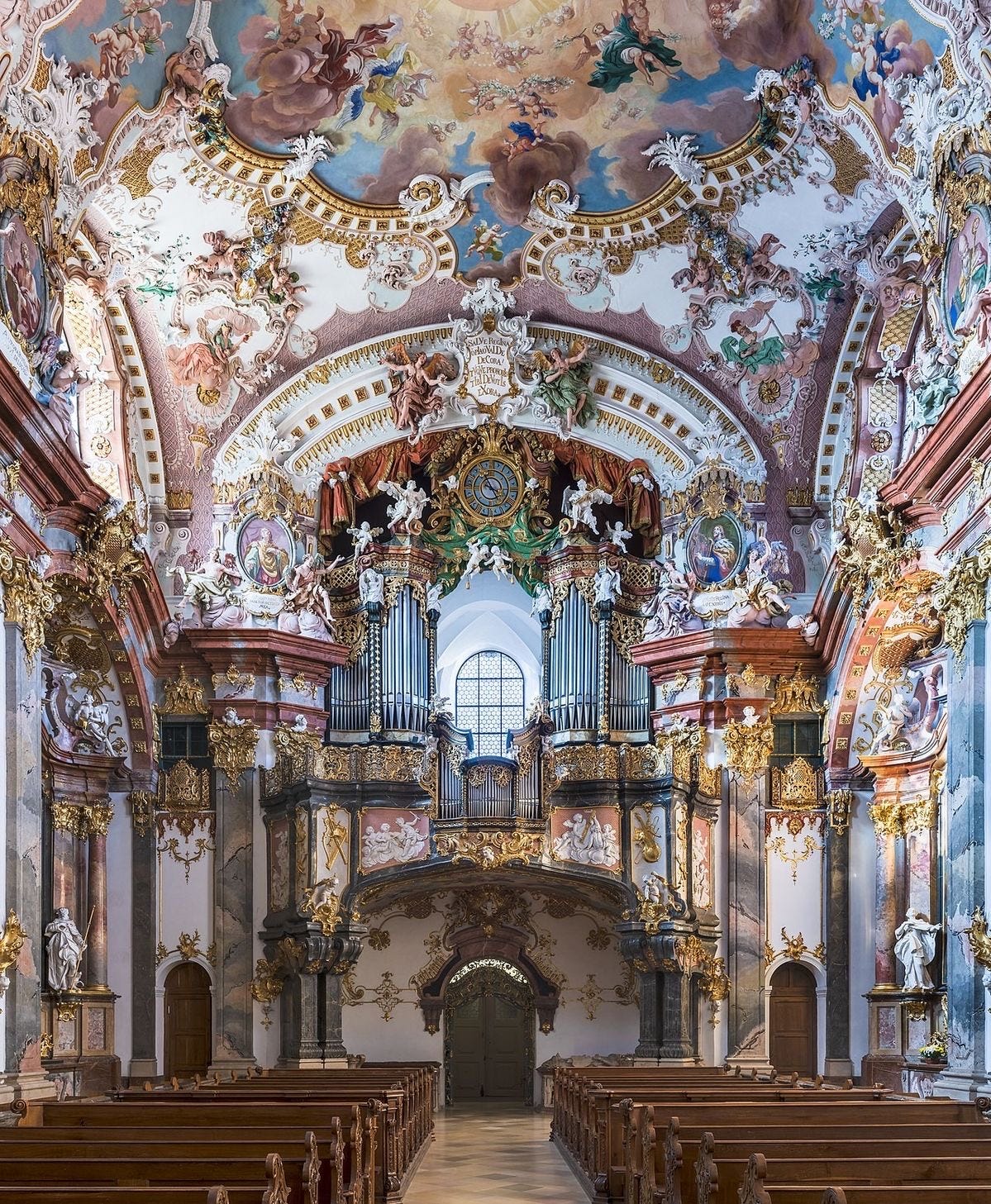
Walk into a Bavarian Baroque church and restraint is difficult to find.
There are marble columns, gilded altars, twisting ornament, painted ceilings opening toward Heaven, angels appearing from clouds, saints standing above side chapels, elaborate stucco curling across walls, and light pouring through windows onto white and gold interiors.
The art historian John Bourke, writing of these interiors, described what the visitor actually meets:
“A great multitude of figures and groups surrounds the visitor in one of these churches. He sees saints and prophets and Fathers of the Church at decisive points of vantage, significantly poised and with their appropriate attributes. He sees angels and putti flying, sitting, leaning, supporting, listening, adoring, pointing, reproving, on altar and pulpit, organ and confessional, making jubilant music, bearing emblems of the Betrayal or the Crucifixion, bringing messages from on high, in charge of the mounting horses of Elijah’s fiery chariot, attending the crucified and awaiting the risen Saviour, up-bearing the Virgin at her Assumption. He sees symbols of dogma and doctrine — of the Trinity (a triangle); of the all-seeing eye of God (an eye, usually framed in the triangle), of the self-sacrificing love of Christ (a lamb or a pelican), of his wounded heart (a heart clasped by a crown of thorns), of the Annunciation of the Virgin (a lily) or of her sorrows (a sword or swords piercing her bosom), of the revelation of divine mysteries (a curtain over choir arch, altar or pulpit drawn aside by putti); of the transitoriness of mortal things (a clock), and of much else.”
The Wieskirche, built in the eighteenth century by the brothers Dominikus and Johann Baptist Zimmermann, is perhaps one of the greatest examples. From the outside it sits almost unexpectedly among fields near the Alps, while inside the building explodes into Rococo decoration, with fresco, stucco, sculpture, architecture, and light merging into a single religious composition.
Then there are places such as Ettal Abbey, Ottobeuren Abbey, Weltenburg Abbey, and countless parish churches scattered through towns most foreign visitors have never heard of.
The remarkable thing is how widespread this beauty became.
You did not need to enter a royal palace to find extraordinary art.
Sometimes you only needed to enter the village church.
If these essays have changed the way you see the world around you, the paid tier goes further.
You get longer, more researched pieces on the places that shaped Western civilization and the stories behind them. Deep dives into tradition, craftsmanship, and what the built world reveals about culture. Travel guides that teach you to actually read the places you visit.
This project is kept alive by people who care about old-world traditions. For a few dollars a month, you can be one of them.
The Monasteries Shaped the Landscape
This brings us to another enormous part of Bavaria’s beauty: the monastery.
Long before the modern German state existed, monasteries were helping shape the Bavarian landscape, establishing religious communities, cultivating land, maintaining libraries, educating people, commissioning artists, and building some of the region’s most impressive architectural complexes.
And because monasteries could survive for centuries, they accumulated architecture in layers.
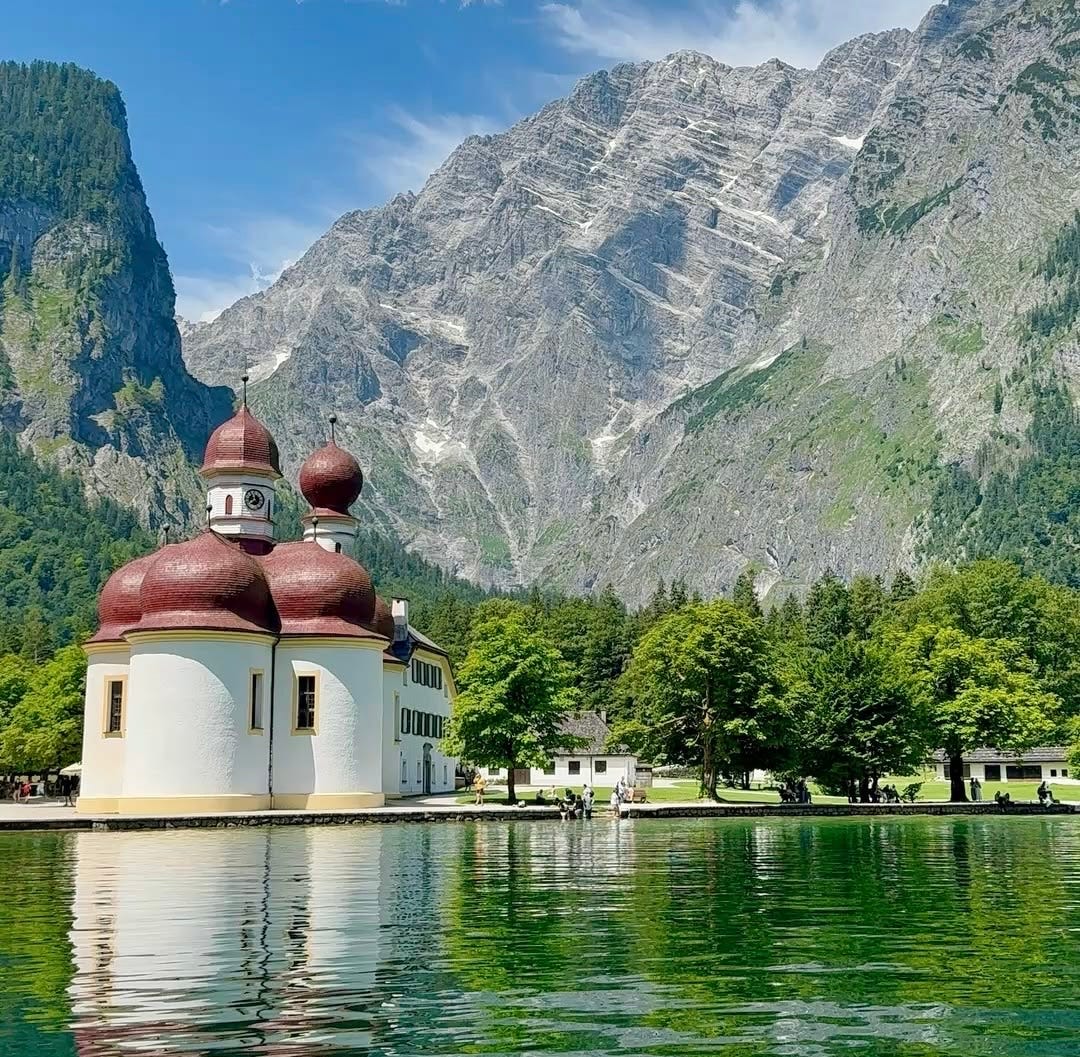
A medieval foundation might receive a Gothic church, later Baroque additions, new gardens, libraries, guesthouses, courtyards, workshops, and agricultural buildings, with each generation adding something to what it inherited.
This created places that felt rooted because they genuinely were.
The architecture had grown with the institution.
The Towns Developed Their Own Beauty
Then there are Bavaria’s towns and cities, which introduce another architectural world entirely…