

When people visit Barcelona for the first time, they all remember the same moment.
They are walking through the city, distracted by cafés, crowds, and traffic, when suddenly they look up and see a cluster of towers rising above the rooftops.
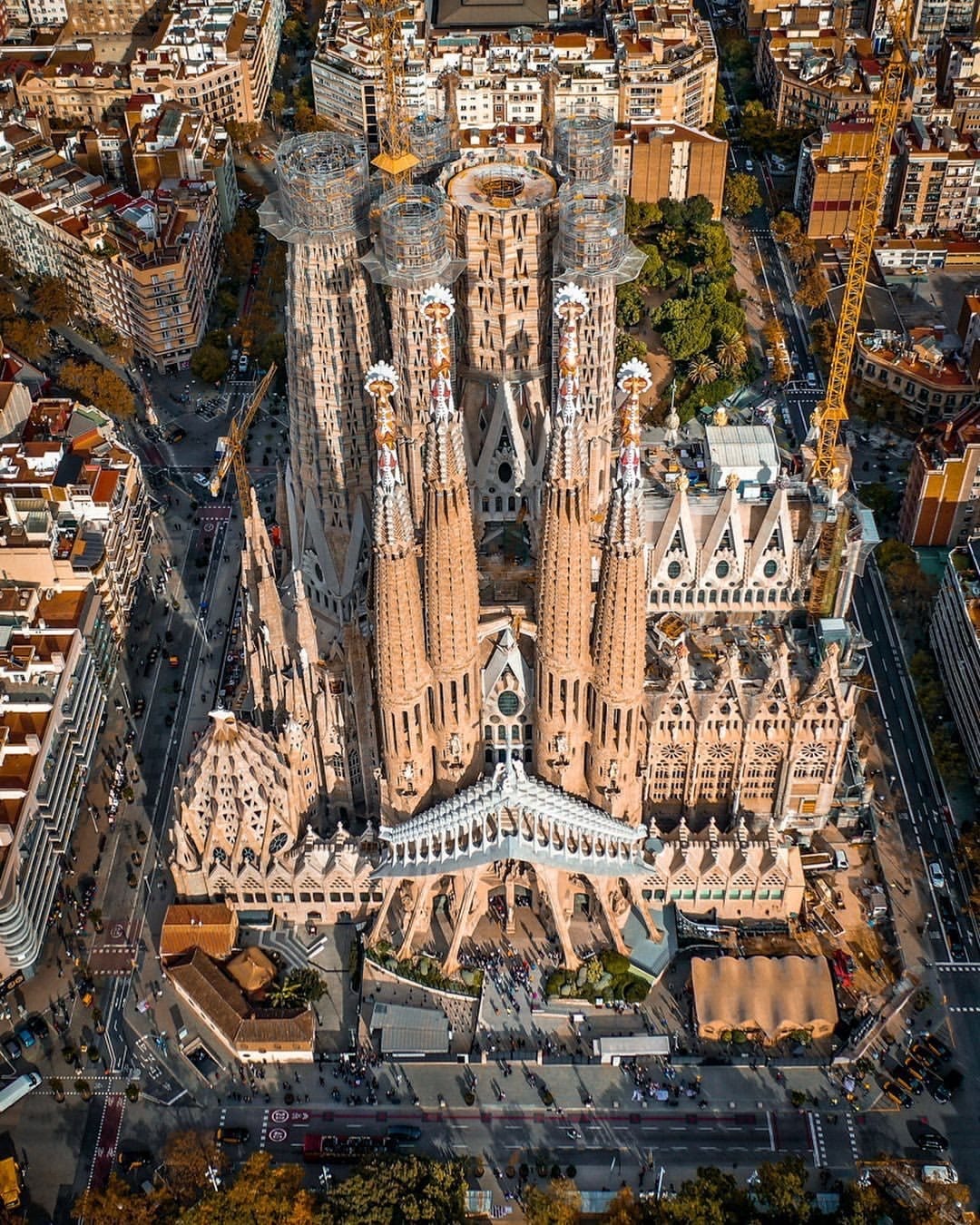
What they are actually looking at is the product of a man who spent the last forty years of his life becoming increasingly consumed by a single idea.
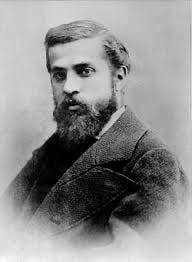
That man was Antoni Gaudí.
Today he is remembered as one of the greatest architects who ever lived, yet his story begins in a ordinary way. He was born in 1852 in Catalonia, the son of a coppersmith, and throughout his childhood he struggled with poor health. Rheumatism prevented him from participating in the activities enjoyed by other children, which meant he spent long periods observing rather than doing. Years later, when journalists and fellow architects asked where his unusual forms came from, he pointed toward nature.
“My teacher is the tree outside my window,” he once remarked.
People who knew him understood he meant it literally. While many architects studied earlier buildings, Gaudí spent countless hours studying branches, leaves, mountains, shells, bones, and animal skeletons. He became fascinated by structures that had evolved naturally because they solved problems efficiently. Long before modern engineers used computers to calculate complex loads, Gaudí was looking at trees and asking why nature rarely built anything in a straight line.
One of his most famous observations was this:
“The straight line belongs to men, the curved line belongs to God.”
That sentence captures much of his philosophy. He believed nature revealed truths that architects ignored at their peril, and the older he became, the more determined he was to build according to those principles.
If these essays have changed the way you see the world around you, the paid tier goes further.
You get longer, more researched pieces on the places that shaped western civilization and the stories behind them. Deep dives into tradition, craftsmanship, and what the built world reveals about culture. Travel guides that teach you to actually read the places you visit.
This project is kept alive by people who care about old world traditions. For a few dollars a month, you can be one of them.
When Gaudí arrived in Barcelona as a young architect, the city was expanding rapidly. Factories were generating wealth. New districts were being built. Ambitious architects competed for commissions. Gaudí gained a reputation for producing designs unlike anything anyone had seen before. His buildings seemed to reject conventional rules. Chimneys looked like sculptures. Roofs resembled dragon backs. Facades flowed like waves.
Not everyone was impressed.
One famous story comes from Elies Rogent, the director of the Barcelona School of Architecture, who handed Gaudí his diploma while supposedly remarking:
