

Walk through Venice, Paris, London, Milan, or Florence and it is easy to assume their streets, squares, hospitals, and urban rhythms emerged from the imagination of architects, rulers, and planners, because that is usually how European urban history gets told.
Yet cities are often shaped just as powerfully by crisis as by design, and few crises altered Europe more deeply than plague.
For centuries, epidemic disease forced European cities to rethink how people moved, where they gathered, how ports functioned, where the sick were treated, how dense neighborhoods should become, and what responsibilities governments had toward public health. Decisions that began as emergency responses gradually hardened into permanent urban logic, leaving visible marks on street plans, hospital design, quarantine infrastructure, civic space, and entire approaches to city planning.
What makes this so fascinating is that plague did not reshape every city in the same way:
Venice turned islands into quarantine architecture.
Milan built enormous containment complexes.
London began rethinking density and circulation.
Paris embraced sanitary restructuring at metropolitan scale.
Florence integrated public health into civic and institutional design.
Taken together, these cities reveal something extraordinary: one of the most influential designers in European history never drew a blueprint.
1) Venice Invented Quarantine Architecture
If one city demonstrates how profoundly plague could reshape architecture, it is Venice, because few cities in Europe were more exposed to the movement of people, goods, and disease.
Venice lived through trade. Ships arrived constantly from Constantinople, Alexandria, the Levant, and across the Mediterranean carrying spices, textiles, merchants, sailors, pilgrims, and cargo from every major commercial network of the age. That wealth made Venice powerful, but it also made the city vulnerable to epidemic disease arriving by sea.
Over time, Venetian authorities developed one of the most sophisticated public health responses in premodern Europe, and the architectural consequences were extraordinary.
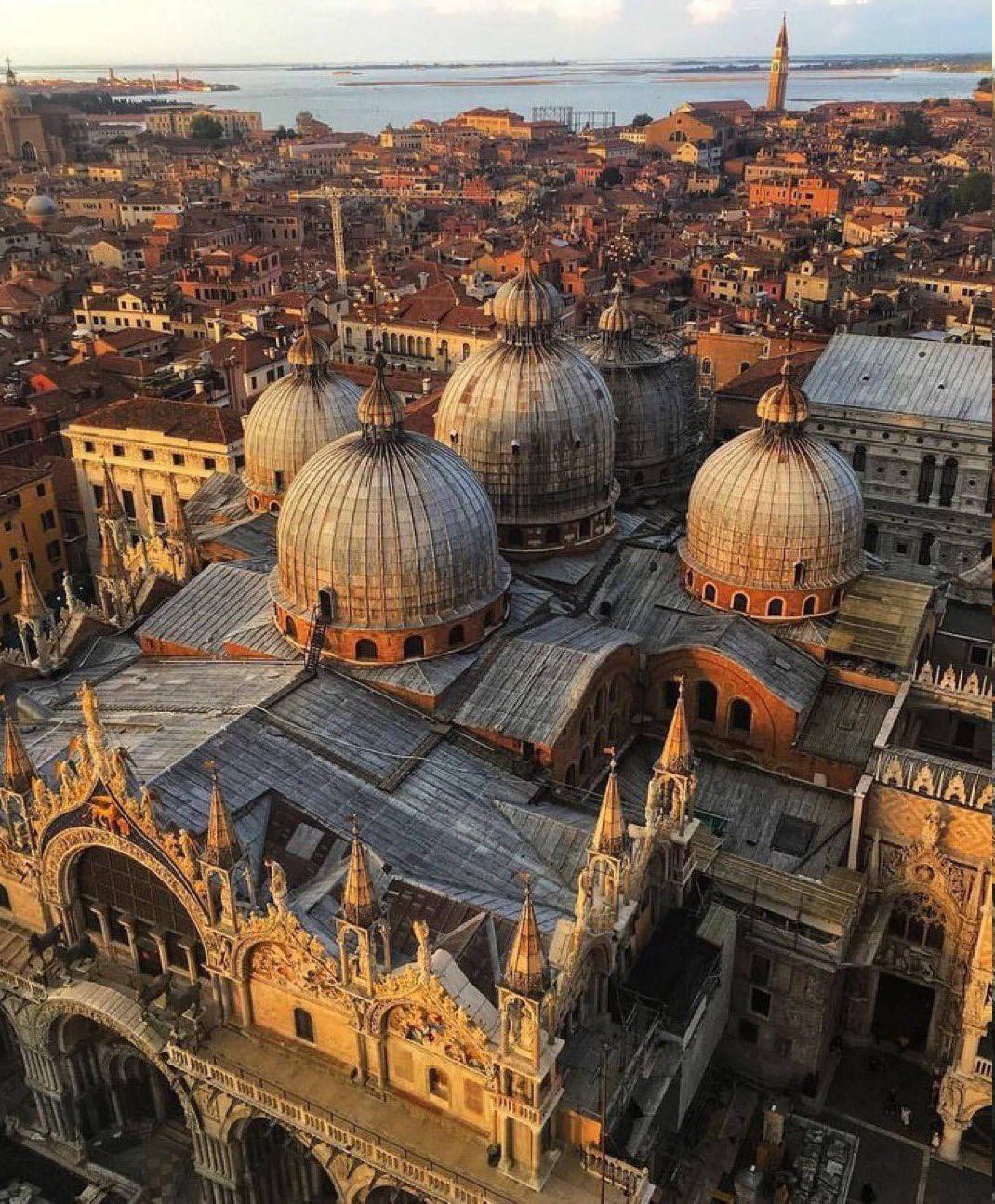
In 1423, Venice established the Lazzaretto Vecchio, widely considered Europe’s first permanent plague quarantine station. This was placed deliberately on an island separated from the dense urban core, creating a controlled space where potentially infected arrivals could be isolated before entering the city itself.
That decision created an entirely new architectural category.
Europe already had hospitals, monasteries, prisons, and warehouses, but this was something distinct, a building complex designed specifically around epidemic containment. The physical layout reflected that purpose. Movement was controlled. Patients were separated. Surveillance mattered. Entry and exit were regulated.
Venice later expanded the system through the Lazzaretto Nuovo, which became central to cargo quarantine and inspection. Goods themselves became part of architectural planning because textiles, crates, and merchandise were widely feared as carriers of disease.
Entire islands became public health infrastructure.
Trade architecture became epidemic architecture.
And because Venice was such an influential maritime power, its quarantine model spread outward into the wider European world.
2) Milan Built a City-Scale Machine for Disease Containment
Milan responded differently, because its urban challenges were those of a major inland metropolis rather than a maritime republic, yet plague shaped its architecture just as dramatically.
Repeated outbreaks forced Milanese authorities to think in terms of containment, surveillance, and metropolitan-scale management, and this thinking produced one of the most remarkable epidemic structures in Europe: the Lazzaretto di Milano.
Built in the late fifteenth century, this was a massive rectangular quarantine complex with hundreds of individual cells arranged around an enormous central space, built specifically to isolate and manage plague victims under controlled conditions.
The scale is difficult to overstate.
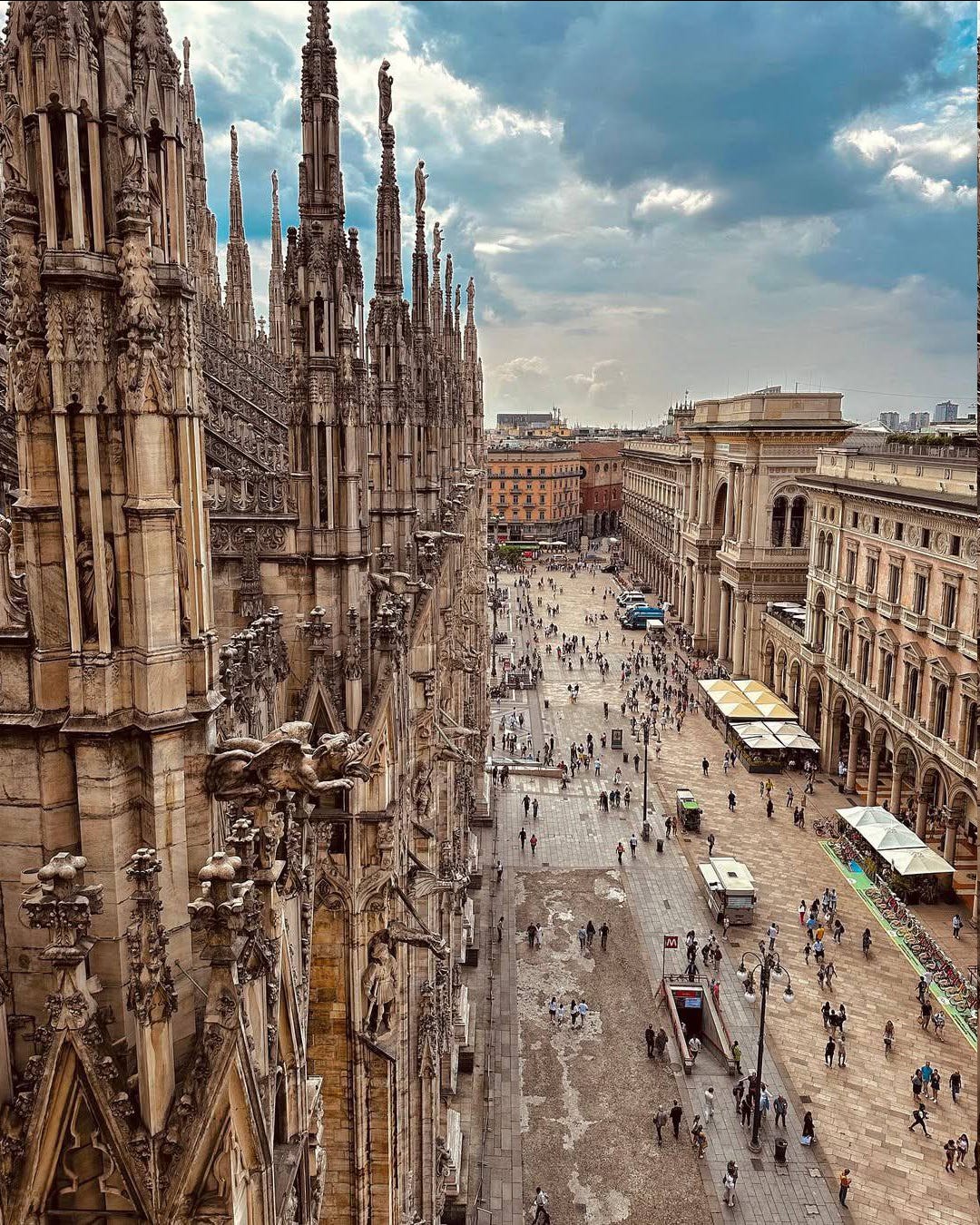
This was architecture treating epidemic disease as something requiring infrastructure on the scale of a city project.
When Alessandro Manzoni later wrote about Milan’s devastating seventeenth-century plague, the Lazzaretto had already become part of the city’s physical and psychological landscape. Disease management was no longer something improvised through religious charity or ad hoc responses. It had become embedded in architecture.
And the implications extended beyond one building.
Plague increased official concern with circulation, access, monitoring, and the practical management of urban populations. Authorities became more conscious of how people moved through the city, how density functioned, and how spaces could be regulated during crisis.
Reminder: If these essays have changed the way you see the world around you, the paid tier goes further.
You get longer, more researched pieces on the places that shaped western civilization and the stories behind them. Deep dives into tradition, craftsmanship, and what the built world reveals about culture. Travel guides that teach you to actually read the places you visit.
This project is kept alive by people who care about old world traditions. For a few dollars a month, you can be one of them.
3) London Began Rethinking Density Itself
Medieval London was exactly the kind of city epidemic disease exposed mercilessly.
The city had developed through centuries of commercial expansion, inherited property boundaries, and incremental building, producing a dense urban environment of timber houses, narrow lanes, compressed neighborhoods, weak sanitation infrastructure, and constant human proximity.
The Black Death devastated London in the fourteenth century, and plague remained a recurring reality for generations afterward, culminating in the Great Plague of 1665.
By then, urban density itself had become inseparable from public fears about disease.
Crowded housing, poor airflow, accumulated waste, and irregular circulation were no longer simply features of inherited medieval urbanism. They had become part of a growing conversation about urban vulnerability.
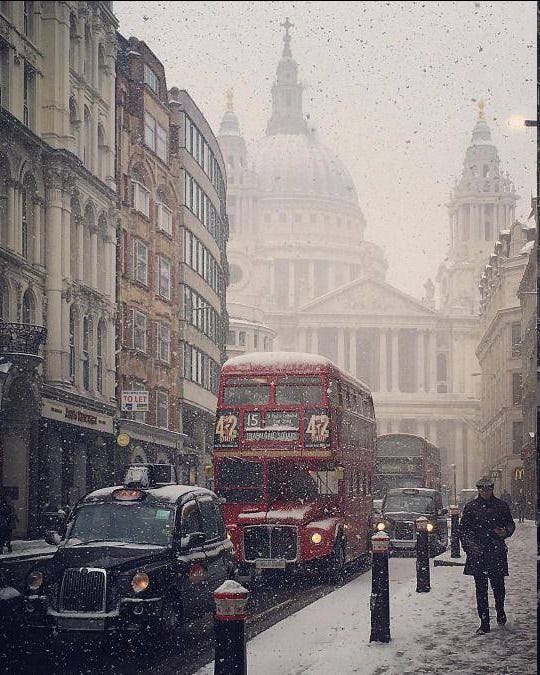
Then came the Great Fire of 1666..